Counting the waves…
Counting the waves…

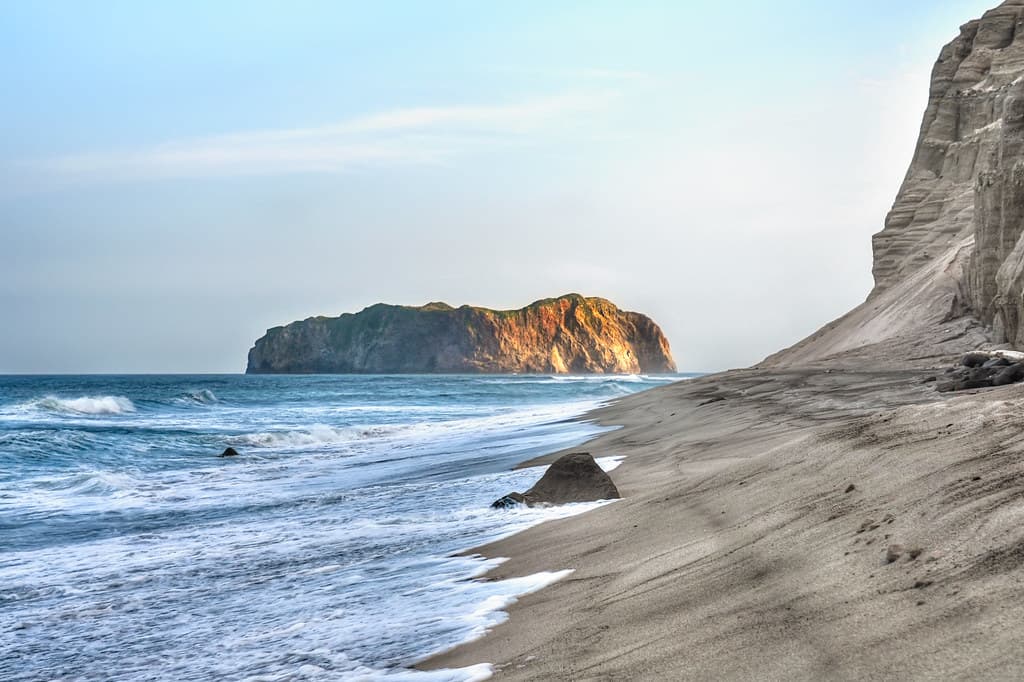
You'll know you've arrived when the road narrows and the landscape shifts from rice paddies to a shoreline of dark, angular rock. Kamo Rocky Shore stretches along Yamagata's western edge, where the Sea of Japan meets land in a perpetual conversation of foam and stone. Winter waves explode against the boulders with force enough to rattle your ribs; summer swells arrive gentler, lapping into crevices worn smooth over centuries. This isn't a beach for laying out towels. Instead, you pick your way across tide-sculpted platforms, peering into pools where crabs scuttle beneath curtains of brown algae and periwinkles cling to wet stone. The rocks themselves tell a volcanic story—sharp-edged basalt in blacks and deep grays, stacked and scattered as if some ancient force grew impatient with order. Fishermen cast lines from the more stable outcrops, their buckets wedged between stones. Come at low tide when the shoreline reveals its fullest extent, a maze of channels and shelves that disappear twice daily beneath the surf. The horizon stretches unbroken to the west, and on clear evenings the sun descends into the sea with the kind of unhurried drama that makes you forget to check your phone. There are no beach clubs here, no jet skis—just you, the rocks, and the reliable rhythm of waves doing what they've done for millennia.
Places, rentals, tours and events within walking and driving distance of Kamo Rocky Shore.
Photos
Kamo Rocky Shore is not ideal for swimming due to its rugged, rocky terrain and lack of sandy beach areas. The shore is characterized by large boulders and uneven coastline, which can make water entry difficult and potentially hazardous. Waves and currents near rocky areas can be unpredictable. This location is better suited for coastal walks, photography, and tide pool exploration rather than swimming. If you're looking to swim, consider nearby beaches with sandy shores and designated swimming areas. Always check local conditions and signage before entering the water.
Kamo Rocky Shore can be visited year-round, with each season offering distinct experiences. Spring and autumn provide mild temperatures ideal for coastal walks and photography, with clearer skies and comfortable conditions. Summer offers warmer weather for exploration, though it can be humid. Winter visits reveal dramatic seascapes with powerful waves, though temperatures are cold and layers are essential. Early morning and late afternoon provide the best lighting for photography. Low tide periods are particularly rewarding for exploring tide pools and rock formations. Check tide tables and weather forecasts before your visit.
Kamo Rocky Shore is located in Tsuruoka, Yamagata Prefecture, along the Sea of Japan coast. The most practical way to reach it is by car, as public transportation options to this specific coastal area are limited. From Tsuruoka city center, drive toward the Kamo area along coastal roads. Parking availability may vary depending on the exact access point you use, and facilities can be basic in this relatively undeveloped coastal area. GPS navigation using the Japanese name will help locate access points. Allow extra time for navigating narrow coastal roads.
Being a more secluded coastal area, Kamo Rocky Shore has limited facilities directly nearby. For dining and accommodations, Tsuruoka city offers the most options, including restaurants serving local seafood and various lodging choices from business hotels to traditional ryokan. Some coastal areas in the region may have small local restaurants or minshuku (family-run guesthouses), though options are limited compared to urban areas. It's advisable to bring snacks and water when visiting the shore. Plan to base yourself in Tsuruoka and make Kamo Rocky Shore a day trip destination.
The rocky shoreline at Kamo creates natural tide pools that host various marine life typical of the Sea of Japan coast. During low tide, you may observe small crabs, sea anemones, snails, and various shellfish among the rocks and pools. The specific species vary by season and conditions. Tide pools offer excellent opportunities for nature observation and photography, particularly for those interested in coastal ecosystems. Visit during low tide for the best viewing opportunities, and wear sturdy footwear as rocks can be slippery. Always observe tide pool life respectfully without disturbing the habitat.