Counting the waves…
Counting the waves…
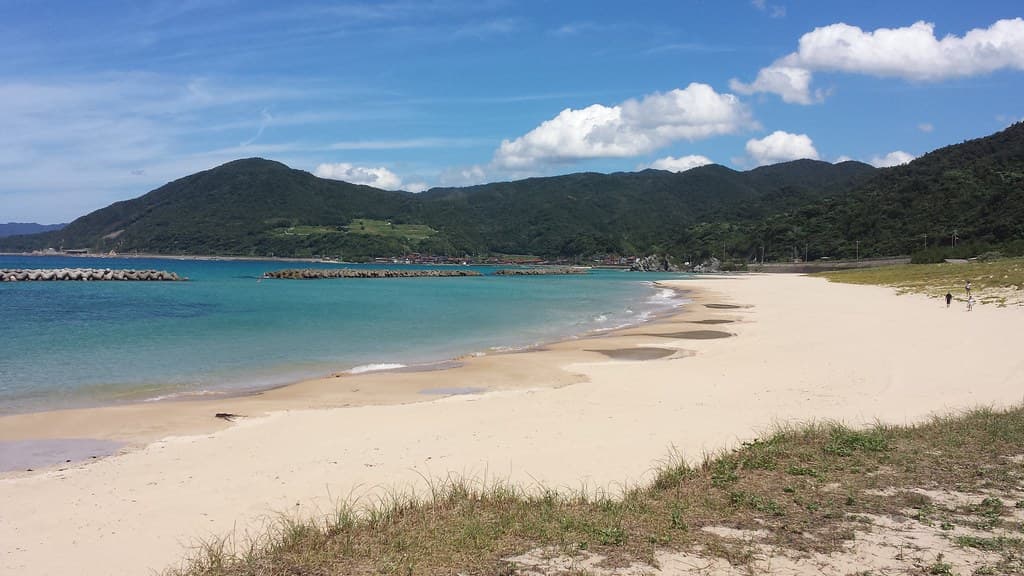
Koshigahama unfolds as a long, straight ribbon of sand backed by coastal forest and low dunes tufted with beach grass. The beach faces northwest, so morning light illuminates the water's surface while afternoons bring the sun over your shoulder, casting long shadows across the sand. Wind is constant here—it shapes the dunes, bends the pines, and raises whitecaps a hundred meters offshore when the Sea of Japan turns moody. You'll notice the absence of infrastructure immediately. No boardwalk, no rental umbrellas, no designated swimming zones with floating ropes. A single weathered sign near the parking area shows tsunami evacuation routes. The beach belongs to sanderlings and plovers that sprint along the waterline, and to the occasional fisherman casting from the southern rocks. During summer months, a few families claim spots near the access path, but even in August you can walk north for ten minutes and lose sight of other humans entirely. The swimming here is straightforward—a gradual slope into waves that peak and tumble with satisfying regularity. The bottom is sandy with occasional patches of rock closer to the headlands. Water temperature climbs to twenty-four degrees in August but rarely exceeds that, keeping the crowds thin compared to southern Japan's beaches. When wind picks up from the northwest, waves build to a meter or more, and the local surfers who know about Koshigahama appear with their boards.
Places, rentals, tours and events within walking and driving distance of Koshigahama Beach.
Photos
Koshigahama Beach is generally suitable for swimming during calm weather, though as an undisturbed, less-developed beach, it lacks lifeguard services. The sandy bottom is gentle, but swimmers should be cautious of changing tides and currents. Always assess conditions before entering the water and avoid swimming alone. The beach's remote nature means help may not be immediately available in emergencies. Swimming is best during summer months when conditions are most stable and predictable.
Koshigahama Beach remains relatively uncrowded throughout the year due to its location in the small town of Abu. Weekdays offer the most solitude, particularly outside the main summer vacation period (late July-August). Spring and autumn provide comfortable weather with minimal visitors. Even during peak summer weekends, this hidden beach sees far fewer people than major tourist destinations. Early mornings any time of year offer the most peaceful experience for beach walks or contemplation.
Koshigahama Beach is located in Abu, a small coastal town in Yamaguchi Prefecture. A rental car is the most practical way to reach it, as public transportation options are limited in this rural area. From Hagi, it's approximately a 30-40 minute drive north along the coast. From major cities, take the Shinkansen to Shin-Yamaguchi, then drive about two hours. GPS navigation is recommended, and asking locals in Abu for specific directions can be helpful.
Koshigahama Beach has minimal facilities, reflecting its undisturbed character. Visitors should bring necessary supplies including food, drinks, and beach equipment. The small town of Abu has some basic shops and eateries serving local cuisine, particularly fresh seafood. Accommodation options in Abu are limited, with most visitors staying in nearby Hagi. Plan to be largely self-sufficient for your beach visit, and prepare provisions before arriving at this remote coastal location.
Koshigahama Beach's main appeal is its undisturbed, authentic character as a local beach without commercial development. The sandy coastline offers a peaceful retreat where you can experience rural Japanese coastal life. Its location in Abu, away from major tourist routes, means you'll likely have large stretches of beach to yourself. The beach provides an authentic, uncommercialized seaside experience increasingly rare in developed countries, ideal for travelers seeking solitude and natural beauty.