“From gentle Waikiki rollers to the terrifying barrels of Pipeline — a complete guide to surfing the Hawaiian Islands.”
Surfing didn't just happen to originate in Hawaii — it's woven into the very fabric of Hawaiian culture. Ancient Hawaiians called it he'e nalu (wave sliding), and it was practiced by kings and commoners alike. When Duke Kahanamoku brought surfing to the world stage in the early 1900s, he shared a gift that would shape coastal cultures across the globe.
Today, Hawaii remains the ultimate surfing pilgrimage. The islands offer a staggering variety of waves that cater to every level, from absolute beginners taking their first lesson to seasoned pros chasing the ride of their lives. Here's your guide to Hawaii's most iconic breaks.
Every surfer's journey should start at Waikiki. The long, gentle, rolling waves that break over the reef here are the most forgiving in Hawaii, perfect for learning on a longboard or soft-top. The lineup is friendly (if crowded), and the backdrop of Diamond Head makes every wave feel cinematic.
Beach boys have been giving surf lessons here for over a century, and today you can book a lesson from $80-150 per person. Most beginners are standing up within the first hour. The best surf here is in the summer months (May-September) when south swells light up the south-facing shores.
The Banzai Pipeline on Oahu's North Shore is surfing's holy grail and its most dangerous proving ground. During winter months (November-February), massive North Pacific swells generate perfectly barreling waves that break over a shallow, razor-sharp reef. The wave is hollow, powerful, and unforgiving — it has claimed lives and ended careers.
For spectators, Pipeline is mesmerizing. Stand on Ehukai Beach Park and watch the world's best surfers thread impossibly deep tubes just 75 yards from shore. The WSL's Pipeline Masters every December is the Super Bowl of surfing. Even if you never paddle out, watching Pipeline in person is a bucket-list experience.
Just down the road from Pipeline, Sunset Beach offers a different kind of challenge. The wave doesn't barrel like Pipe — instead, it shifts and jacks across a vast playing field of reef. Paddling out at Sunset in a solid swell is a workout in itself, and the drops are steep and powerful. It's the wave that separates good surfers from great ones.
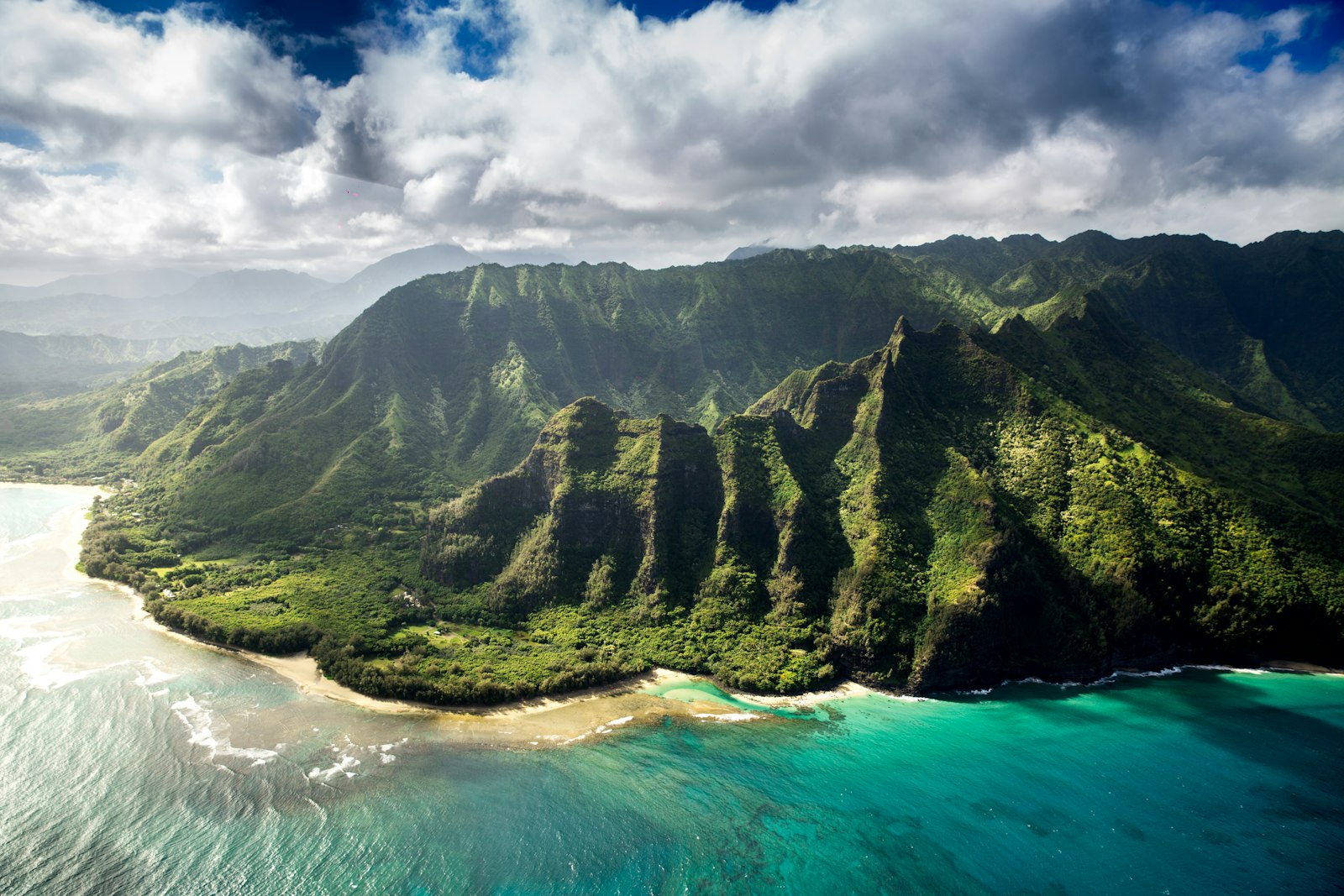
Set against a backdrop of 4,000-foot emerald cliffs streaked with waterfalls, Hanalei Bay might be the most beautiful surf spot on Earth. In winter, powerful north swells transform the bay into a legitimate big wave zone. In summer, the water goes flat and calm, perfect for paddleboarding and swimming. The small-town charm of Hanalei village, with its taro fields and food trucks, makes it impossible to leave.
When a big northwest swell hits Maui, Honolua Bay produces one of the most perfect right-hand point breaks in the world. The wave peels along a reef-lined bay backed by a lush jungle valley. The paddle-out through the channel is straightforward, and the wave offers long, carving walls that experienced surfers live for. Get here early — the cliff-side viewpoint above fills up fast on big days.
For families and beginners visiting Kauai, Poipu Beach on the south shore offers friendly, manageable waves in a stunning setting. A natural tombolo (sandbar) creates a protected wading area for kids, while the outer breaks provide mellow waves for learning. Monk seals frequently haul out on the sand, and sea turtles feed near the rocks at the eastern end.
Hawaiian surf culture runs deep, and respecting the lineup is not optional. Here's the essential etiquette:
For beginners, summer (May-September) offers the most approachable conditions on south-facing shores. For experienced surfers chasing the North Shore experience, November through February is prime season. Just remember: Hawaii's waves are powerful year-round, and the ocean demands respect at every level.