Counting the waves…
Counting the waves…

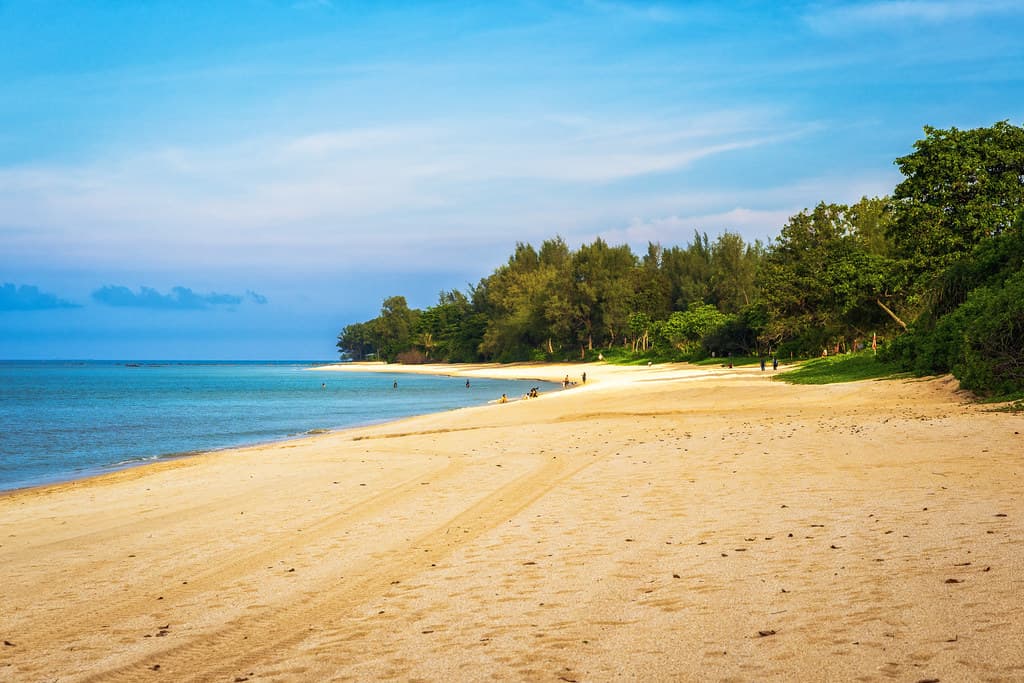
Tanjung Balau Beach stretches wide and unmanicured along Johor's Desaru coast, a sandy expanse where local families claim their weekend territory long before tourists arrive. Casuarina trees fringe the upper beach, casting dappled shade over picnic blankets and coolers packed with homemade nasi lemak. The water edges in slowly—ankle-deep for twenty metres out—making it a favourite for toddlers who chase receding wavelets and shriek at incoming foam. By four o'clock, the light turns honey-coloured and vendors wheel carts onto the sand, fanning charcoal until smoke streams sideways in the sea breeze. You'll smell grilled squid and sweet corn before you see the stalls. Couples stroll the tide line as fishing boats motor past the horizon, their outlines sharpening against an apricot sky. The beach lacks lounge chairs and thatched umbrellas; instead, you sit on sarongs or rent plastic chairs from enterprising teenagers. Weekends draw crowds from Johor Bahru and Singapore—children bury each other in sand while grandparents nap under makeshift canopies. Weekdays feel emptier, just a few anglers casting from the rocks at the southern end and the occasional runner leaving footprints in the wet sand. It's public, unpretentious, and unapologetically alive with the rhythms of families who return season after season.
Places, rentals, tours and events within walking and driving distance of Tanjung Balau Beach.
Photos
Tanjung Balau Beach is generally safe for swimming, particularly for families with children, as the waters tend to be calm and shallow near the shore. However, conditions can vary depending on weather and tides. Always check local conditions before entering the water and supervise children closely. The beach lacks lifeguards in most areas, so exercise caution. Avoid swimming during monsoon season (November to February) when waves and currents can be stronger. Weekends see more visitors, which can provide additional safety in numbers.
The best time to visit Tanjung Balau Beach is during the dry season from March to October, when rainfall is minimal and skies are clearer. Weekdays offer a quieter experience, while weekends attract local families. Late afternoon visits are particularly popular for enjoying stunning sunsets over the South China Sea. Avoid the monsoon season (November to February) when heavy rains and rough seas can limit beach activities. Early mornings provide cooler temperatures and peaceful surroundings, ideal for walks along the sandy shoreline.
Tanjung Balau Beach is located in the Desaru coastal area, approximately 90 kilometers east of Johor Bahru. By car, take the Senai-Desaru Expressway and follow signs toward Desaru Coast; the journey takes roughly 1.5 hours from JB. Public transportation options are limited, so driving or hiring a car is recommended. Parking is available near the beach, with designated areas along the roadside and near food stalls. During weekends and public holidays, parking can fill up quickly, so arrive early to secure a spot.
Tanjung Balau Beach has several local food stalls and small warungs (eateries) serving fresh seafood, Malaysian favorites like nasi lemak, and refreshing coconut water. These are typically concentrated near the main beach area and parking zones. Basic amenities include public restrooms and shower facilities, though they may be simple. For accommodations, the nearby Desaru Coast area offers resorts and hotels ranging from budget to luxury options, though the immediate beachfront has limited lodging. Bring your own beach equipment as rental options are minimal.
Tanjung Balau Beach stands out as a more traditional, local-focused beach compared to the commercial resort beaches in Desaru. It maintains an authentic kampung (village) atmosphere with fishing boats dotting the shoreline and local fishermen bringing in daily catches. The beach is particularly beloved by Malaysian families for weekend outings and is less developed than nearby resort areas. Its reputation for spectacular sunsets and laid-back vibes makes it ideal for visitors seeking a genuine local beach experience rather than a manicured resort setting.