Counting the waves…
Counting the waves…

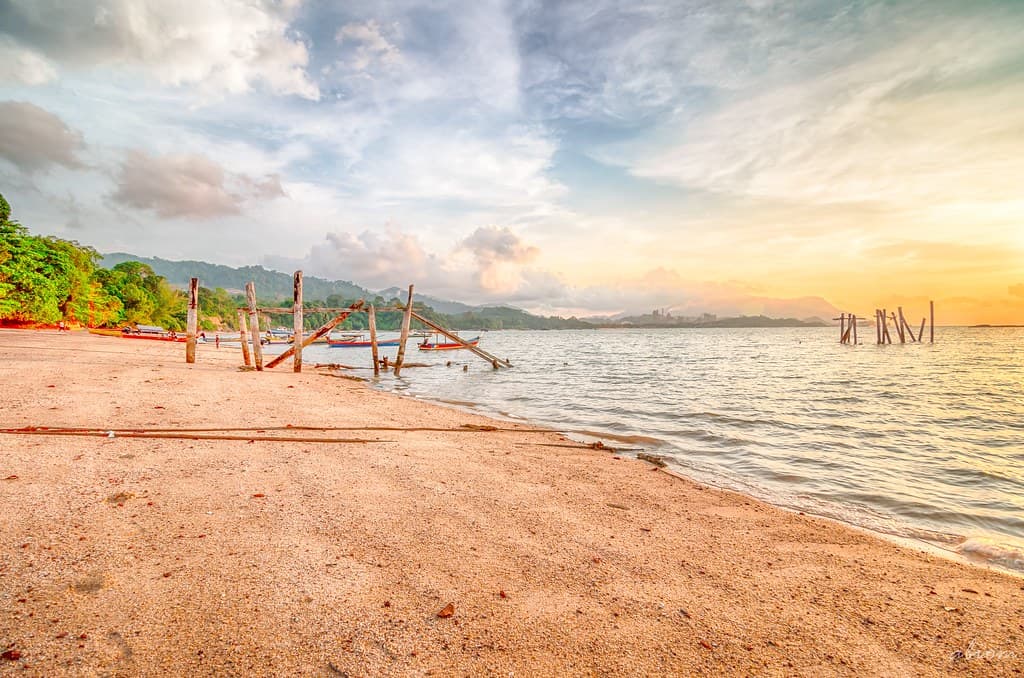
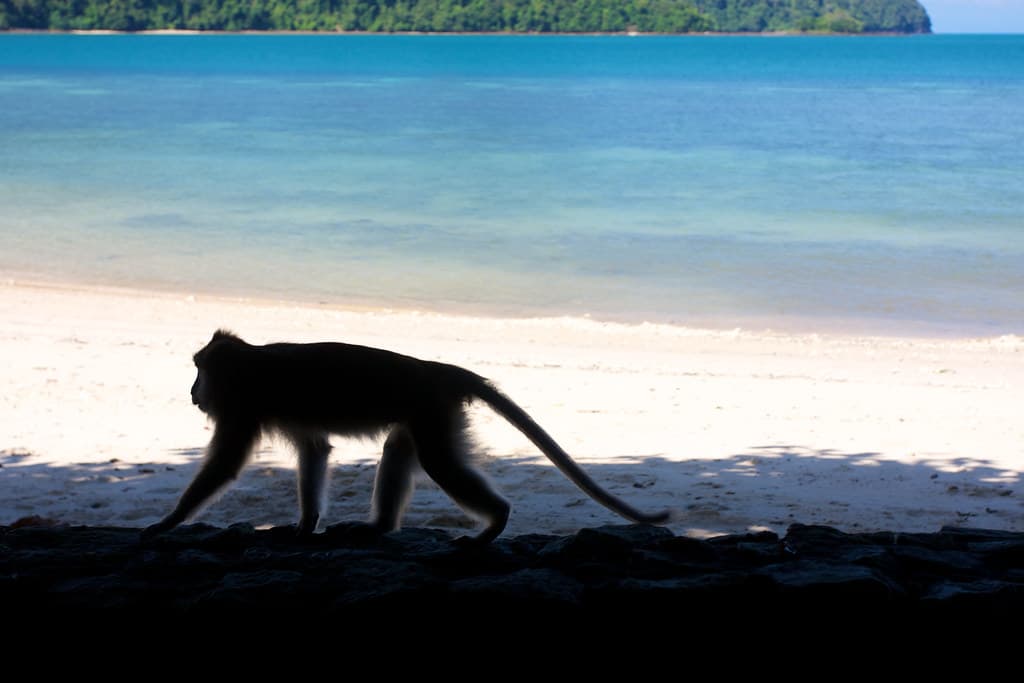
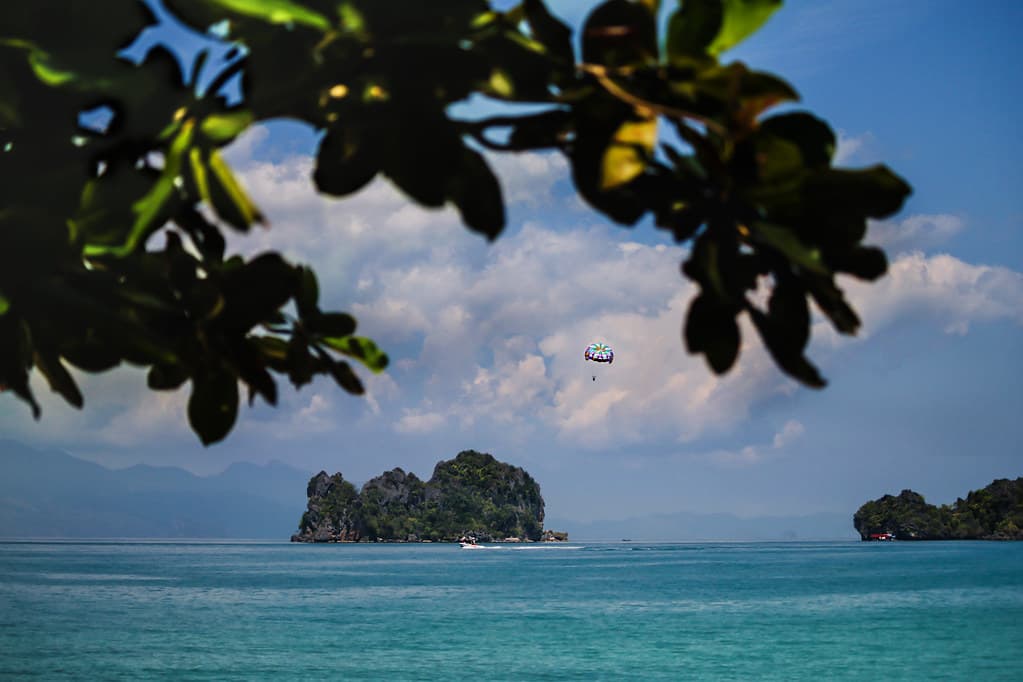
The road to Pasir Tengkorak is half the story: a narrow lane winding past kampung houses and rubber plantations before spitting you onto a beach the tour buses haven't discovered. The sand here tilts toward ochre rather than white, grainy underfoot, scattered with driftwood and the occasional fishing net drying in the sun. Casuarina trees lean over the upper beach, their needle-like leaves carpeting the ground, creating natural shade pockets where you'll spot Malaysian families unpacking tiffin carriers and thermoses of teh tarik. The cove's calm waters make it ideal for wading rather than swimming—at low tide, the sea retreats far enough to expose tidal pools stippled with tiny crabs. To your left, limestone karsts rise abruptly, their bases gnawed smooth by centuries of waves. Monkeys patrol the tree line with the confidence of long-term residents, eyeing any unattended snacks with tactical precision. The beach curves gently, bordered on both ends by rocky headlands that frame views of the Andaman's deeper blue beyond. Come mid-afternoon when the light softens and the heat relents. Spread your picnic on the sand, watch fishermen's boats putt-putt past the headland, and understand why locals guard this spot jealously. There are no sun loungers, no beach bars, no jet skis—just the smell of salt and pine resin, and the particular quiet that belongs to places still unclaimed by guidebooks.
Places, rentals, tours and events within walking and driving distance of Pantai Pasir Tengkorak.
Photos
Pantai Pasir Tengkorak is a sheltered cove beach with generally calm waters, making it safer than Langkawi's more exposed beaches. However, always check local conditions before swimming, as currents can vary. The beach is relatively secluded with limited lifeguard presence, so swim with caution and never alone. The sandy bottom is gentle, suitable for wading. During monsoon season (September to November), waves can be rougher. The beach's hidden nature means fewer people around for emergencies, so prioritize safety and inform someone of your plans.
The best time to visit Pantai Pasir Tengkorak is during Langkawi's dry season from November to April, when sunny skies and calmer seas prevail. Early mornings and late afternoons offer cooler temperatures ideal for picnics and photography, with beautiful light enhancing the scenic cove setting. Weekdays are quieter than weekends, preserving the beach's hidden, tranquil atmosphere. Avoid the monsoon months (September-October) when heavy rains and rough seas make access difficult. Midday visits can be very hot, so bring shade and plenty of water for picnicking.
Pantai Pasir Tengkorak is located on Langkawi's northern coast, accessible by car or scooter. From Kuah town, drive north toward Tanjung Rhu, then follow local signs to the beach—the journey takes approximately 30-40 minutes. The beach is somewhat hidden, so GPS navigation is helpful. Limited informal parking is available near the beach entrance, usually along the roadside. Since it's a quieter, less developed beach, facilities are minimal. Renting a vehicle is the most practical option, as public transportation to this secluded spot is limited or non-existent.
Pantai Pasir Tengkorak is a relatively undeveloped, hidden beach with minimal on-site amenities. There are typically no restaurants, cafes, or permanent food vendors directly at the beach, so bring your own picnic supplies, snacks, and drinking water. Basic facilities like restrooms may be limited or absent. The nearest food options and convenience stores are in nearby villages or along the main road toward Tanjung Rhu. For accommodations, you'll need to stay in Langkawi's main tourist areas like Pantai Cenang, Kuah, or Tanjung Rhu, which offer various hotels and resorts.
Pasir Tengkorak translates to 'Skull Sand Beach' in Malay, a name with local historical significance. According to local lore, skulls and bones were discovered here in the past, possibly from ancient burial sites or historical conflicts. While the exact origins remain part of local legend, the name adds mystique to this scenic cove. Today, it's simply a peaceful, hidden beach popular for picnics and relaxation. The intriguing name contrasts with the beach's tranquil, beautiful setting, making it a conversation piece among visitors exploring Langkawi's quieter northern shores.