
Counting the waves…
Counting the waves…

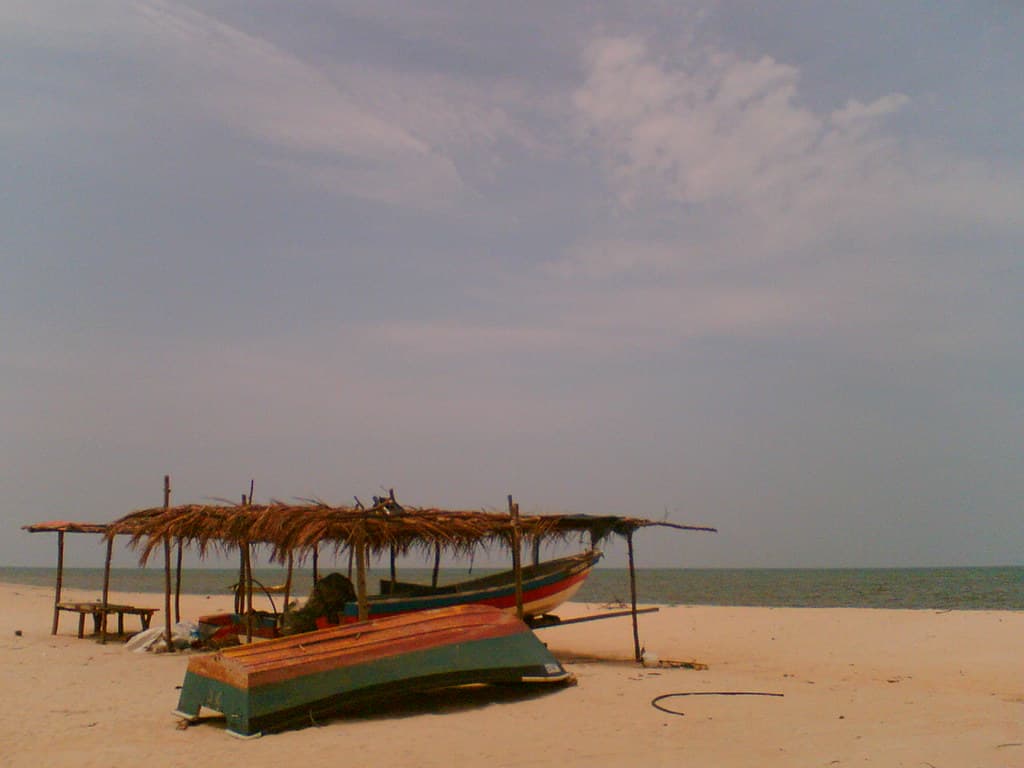
Cherating sprawls along four kilometers of shoreline where casuarina trees lean toward the water and the South China Sea builds slow, forgiving waves. You'll share the sand with local families who arrive with coolers and badminton nets, surfers nursing boards between sets, and the occasional monitor lizard ambling toward the treeline. The beach curves gently north, wide enough that even weekend crowds dissolve into pockets of space. Mornings belong to the fishermen. Watch them work their nets from wooden boats painted turquoise and ochre, the catch sorted directly on the sand before noon. By afternoon, the heat sends most visitors to the shade of beachfront warungs, where you can nurse a coconut and watch kite-surfers skim the shallows. The water stays bathwater-warm year-round, shallow for fifty meters out, tinted amber where rivers bleed tannins into the bay. Sunset here is a ritual, not a photo opportunity. The sky bruises pink and violet over the palms, and the calls to prayer from the village mosque drift across the sand. You'll find yourself lingering longer than planned, dinner eaten with your toes still gritty, the night markets beckoning from the roadside just beyond the dunes. Cherating doesn't dazzle—it simply refuses to let you rush.
Places, rentals, tours and events within walking and driving distance of Cherating Beach.
Photos
Cherating Beach generally has calm waters suitable for swimming, especially during the dry season (March to October). However, conditions vary depending on weather and monsoon patterns. The beach can experience stronger currents and waves during the northeast monsoon (November to February). Always check local conditions before entering the water and swim in designated areas where lifeguards may be present. The gently sloping sandy bottom makes it relatively family-friendly, but supervision of children is essential. Avoid swimming during rough seas or when red flags are displayed.
The best time to visit Cherating Beach is between March and October, during the dry season when you'll enjoy sunny weather, calm seas, and minimal rainfall. This period is ideal for beach activities, surfing, and turtle watching (July to September). Avoid November through February as the northeast monsoon brings heavy rain, rough seas, and strong winds—many resorts and restaurants close during this period. For the most pleasant experience with fewer crowds, consider visiting during the shoulder months of March, April, or September when weather is good and accommodation rates may be lower.
Cherating Beach is located about 47 km north of Kuantan, accessible via Route 3 (the coastal highway). From Kuala Lumpur, it's approximately a 3.5-hour drive. You can drive, take a bus to Cherating from Kuantan (about 45 minutes), or arrange private transportation from Kuantan Airport. Most beach resorts and guesthouses offer parking for guests, and there are public parking areas near the main beach access points along the coastal road. The village is small and walkable once you arrive. Taxis and grab services from Kuantan are also available.
Cherating offers diverse accommodation from budget backpacker hostels to mid-range beach resorts and boutique hotels, many set along the beachfront with a relaxed, bohemian atmosphere. The main village has local Malay restaurants serving fresh seafood, nasi lemak, and satay, plus international cafes catering to tourists. You'll find beachside bars and reggae-themed establishments popular for sunset drinks. Several resorts have on-site restaurants. For more dining variety, Kuantan is 45 minutes away. Most accommodations provide basic amenities; higher-end resorts feature pools and organized activities like turtle watching tours.
Yes, Cherating is home to the Cherating Turtle Sanctuary, a conservation center where green turtles and occasional leatherback turtles nest. The main nesting season runs from July to September. The sanctuary offers night walks during nesting season where you might witness turtles laying eggs or hatchlings being released—a memorable experience for families. Visits are typically organized through the sanctuary or local resorts, as access is controlled to protect the turtles. During the day, you can visit the sanctuary's facilities to learn about turtle conservation efforts and see young turtles being cared for before release.