
Counting the wavesβ¦

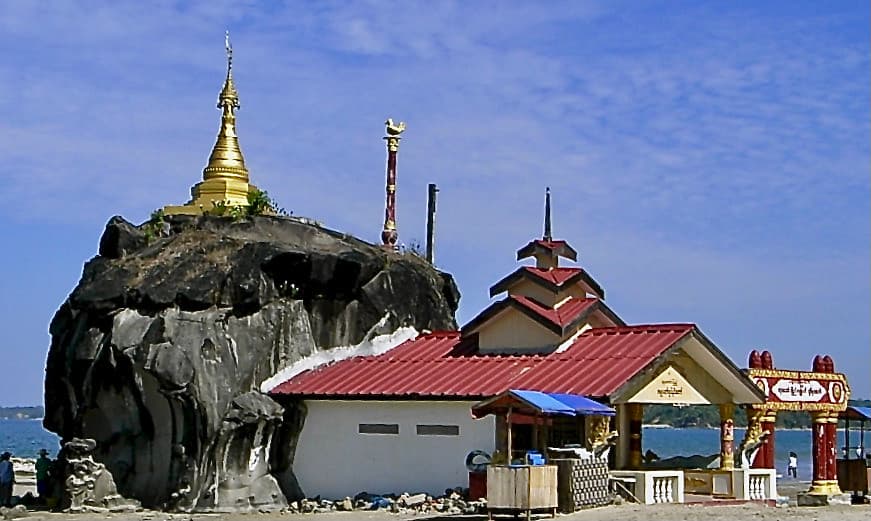
The journey to Thae Phyu Island is an adventure in itself, a short boat ride across jade-green waters that reveals a sight both unexpected and profound. As your vessel nears the shore, the brilliant white of the Water Pagoda emerges, seemingly floating on the sea, its spire reaching towards the cerulean sky. This sacred structure, a beacon of tranquility, stands sentinel over a sliver of beach that feels untouched by time. Step onto the fine, white-shell sand, a soft carpet underfoot, and let the gentle rhythm of the waves wash over you. The air here carries a whisper of salt and serenity, a stark contrast to the bustling mainland. You'll find yourself drawn to the pagoda, its intricate details a testament to devotion, offering a peaceful backdrop to your seaside escape. Beyond the spiritual allure, the beach itself is a canvas of natural beauty. The shallow, warm waters invite a leisurely wade, while the panoramic views of the coastline stretch endlessly, painted in hues of emerald and sapphire. It's a place where every photograph captures a moment of pure, unadulterated wonder, a memory etched in the heart of Myanmar's coast.
Places, rentals, tours and events within walking and driving distance of Thae Phyu Island Water Pagoda Beach.
Photos
Swimming conditions at Thae Phyu Island beach depend on weather and sea conditions, which can vary throughout the year. During calm weather, the waters are generally safe for swimming near the shore, though currents can be unpredictable. Always ask your boat operator about current conditions before entering the water. Life-saving facilities are limited on the island, so exercise caution and stay within shallow areas. It's advisable to swim only when your boat crew is present and can assist if needed. Avoid swimming during monsoon season or rough weather.
The ideal visiting period is during Myanmar's dry season from November through February, when seas are calmest and boat trips are most reliable. During these months, you'll enjoy clear skies, gentle waves, and optimal conditions for photography of both the pagoda and beach. Early morning visits offer cooler temperatures and fewer crowds, while afternoon trips provide beautiful lighting for the white sand. Avoid the monsoon months (May-October) when rough seas can make boat access difficult or impossible, and visibility is reduced by rain and clouds.
Access to Thae Phyu Island is exclusively by boat from Chaung Tha Beach. Local boat operators offer day trips that typically include the island as part of a coastal tour package. You can arrange trips through your hotel, local tour operators, or directly with fishermen at Chaung Tha Beach. Boats usually accommodate groups and departure times are weather-dependent. The journey takes approximately 20-40 minutes depending on sea conditions and boat type. It's recommended to book in advance during peak season and confirm departure times the evening before your planned visit.
Thae Phyu Island has minimal facilities and no formal accommodation, as it's primarily a day-trip destination centered around the water pagoda. Visitors should base themselves in Chaung Tha and take boat tours to the island. There may be occasional local vendors selling drinks or simple snacks, but availability is unreliable. It's strongly recommended to bring your own water, snacks, and sun protection for your visit. Most boat tours last a few hours, allowing time to explore the pagoda, walk the beach, and return to Chaung Tha for proper meals and lodging.
This beach is unique for its combination of Buddhist cultural significance and natural beauty. The water pagoda temple, accessible during low tide, creates a striking architectural focal point against the coastal backdrop. The beach is known for its exceptionally fine white sand composed of crushed shells, which differs from typical Chaung Tha sand. The island setting provides a sense of escape and tranquility away from the mainland's busier beaches. It's an excellent spot for photography enthusiasts seeking to capture the blend of spiritual architecture and pristine coastal scenery.