Counting the waves…
Counting the waves…
A refined fusion of water purity, environmental stability, and communal vibrancy for Sandwich Harbour Beach.
View MethodologyAnalyzed via live sensors and environmental data.
Wave height, wind, and atmospheric stability.
Live footfall and crowd balance metrics.
Community reviews and curated sentiment.
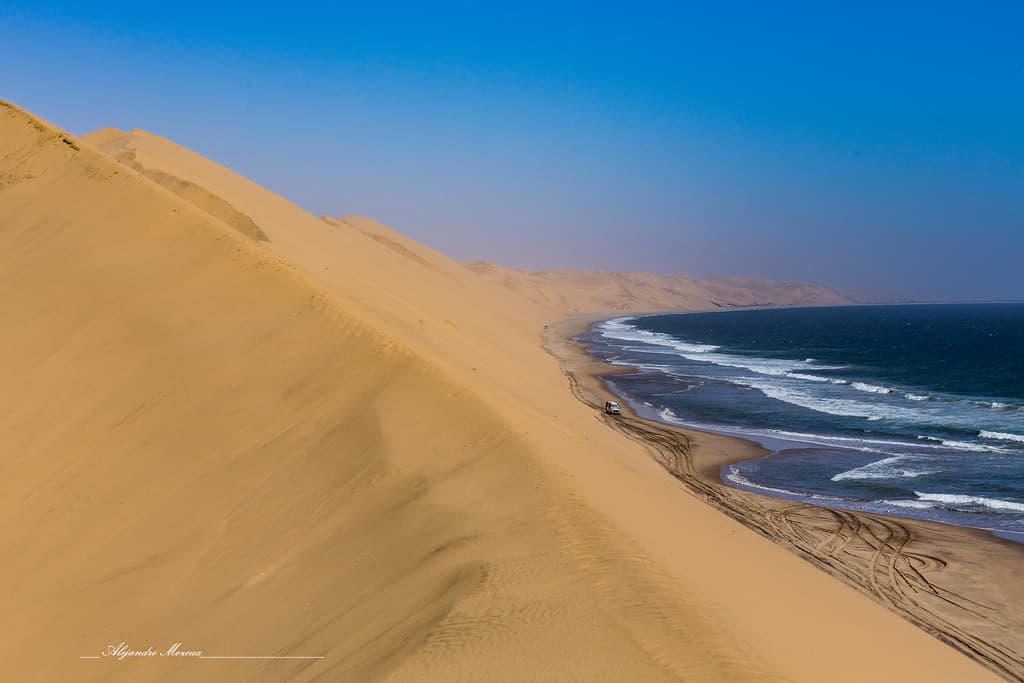
“Prepare for an extraordinary encounter at Sandwich Harbour Beach, where the world's oldest desert dramatically meets the powerful Atlantic. This iconic Namibian site offers a breathtaking panorama of colossal dunes…”
Limited recent visitor reports — live OBI telemetry is your best guide for current conditions.
Sandwich Harbour Beach is not merely a beach; it's a geological marvel, an iconic Namibian landscape where the colossal, ochre dunes of the Namib Desert plunge directly into the cold, churning waters of the Atlantic Ocean. This dramatic convergence creates a visual spectacle unlike anywhere else on Earth, a testament to nature's raw power and artistic flair. The white sand of the beach provides a striking contrast to the towering, wind-sculpted dunes that rise abruptly from the shoreline.
Your journey to Sandwich Harbour is an adventure in itself, typically requiring specialist 4x4 vehicles to navigate the shifting sands and tidal flats. But the effort is richly rewarded with breathtaking vistas at every turn. The air is crisp with the tang of salt, and the only sounds are the roar of the ocean and the whisper of the wind across the dune crests. Keep an eye out for desert-adapted wildlife, from brown hyenas to various bird species that thrive in this unique ecosystem.
Cliff-edge cove with emerald water
Palm trees framing a sunset shore
Capture iconic desert-meets-sea scenes
Ascend towering sand mountains
Witness spectacular coastal sunsets
Prime Visitation
Best Weather|Less Crowds
Where it is
Sandwich Harbour Beach
Walvis Bay, Erongo Region, Namibia
-23.390920°, 14.474670°
Weather
Loading…
Swell
—
Temp
Warm · Restorative
UV Index
Moderate
Wind
—
Tidal State
Last known
Max Sunlight
—
Ideal Shade
—
May - Sep (Peak)
Jan - Dec (Off-season)
Best Weather|Less Crowds
Select a category to load nearby places.
Unlock restaurants, luxury stays and curated maritime experiences within 2km
Sandwich Harbour Beach is generally not recommended for swimming due to the cold Atlantic waters, strong currents, and the presence of marine wildlife. Safety considerations primarily revolve around the tides; access to the beach can be cut off by high tide, trapping vehicles. Always visit with experienced guides who understand the tidal patterns and adhere to their instructions for safety.
The best time to visit Sandwich Harbour Beach is typically during the cooler, drier months from May to October. This period offers more comfortable temperatures for exploring the dunes and coastline. While popular year-round, visiting outside of major holiday periods can offer a slightly less crowded experience, allowing for more serene enjoyment of the iconic landscape.
Access to Sandwich Harbour Beach is strictly by 4x4 vehicle, and it's highly recommended to go with an experienced local guide or tour operator. The route involves driving on soft sand, navigating between towering dunes and the ocean, which requires significant off-road driving skills and knowledge of tidal movements. Independent access is often restricted and risky.
Sandwich Harbour Beach is located within the Namib-Naukluft National Park and is a protected, undeveloped area. There are no commercial food or lodging facilities directly at the beach. Visitors typically experience it as a day trip from Walvis Bay or Swakopmund, with tour operators often providing refreshments or a picnic lunch. Camping is not permitted directly on the beach.
Sandwich Harbour Beach is iconic for its dramatic landscape where towering desert dunes plunge directly into the Atlantic Ocean. This unique confluence of desert and sea creates breathtaking scenery, making it a world-renowned natural wonder. It's also a significant wetland area, attracting diverse birdlife, adding to its unique ecological and visual appeal.
Photos