Counting the waves…
Counting the waves…
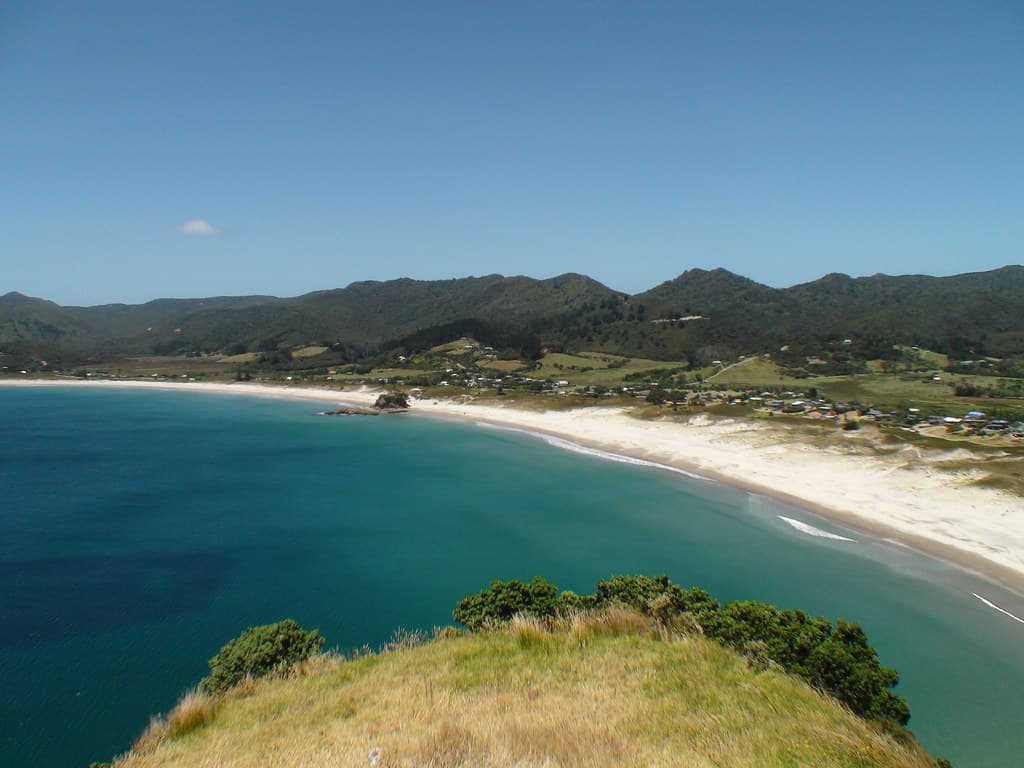
The track to Kaitoke Beach descends through dense coastal forest—nikau palms, tree ferns, and kauri regeneration that hasn't seen logging in decades. Then the trees part and you're facing the full force of the Pacific: a massive sweep of tan sand stretching north and south, waves peeling in multiple directions depending on the banks and swell angle. The beach feels less like a destination and more like a threshold, the edge of New Zealand before the ocean takes over completely. The surf here is powerful and shifty, fed by swells that have wrapped around the island's northern headland and refracted across Kaitoke's exposed coastline. Rips form and dissolve with the tide, banks shift after storms, and the lineup is yours to read without reference to crowds or local knowledge passed down through generations. The sand is coarse and volcanic, the same rust-and-charcoal mix that characterizes Great Barrier's beaches, and the water runs cold year-round from southern currents. Between sessions or swims, the beach offers nothing but space and the sound of waves meeting land. The forest behind provides shade but no facilities, no surf club, no lifeguards. A few trampers appear via the coastal tracks that link Kaitoke to Whangapoua and Awana, their packs heavy with overnight gear. By late afternoon, when the offshore wind dies and the surface turns glassy, the beach takes on an almost prehistoric quality—all scale and power and indifference, beautiful in its refusal to accommodate.
Places, rentals, tours and events within walking and driving distance of Kaitoke Beach.
Photos
Kaitoke Beach is a surf beach on Great Barrier Island, which means it can experience significant waves and varying ocean conditions. The beach is unsupervised with no lifeguard services, so swimmers and surfers must assess conditions independently and take full responsibility for their safety. Surf beaches can have strong currents, rips, and powerful waves, so only confident swimmers and experienced surfers should enter the water. Always check conditions before swimming, never go alone, and be conservative in your assessment. The wilderness setting means emergency help may be far away.
For surfing, Kaitoke Beach is best visited during New Zealand's warmer months from November to April, though surf conditions depend on swells which can occur year-round. Summer months (December-March) offer the most pleasant weather for beach activities and camping. For fewer crowds and more solitude, any time outside peak summer holidays works well, as Great Barrier Island remains relatively quiet. Check surf forecasts if wave riding is your goal. The wilderness character means the beach is rarely crowded regardless of season, offering peaceful experiences for those who make the journey.
Reaching Kaitoke Beach requires traveling to Great Barrier Island first, either by ferry from Auckland (4-5 hours) or by flight (30 minutes). Once on the island, you'll need a vehicle to reach the beach, ideally a 4WD as Great Barrier Island roads are often unsealed and can be challenging. Vehicle rentals are available but limited, so book in advance. The beach's exact location and access route may require local knowledge or good navigation tools. The remote nature means the journey is part of the adventure, requiring preparation and self-sufficiency.
Kaitoke Beach is located in a wilderness area with minimal development and no immediate facilities. There are no restaurants, shops, or services directly at the beach, so visitors must bring all necessary supplies including food, water, and emergency equipment. Great Barrier Island has limited commercial infrastructure overall, with basic services mainly in Tryphena, Claris, and Port Fitzroy. Accommodation options on the island include campgrounds, holiday homes, and small lodges, but availability is limited and booking ahead is essential. The beach experience is rustic and self-sufficient, appealing to those seeking genuine wilderness.
Kaitoke Beach is distinguished by its remote wilderness setting on Great Barrier Island, offering a surf experience far removed from urban areas and crowds. Unlike more accessible surf beaches, reaching Kaitoke requires significant effort, including a ferry or flight journey and navigating unsealed roads. This isolation means uncrowded waves and pristine natural surroundings. The beach maintains a wild, undeveloped character that's increasingly rare in New Zealand. It appeals to adventurous surfers and beach lovers who value solitude and are comfortable with self-sufficiency, limited facilities, and the raw beauty of untouched coastal landscapes.