Counting the waves…
Counting the waves…
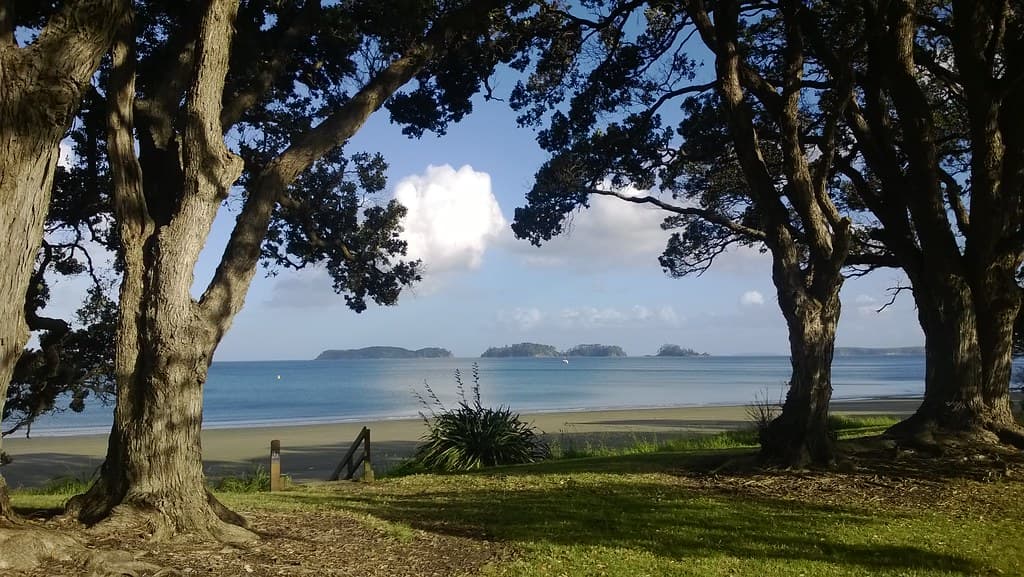
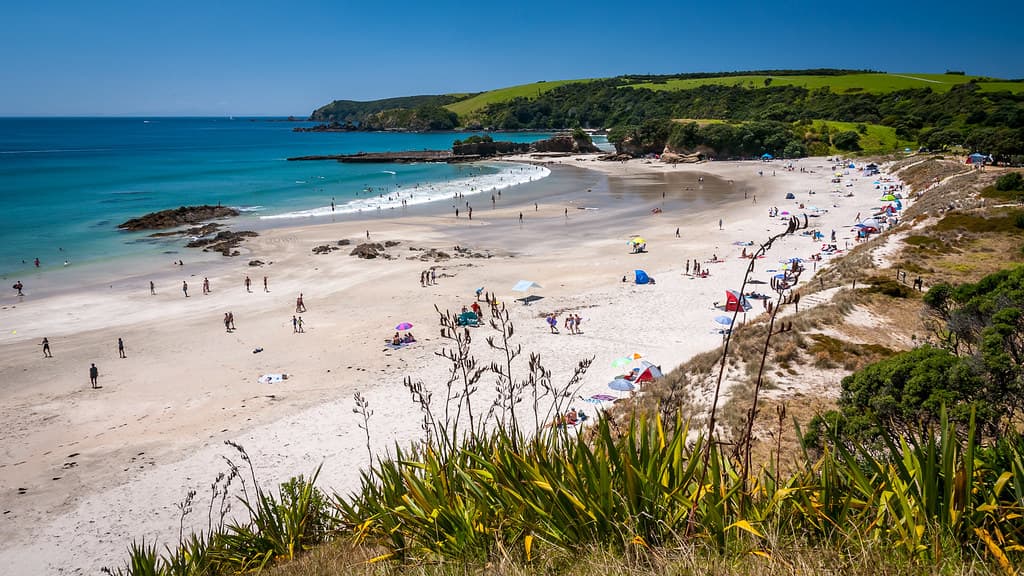
The farm road descends past restored outbuildings—stone walls mortared by hands dead a century—and splits toward the beach or the historic homestead perched on the slope above. Scandretts Bay announces itself gradually: first the glint of water through trees, then the full arc of sand between rocky points, and finally the realization that you've stepped into a landscape where human settlement and coastal ecology have reached an accidental equilibrium. The beach itself runs perhaps three hundred meters, fine sand giving way to coarser shingle near the high-tide mark, backed by the kind of gnarled pohutukawa that take decades to achieve their sculptural grace. You'll spread your picnic on grass above the beach where the old farm lawn meets native regeneration, pohutukawa roots creating natural seating and shade dappling the ground in patterns that shift with the sun's arc. The swimming is gentle—wade out over sand that firms underfoot, water temperature that moderates in the bay's sheltered embrace, depth that increases gradually enough for cautious swimmers and small children. At low tide, the bay reveals rock platforms where oystercatchers probe for crabs and anemones flower in tidal pools left behind by the retreating gulf. The farm buildings provide the beach's unusual context: you swim with history watching from the hillside, stone barns and cottage ruins testament to the Scandrett family's hundred-year tenure. The regional park designation means walking tracks thread through regenerating bush behind the beach, connecting the bay to headland lookouts where you can see the full sweep of the Mahurangi's island-dotted waters.
Places, rentals, tours and events within walking and driving distance of Scandretts Bay.
Photos
Scandretts Bay is generally considered family-friendly and safe for swimming due to its sheltered, cove-like nature which protects it from strong waves and wind. The calm waters make it suitable for children and less confident swimmers. However, as with any beach, supervision is essential, and conditions can change with tides and weather. There are no lifeguard patrols, so visitors swim at their own risk. Check local weather and tide conditions before entering the water, and be aware of boat traffic in the Mahurangi area.
The best time to visit Scandretts Bay is during New Zealand's summer months from December to March when weather is warmest and most settled. Visiting during weekdays or shoulder seasons (late spring and early autumn) helps avoid weekend crowds, as this is a popular local picnic and swimming spot. Early morning visits offer the most peaceful experience with better chances of wildlife spotting. The bay's sheltered position means it can be pleasant even on days when other Auckland beaches are windswept, though winter months are generally cooler and less ideal for swimming.
Scandretts Bay is located in the Mahurangi East area, approximately 60 kilometers north of Auckland's city center. Access is by private vehicle, involving a scenic drive through rural areas followed by a walk down to the beach. The bay sits within or near heritage farmland, so visitors should respect private property and use designated access points. Some visitors also arrive by boat, anchoring in the sheltered bay. The remote location means public transport options are very limited, making a car essential for most visitors planning a trip to this hidden spot.
Scandretts Bay itself has minimal facilities, so visitors should bring their own food, water, and supplies for picnicking. The nearest towns with cafes, restaurants, and grocery stores are in the wider Mahurangi area, requiring a drive back toward main roads. Accommodation options in the region include holiday homes, bed and breakfasts, and camping facilities, though not immediately at the beach. The Mahurangi East area is known for rural and coastal holiday rentals. Planning ahead and packing provisions is recommended, as this is a quiet, low-key destination without commercial beachfront development.
Scandretts Bay stands out for its combination of heritage farm scenery and sheltered coastal beauty, offering visitors a glimpse of rural New Zealand alongside beach relaxation. The bay's connection to historic farmland creates a distinctive pastoral-meets-coastal atmosphere not found at more developed Auckland beaches. Its hidden, local character means fewer crowds and a more authentic, peaceful experience. The sheltered waters and scenic surroundings make it particularly appealing for families seeking calm swimming conditions and picnic spots. The bay represents the quieter, less commercialized side of the Mahurangi coast, valued by those who discover it.