Counting the waves…
Counting the waves…
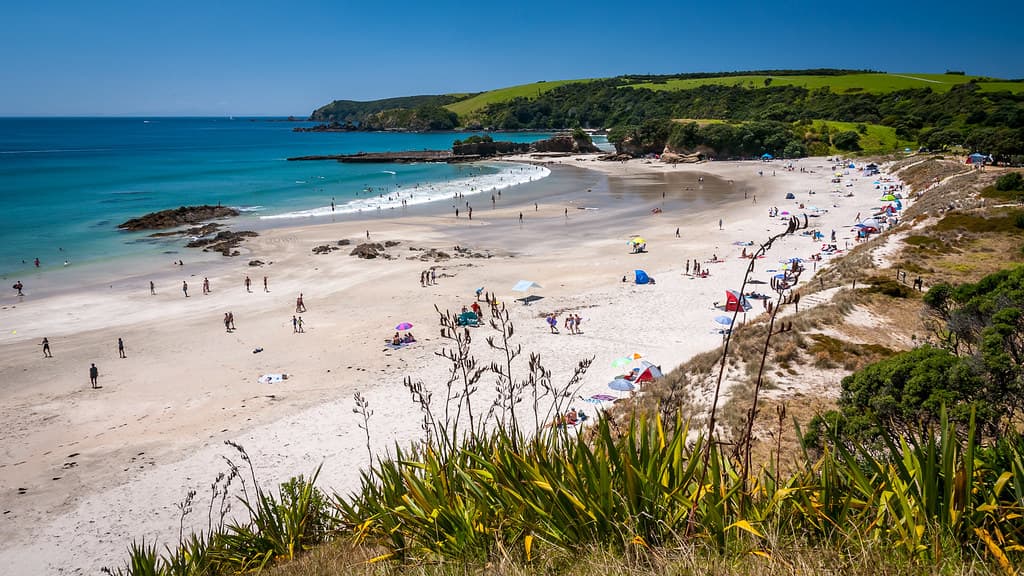
The road narrows to gravel before delivering you to the regional park boundary, a symbolic and literal threshold—beyond this fence, pest-free sanctuary land where native birds thrive and the coastline has been allowed to remember its pre-settlement character. Anchor Bay curves between rocky headlands, its sand finer and paler than most Auckland beaches, the water taking on a turquoise cast when the sun hits the right angle. You'll spread your towel and understand immediately why this beach claims its reputation: the view extends uninterrupted to offshore islands, the water is genuinely transparent, and the surrounding hills wear native bush rather than subdivision roofs. Snorkeling here reveals what most Auckland harbour swimming conceals—kelp beds swaying in the current, schools of juvenile fish darting between rocks, the occasional stingray gliding over sand. The water stays calmer than the gulf beaches, protected by the peninsula's geography, warm enough in summer that you'll swim until your fingers prune. Families claim the beach's southern end where the creek mouth creates a natural paddling pool; couples and photographers favor the northern rocks where pohutukawa lean photogenically over tide pools. The farmland behind the beach is part of the conservation picture, heritage breeds grazing slopes that tui and bellbirds patrol from fence posts. You're an hour's drive from Auckland's centre, but the distance delivers a quality of quiet and clarity that justifies the petrol. No cafés, no commercial anything—just carparks, walking tracks, and coastline that's been consciously protected rather than developed. Bring everything you'll need; the nearest shops are back toward Matakana.

Places, rentals, tours and events within walking and driving distance of Anchor Bay.
Photos
Anchor Bay is considered one of the safer swimming beaches in the Auckland region, thanks to its location within the protected Tāwharanui Regional Park. The bay's sheltered position creates calmer conditions than open coast beaches. The clear water and marine reserve status make it excellent for snorkeling, with diverse marine life visible close to shore. However, no lifeguard service is provided, so swimmers should exercise caution and stay within their abilities. Check conditions before entering the water and be mindful of currents around rocky areas.
Summer (December-February) offers the best weather for swimming and snorkeling, with warm water temperatures and calmer seas. However, this is also the busiest period, particularly on weekends and public holidays when parking can fill early. For fewer crowds, visit during weekdays or shoulder seasons (late spring and early autumn), which still offer pleasant conditions. Low tide reveals rock pools perfect for exploring. Arrive early in the day during peak season to secure parking, as the park has limited capacity and occasionally closes when full.
Anchor Bay is located within Tāwharanui Regional Park, approximately 80-90 kilometres north of Auckland (about 90 minutes' drive). Take State Highway 1 north, then follow signs through Matakana to Tāwharanui. The final stretch involves rural roads. Entry to the regional park is free, but parking is limited and fills quickly on fine summer weekends. Public transport does not service the area, so a private vehicle is necessary. The beach is a short walk from the main car park through the coastal park.
Tāwharanui Regional Park has no commercial facilities, so visitors must bring all food, water, and supplies. Basic toilet facilities are available at the car park. The nearest shops and cafés are in Matakana village, about 20 minutes' drive away. A campground operates within the park, offering basic camping facilities (bookings essential, especially in summer). Alternatively, Matakana and nearby Omaha offer holiday homes, B&Bs, and boutique accommodation. Most visitors treat Anchor Bay as a day trip from Auckland, bringing picnic supplies.
Anchor Bay is distinguished by its pristine white sand, remarkably clear turquoise water, and protected marine reserve status, rare for the Auckland region. The beach sits within a working conservation area where native wildlife is protected, creating an unspoiled natural environment. The combination of white sand, pohutukawa-lined shores, and excellent snorkeling makes it feel more tropical than typical Auckland beaches. Being inside Tāwharanui Regional Park means limited development and careful environmental management, offering a true wilderness beach experience just over an hour from New Zealand's largest city.