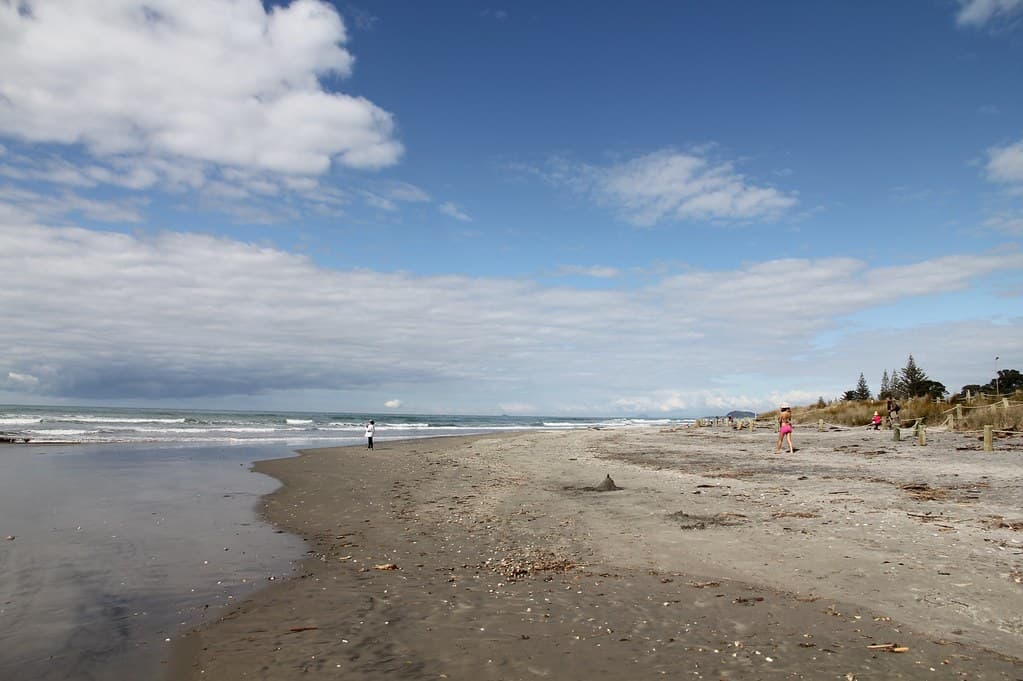
Counting the waves…
Counting the waves…
The track begins at the end of Beach Road, a well-worn path that rises steeply through nikau palms and puriri trees. Your breath comes harder as the incline steepens, but the forest canopy keeps you cool. Tui calls echo through the green, and tree ferns arch overhead. Then the path crests and drops, and Homunga Bay opens below: a crescent of sand tucked between bush-clad headlands, waves folding onto a shore that curves just so. The sand is coarser here than Waihi's main beach, mixed with rounded pebbles and scattered with driftwood. Rock platforms jut into the bay at both ends, creating tide pools that fill with anemones and small fish. The water shifts from pale aquamarine in the shallows to deep navy beyond the break. You spread your towel on sand still cool from the shade of the eastern headland, and the bay feels private, protected, yours for the afternoon. The cliffs frame everything. To the north, rock strata tilt and fold in geological drama; to the south, pohutukawa cling to improbable ledges. When the sun reaches the right angle, the entire bay glows gold and the water turns translucent over the rocks. The track back up tests your calves, but you pause halfway to catch your breath and the view: Homunga Bay shrinking below, the ocean extending forever, and not another soul on the sand.
Places, rentals, tours and events within walking and driving distance of Homunga Bay.
Photos
Homunga Bay is a small, rocky cove accessed by walking track, and swimming conditions vary significantly with tides and swell. The bay has rocks and uneven terrain rather than a sandy swimming beach, making it less suitable for casual swimming than wider sandy beaches. There are no lifeguard patrols, and the remote location means help is not readily available. Visitors should exercise caution, wear appropriate footwear for rocky surfaces, and be mindful of waves washing over rocks. The bay is better suited for scenic appreciation, rock pooling, and photography than swimming.
The best time to visit Homunga Bay is during settled weather with calm seas, typically in summer (December-February) and shoulder seasons (November, March-April) when conditions are most pleasant for the walk in. Early morning or late afternoon provides beautiful light for photography, given the bay's Instagrammable tag. Visiting during weekdays and outside peak holiday periods ensures fewer crowds and a more intimate experience. Check tide times, as lower tides may reveal more of the bay's coastal features. Avoid visiting during storms or high surf when the track may be slippery.
Homunga Bay is reached via a walking track from the Waihi Beach area, offering a remote-feeling experience despite being relatively close to town. The exact trailhead location should be confirmed locally, but access typically involves parking near Waihi Beach and following coastal walking paths. The track may be uneven and require moderate fitness. Wear sturdy walking shoes and bring water. Allow time for the return journey and don't underestimate the walk. Check with the Waihi Beach visitor center for current track conditions and specific directions, as coastal tracks can be affected by weather and erosion.
Homunga Bay is a remote cove with absolutely no facilities—no toilets, shelters, or fresh water. Visitors must be completely self-sufficient, bringing all necessary supplies including water, snacks, sun protection, and any safety equipment. The nearest services are in Waihi Beach township (distance varies depending on access point), which has cafes, shops, and accommodation. Pack out all rubbish to preserve the bay's pristine character. Given the walk required to reach the bay, pack light but bring essentials. This is a wilderness experience requiring preparation and respect for the natural environment.
Homunga Bay stands out for its dramatic coastal scenery and sense of remoteness despite being near Waihi Beach. The walking track access filters casual visitors, creating a more secluded experience. The rocky cove setting offers striking photographic opportunities with rugged headlands, rock formations, and coastal views that differ markedly from the region's sandy surf beaches. It's particularly appealing to couples seeking a romantic, off-the-beaten-path destination and photographers chasing Instagram-worthy coastal landscapes. The bay rewards those willing to make the effort with a distinctly wild, untouched character.