Counting the waves…
Counting the waves…
A refined fusion of water purity, environmental stability, and communal vibrancy for Ōtanerito Bay.
View MethodologyAnalyzed via live sensors and environmental data.
Wave height, wind, and atmospheric stability.
Live footfall and crowd balance metrics.
Community reviews and curated sentiment.
“You'll hike through Hinewai Reserve to reach Ōtanerito, descending through podocarp forest and regenerating scrub before the bay opens below—a crescent of dark sand cupped between headlands, seals basking on offshore…”
Limited recent visitor reports — live OBI telemetry is your best guide for current conditions.
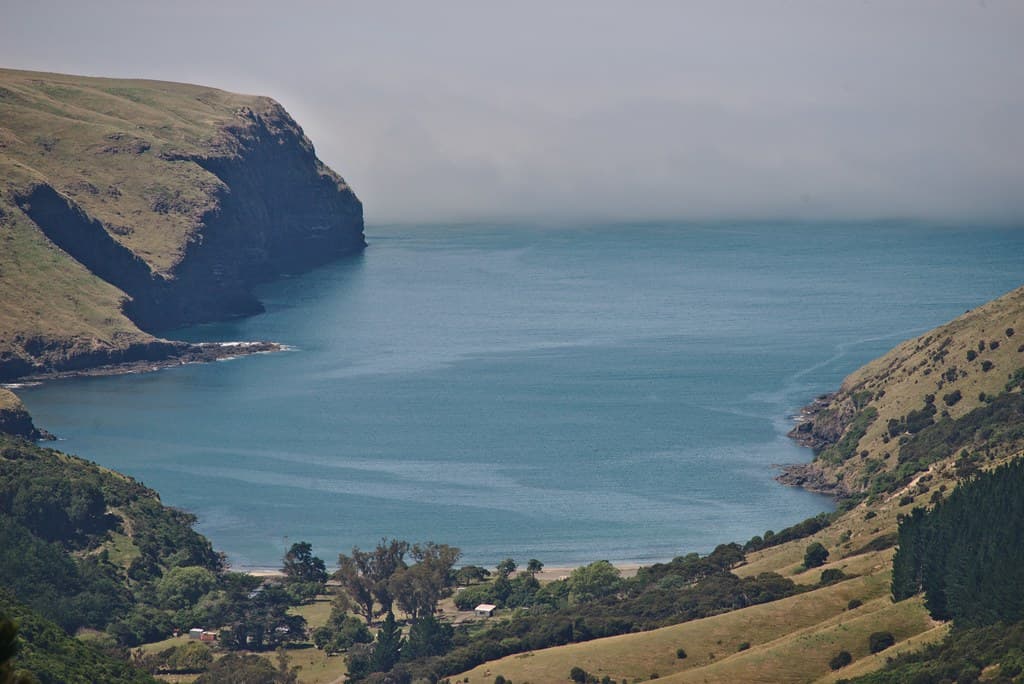
The trail to Ōtanerito Bay begins in silence, threading through Hugh Wilson's restoration dream at Hinewai Reserve. Rimu and totara saplings crowd the path, and bellbirds punctuate the green hush with their liquid calls. The track drops steadily, trading forest shade for coastal scrub, and then suddenly you're standing above the bay—a perfect half-moon of black volcanic sand backed by cliffs draped in native vegetation.
There's no road, no houses, no infrastructure. The beach exists in a rare state of undevelopment, protected by the reserve and the forty-minute walk required to reach it. The sand is coarse and dark, flecked with fragments of shell and pumice. Small waves fold onto the shore with a rhythmic whisper, and the water is deep blue, clear enough to watch rays gliding over sand ripples. Fur seals claim the rocks at either end of the bay, and occasionally one will surf into the shallows, curious about human visitors.
 Credit: Unsplash
a body of water with boats in it
 Credit: Unsplash
aerial photography of grass and trees
Regenerating podocarp forest and birdlife
Offshore rocks and curious swimmers
Warm volcanic grains and clear shallows
Prime Visitation
Best Weather|Less Crowds
Where it is
Ōtanerito Bay
Akaroa, Canterbury, New Zealand
-43.843000°, 173.067400°
Weather
Loading…
Swell
—
Temp
Warm · Restorative
UV Index
Moderate
Wind
—
Tidal State
Last known
Max Sunlight
—
Ideal Shade
—
Jan - Dec (Peak)
Mar - Nov (Off-season)
Best Weather|Less Crowds
Select a category to load nearby places.
Unlock restaurants, luxury stays and curated maritime experiences within 2km
Ōtanerito Bay is a secluded bay with relatively calm waters compared to fully exposed ocean beaches, though conditions depend on weather and swell. Swimming is possible but requires caution as the bay is remote with no lifeguard services or emergency assistance readily available. Water temperatures are cool year-round, typical of Banks Peninsula. The bay's sheltered position offers some protection from prevailing winds, making it more suitable for confident swimmers during settled weather. Most visitors come for the scenic beauty and peaceful atmosphere rather than swimming. Always assess conditions before entering the water, never swim alone, and be conservative given the isolated location.
The best time to visit Ōtanerito Bay is during New Zealand's summer and early autumn (December through March) when weather is most settled and days are long, ideal for photography and coastal walks. The bay's connection to Hinewai Reserve makes it appealing for nature lovers year-round, though summer offers the most comfortable conditions for extended exploration. For fewer crowds and intimate experiences ideal for couples, visit during shoulder seasons (November or March-April) or weekdays. Early morning and late afternoon provide the best light for photography given the bay's dramatic coastal setting. Winter visits are possible but require appropriate clothing for changeable conditions.
Accessing Ōtanerito Bay involves traveling on remote Banks Peninsula roads. From Akaroa, drive along Summit Road or coastal routes toward the southeastern peninsula, following signs toward the Hinewai Reserve area. The journey typically takes 40-60 minutes on narrow, winding roads that may be partially unsealed. Road conditions can be challenging, particularly in wet weather, and a suitable vehicle is important. Some access points to the bay involve walking tracks through private land or the Hinewai Reserve. It's advisable to research specific access routes beforehand, respect any private property, and ensure you're prepared for remote travel with limited mobile coverage.
Ōtanerito Bay is an extremely remote location with no commercial facilities, accommodation, or food services. The bay and surrounding area are essentially wilderness, requiring visitors to be completely self-sufficient. Bring all food, water, and supplies you'll need. The nearest services are in Akaroa township, approximately 40-60 minutes away by winding roads, where you'll find restaurants, cafes, shops, and various accommodation options. Some visitors may arrange stays in remote holiday homes or farm stays on Banks Peninsula, but these require advance booking. Mobile phone coverage is unreliable or absent in this isolated area, so plan accordingly.
Ōtanerito Bay is geographically linked to Hinewai Reserve, a significant privately-owned ecological restoration project on Banks Peninsula. The reserve encompasses over 1,200 hectares of regenerating native forest and coastal areas, dedicated to conservation through natural processes. Walking tracks from the reserve can lead toward coastal areas including or near Ōtanerito Bay, offering opportunities for quiet coastal walks through regenerating bush. The bay shares the reserve's wild, undeveloped character, making it appealing for nature enthusiasts and those seeking solitude. While access arrangements should be confirmed, the area represents Banks Peninsula's conservation efforts and provides an Instagrammable, secluded coastal experience valued by couples and photographers.
Photos