

While most visitors congregate on Anaura Bay's main beach, the northern section offers a different character—wilder, less manicured, preferred by locals who value the separation provided by the rocky point and stream crossing. The sand here darkens to charcoal near the waterline, a mix of iron-rich sediment and crushed shell. At low tide, platforms of reef emerge offshore, creating channels where kahawai chase baitfish in silver flashes.
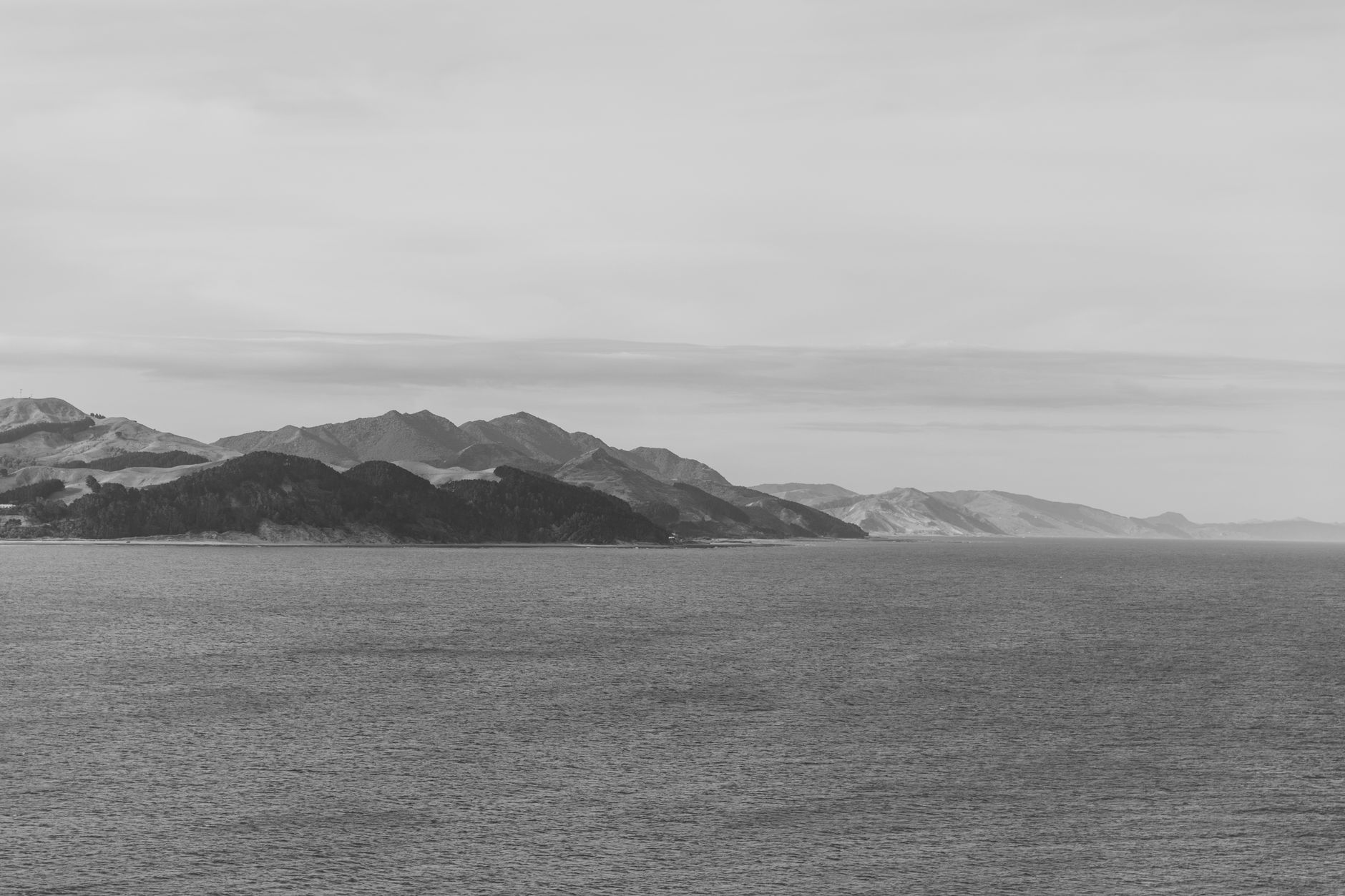
“The local side of Anaura Bay where wading the stream grants access to a fishing beach largely untouched by the tourism that's discovered the southern shore.”
 Credit: Pexels
Black and white photo of New Zealand coastline with mountains and calm sea.
Pohutukawa and karaka trees crowd the backshore, their canopies dense enough to provide genuine shade. In the leaf litter beneath, you'll find karaka berries—toxic until properly prepared, but an important traditional food source. Oystercatchers nest in the dune grass above the high-tide mark, and they'll scold you vigorously if you venture too close in spring. The stream that divides the beaches runs tea-brown from tannins, cool against your legs as you cross.
Fishing is the primary activity here. You'll see kontī being hauled from the sand, and in summer months, families set up camp for days, smoking their catch over manuka coals. The northern headland blocks southern swells but funnels the wind, so conditions can be gusty even when the main bay lies calm. At dawn, mist hangs over the stream mouth, and the only sounds are waves on stones and the piping of dotterels.


