Counting the waves…
Counting the waves…
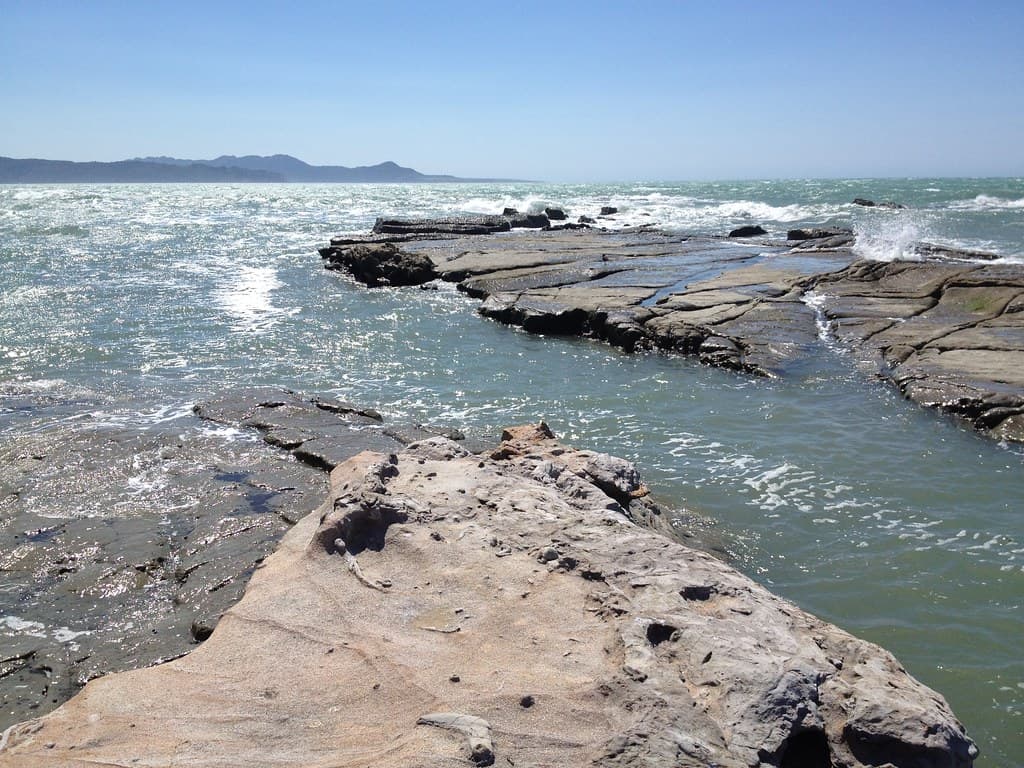
Onepoto Bay exists at a scale that feels almost implausible—a miniature paradise carved from rugged coastline, protected by headlands that turn aside the easterly swells that punish beaches further north. The water inside the bay gradates from aquamarine in the shallows to sapphire where the bottom drops away, and you can see every detail of the sandy bottom through ten feet of water so clear it seems absent, just air between you and the shells and stones below. Pohutukawa trees frame the bay, their gnarled trunks testament to decades of wind and salt, their summer blossoms attracting tui whose songs compete with the gentle lap of waves. At low tide, rock platforms emerge on both sides of the cove, creating pools where hermit crabs scuttle and anemones wave translucent tentacles. You can snorkel from one headland to the other in twenty minutes, following schools of spotties and koheru that dart between the kelp forests anchored to the volcanic rock. The bay's intimacy means it fills quickly—six or seven families transform it from secluded to crowded—but arrive early or late and you'll have it to yourself, the water warm enough by afternoon to swim for hours without numbing. A small stream trickles from the hillside, creating a freshwater pool behind the beach where kids build dams while parents doze beneath the pohutukawa shade. The bay holds the afternoon sun long after nearby beaches fall into shadow, making it precious for those final hours of warmth before evening chill arrives off the Pacific.
Places, rentals, tours and events within walking and driving distance of Onepoto Bay.
Photos
Onepoto Bay can offer reasonable swimming conditions due to its cove structure, which provides some natural protection from open ocean swells. However, there are no lifeguard services at this remote location, so swimmers must exercise personal judgment and caution. The bay's sheltered nature typically creates calmer conditions compared to fully exposed beaches, and the turquoise waters are inviting during settled weather. Always assess conditions before entering the water, watch for rips and currents, and never swim alone. Summer months generally offer the safest swimming with warmer water and calmer seas. Be mindful of changing tides and avoid swimming during rough weather or strong winds.
The ideal time to visit Onepoto Bay is during New Zealand's summer season from December through March, when you'll experience the best weather, warmest temperatures, and calmest ocean conditions that showcase the bay's beautiful turquoise waters. These months offer optimal conditions for swimming, photography, and enjoying the scenic coastal setting with your partner. Shoulder seasons (November and April) can also be pleasant with fewer visitors and still-reasonable weather. The remote location means crowds are rarely an issue even during peak summer. Visit during mid-morning to early afternoon for the best light on the water, though sunset can be spectacular. Avoid winter months when conditions can be cold and rough.
Onepoto Bay is located near Hicks Bay on the northern East Cape, accessed via State Highway 35. From Te Araroa township, drive toward Hicks Bay—the distance is relatively short, typically 15-20 minutes. From Gisborne, the journey takes approximately 3-3.5 hours heading north and east around the Cape (about 170-180 kilometers). Access roads may require some local knowledge, so GPS navigation or asking locals in Te Araroa or Hicks Bay is recommended. The roads are generally sealed main routes with some narrower sections. A standard vehicle should suffice in good weather. Plan for a leisurely drive through spectacular coastal scenery along this remote stretch of highway.
Accommodation and dining options near Onepoto Bay are limited but exist primarily in nearby Hicks Bay and Te Araroa. Hicks Bay offers a few lodges, motels, and holiday rentals that should be booked in advance, especially during summer. Te Araroa has basic facilities including a general store. Some properties may offer meals, but independent travelers should plan to be largely self-sufficient. The nearest substantial services are much further away in Gisborne or Opotiki. Many visitors bring their own food supplies and cook at their accommodation. Camping options may be available locally. Given the remote location, it's wise to stock up on essentials before arriving in the area.
Onepoto Bay's distinctive turquoise waters result from a combination of factors that make it particularly photogenic and memorable. The sheltered cove structure, sandy bottom, and clarity of the water create stunning color gradations from deep blue to bright turquoise, especially visible in sunshine and calm conditions. The bay's relatively shallow areas near shore allow light to reflect beautifully, enhancing the tropical-like appearance unusual for New Zealand's East Coast. This natural phenomenon is best appreciated during summer with good weather and clear skies. The contrast between the vibrant water colors, surrounding green headlands, and often-empty beach creates an intimate, almost secret paradise feel that appeals particularly to couples and photographers seeking hidden coastal gems.