Counting the waves…
Counting the waves…

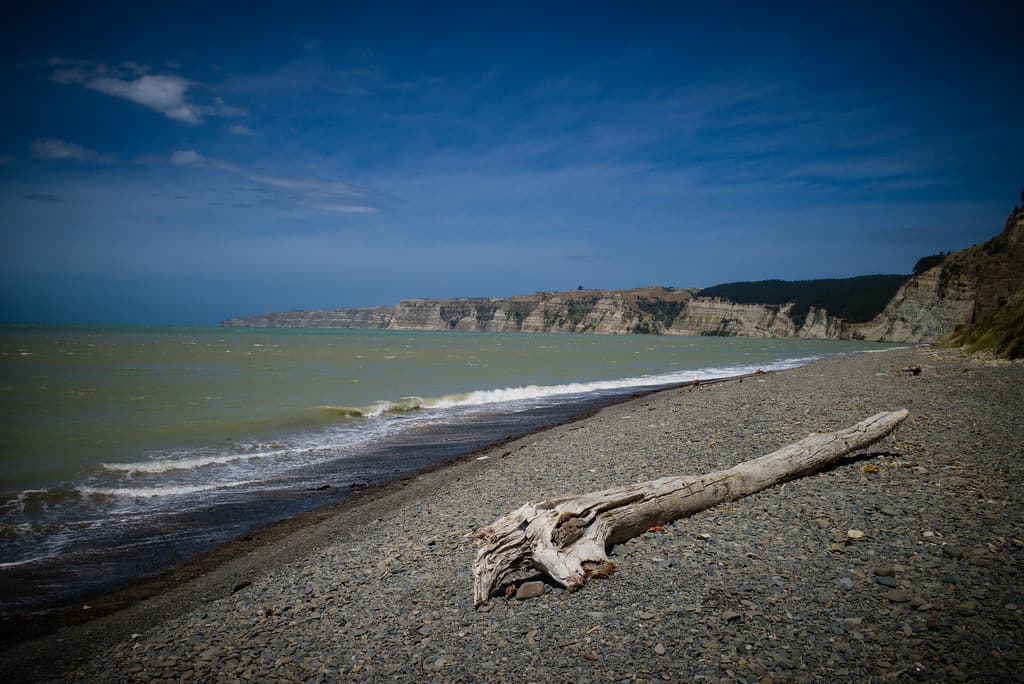
The shoreline rattles with rounded greywacke pebbles that shift beneath your feet as waves withdraw. Behind you, grassy headlands slope toward the water; ahead, the fractured sandstone bluffs of Cape Kidnappers rise in amber and ochre bands, their surfaces pocked with nesting gannets during summer months. The wind carries salt and the faint ammonia tang of seabird colonies. Low tide exposes tidal platforms where rock pools hold anemones and small crabs. Families spread picnic rugs on the upper beach while children select stones for skipping. The beach curves gently northward, offering unobstructed sightlines toward the cape's famous saddle formation. During spring, lambs graze the clifftop pastures above. You'll find no facilities here—just a gravel carpark and a wooden access path. The lack of amenities preserves the coastline's raw character. Photographers arrive before dawn to capture the cliffs under alpenglow, while walkers time their visits to the tidal windows that permit foot access to the gannet plateau. The beach itself remains secondary to the drama unfolding in the vertical landscape beyond.
Places, rentals, tours and events within walking and driving distance of Clifton Beach.
Photos
Clifton Beach is generally suitable for swimming, though the pebble shore and occasional surf require moderate caution. Lifeguards are not regularly stationed here, so swimmers should assess conditions independently and never swim alone. The beach can experience moderate swells and currents, particularly during unsettled weather. Families should supervise children closely, as the pebble entry can be slippery. The beach is more sheltered than fully exposed ocean beaches, but checking local forecasts and tide times before swimming is always recommended.
Clifton Beach is most rewarding during settled weather conditions, typically December through April, when clear skies showcase the dramatic Cape Kidnappers backdrop. Summer offers warmest swimming temperatures and optimal conditions for exploring the iconic gannet colony accessible from the beach. Spring (September-November) brings fewer visitors while maintaining pleasant weather. Low tide is ideal for walking along the coast toward Cape Kidnappers. Early morning and late afternoon provide the best light for photography of the striking coastal cliffs and sea stacks.
Clifton Beach is located approximately 20 kilometres south of Napier via Clifton Road. The beach requires private vehicle access, as public transport is not available to this location. Parking is available near the beach, though space can be limited during peak summer periods. The final section of road is steep and winding, requiring careful driving. From Napier, follow the coastal route through Te Awanga. Allow 25-30 minutes driving time from central Napier. Four-wheel drive is not necessary for beach access itself.
Clifton Beach itself has limited commercial facilities, so visitors should plan accordingly. The nearby settlement of Te Awanga (10 minutes north) offers a winery, café, and limited accommodation. Most visitors base themselves in Napier or Havelock North, both offering full dining and lodging options within 20-30 minutes' drive. It's advisable to bring picnic supplies, drinking water, and sunscreen for a beach day, as no shops or restaurants operate directly at Clifton. The beach suits self-sufficient day trips.
Clifton Beach serves as the primary public access point for walking to Cape Kidnappers' famous gannet colony, one of the world's largest mainland seabird colonies. At low tide, visitors can walk along the beach and around coastal cliffs to reach the gannets (allow 3-4 hours return). The beach's photogenic sea stacks and dramatic headland views create iconic Hawke's Bay coastal scenery. Timing walks with tide tables is essential, as some sections become impassable at high tide. The combination of accessible wildlife and stunning geology makes Clifton genuinely distinctive.