Counting the waves…
Counting the waves…
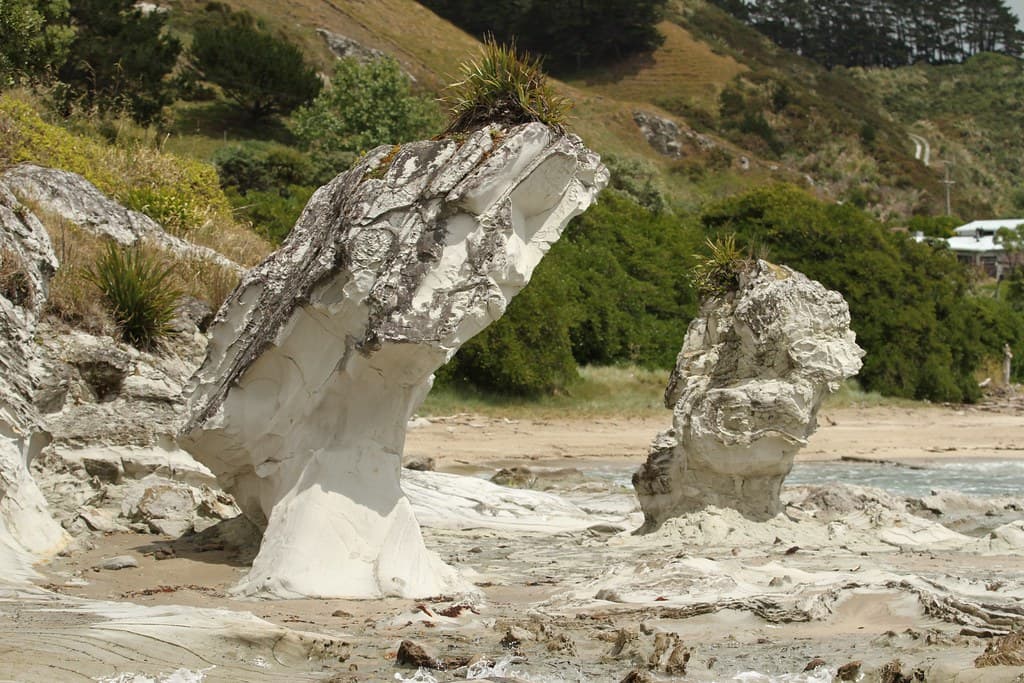
The gravel track ends at a makeshift pullout, and from there you pick your way down a footpath worn smooth by locals who've kept this bay to themselves for generations. Taylors Bay sits in a fold of the Māhia Peninsula's coastline, protected from prevailing winds by headlands draped in native flax and gnarled pohutukawa that lean seaward like old sentinels. The beach itself is compact, maybe two hundred meters of sand that darkens where the tide line meets scattered driftwood. You'll notice the silence first—no surf roar here, just the rhythmic sigh of small waves collapsing onto the shore. The water holds that particular clarity you find in sheltered bays, revealing stones and the occasional school of juvenile snapper moving through the shallows. At mid-morning, the sun warms the sand enough that you'll sink your toes in and feel the heat radiating back. A few rock platforms jut from either end of the bay, black basalt worn smooth and studded with barnacles that click as the tide retreats. By late afternoon, the headland shadow creeps across the cove, and the temperature drops just enough to remind you that the Hawke's Bay coast can turn cool without warning. You'll gather your towel and glance back at the bay, already planning when you'll return—preferably before anyone else discovers it.
Places, rentals, tours and events within walking and driving distance of Taylors Bay.
Photos
Taylors Bay is generally calmer than exposed ocean beaches due to its cove formation, making it suitable for swimming in settled conditions. However, always check local weather and sea conditions before entering the water, as New Zealand's east coast can experience unpredictable swells and currents. There are no lifeguard patrols at this beach, so swim at your own risk and stay close to shore. Avoid swimming during rough weather or strong winds. The sheltered nature of the bay typically provides safer conditions during summer months.
The best time to visit Taylors Bay is during New Zealand's summer months from December to March when you'll enjoy warm temperatures and calm seas. Visiting during shoulder seasons (October-November or April-May) offers fewer crowds and mild weather, ideal for peaceful beach walks. Weekdays are quieter than weekends year-round. Early mornings provide the most serene atmosphere for couples seeking solitude. The bay's sheltered position makes it pleasant even on breezy days when other Māhia beaches might be windswept.
Taylors Bay is located on the Māhia Peninsula, approximately 90 minutes' drive from Napier or Gisborne. From State Highway 2, turn onto Māhia Peninsula Road and follow signs toward Māhia. The bay requires local knowledge to find, so using GPS coordinates or asking locals in Māhia township is recommended. Roads are sealed but can be narrow and winding. Rental cars are suitable, though some access points may require short walks. Limited parking is available near the beach, so arrive early during peak season.
Accommodation and dining options are limited directly at Taylors Bay, but nearby Māhia township offers holiday homes, baches (beach cottages), and a motor camp with basic facilities. The Māhia Peninsula has a small general store and cafe for essentials and casual meals. For more extensive dining and lodging choices, Wairoa (30 minutes away) provides motels, cafes, and restaurants. Many visitors book self-contained holiday rentals in Māhia and prepare their own meals. Stock up on groceries before arriving, as local options are minimal.
Taylors Bay stands out for its tucked-away location and intimate atmosphere, offering a distinct experience from the main Māhia Beach. The cove's sheltered setting creates a more private, romantic environment perfect for couples seeking seclusion. Its scenic beauty and relative obscurity mean you'll often have the beach largely to yourself, especially on weekdays. The bay's orientation provides excellent sunbathing conditions with protection from prevailing winds. Unlike busier Māhia beaches, Taylors Bay rewards those willing to explore beyond the obvious, offering a genuine sense of discovery.