Counting the waves…
Counting the waves…
A refined fusion of water purity, environmental stability, and communal vibrancy for South Beach.
View MethodologyAnalyzed via live sensors and environmental data.
Wave height, wind, and atmospheric stability.
Live footfall and crowd balance metrics.
Community reviews and curated sentiment.
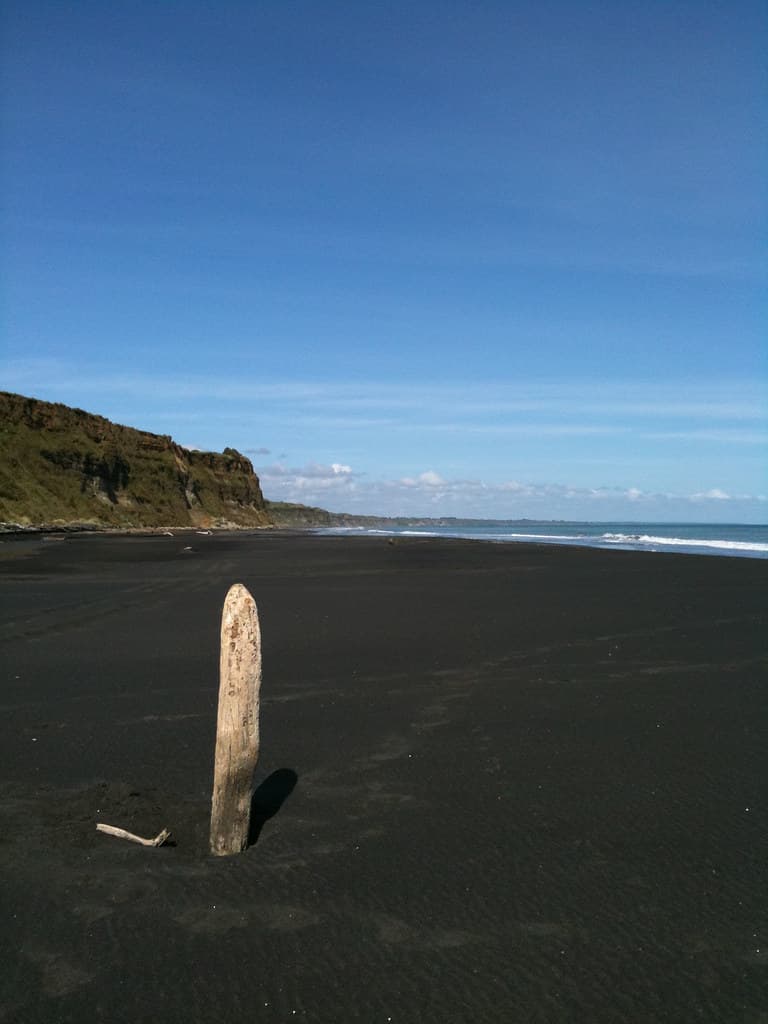
“This is where the river finally exhausts itself into the sea after its journey from Mount Taranaki's flanks. The black sand stretches unbroken toward the horizon, backed by dunes and the occasional concrete remnant of…”
Limited recent visitor reports — live OBI telemetry is your best guide for current conditions.
The Whanganui River mouth dominates the northern end, its brown freshwater colliding with incoming swells in a perpetual rip that seasoned swimmers respect and novices avoid. The beach extends south in a ruler-straight line, volcanic sand so dark it radiates heat even on overcast days. Families stake claims with windbreaks and beach tents, their bright nylon flags visible from kilometers away across the flat expanse.
Dunes rise behind the beach in irregular humps, their seaward faces carved vertical by storm surge and held together by spinifex and pingao. The surf pounds with metronomic consistency—this coast catches every bit of weather the Tasman generates. On big westerly swells, the waves stack up in clean lines that peel for hundreds of meters, drawing surfers from across the region despite the heavy closeouts that dominate smaller days.
 Credit: Unsplash
a view of the ocean from inside a cave
 Credit: Unsplash
A group of people standing in the entrance to a cave
Long rides on clean days
Kilometers of uninterrupted sand
Dramatic freshwater meets saltwater
Prime Visitation
Anytime|Less Crowds
Where it is
South Beach
Whanganui, Manawatū-Whanganui, New Zealand
-39.953900°, 175.014200°
Weather
Loading…
Swell
—
Temp
Warm · Restorative
UV Index
Moderate
Wind
—
Tidal State
Last known
Max Sunlight
—
Ideal Shade
—
Jan - Dec (Peak)
Mar - Nov (Off-season)
Historical data suggests peak visibility and stable sea temperatures occur during the prime visitation window.
Select a category to load nearby places.
Unlock restaurants, luxury stays and curated maritime experiences within 2km
South Beach is an exposed ocean beach with characteristic surf conditions including waves, currents, and rips. There are no lifeguard patrols, so swimming is at your own risk. The beach is better suited to confident ocean swimmers and surfers rather than inexperienced swimmers or young children. Conditions can change quickly, and the black sand can heat up significantly in summer. Always assess conditions before entering the water, never swim alone, and be aware of rip currents. The beach's open, long nature means help may not be immediately available in emergencies.
South Beach can be visited year-round, offering good value for budget travellers with free access and natural beauty in any season. Summer (December-February) provides the warmest weather for beach activities, though the beach never becomes overcrowded. The west-facing beach offers spectacular sunset viewing opportunities, particularly stunning in autumn and winter months. Early morning and late afternoon visits provide the best light for photography. Weekdays are quieter than weekends. Winter visits offer dramatic storm-watching opportunities for those who enjoy wild coastal scenery, though swimming is only advisable in calmer summer conditions.
South Beach is located on the southern side of the Whanganui River mouth, easily accessible from Whanganui city. From the city centre, head south and follow signs towards the coast and South Beach, approximately 10-15 minutes' drive. Access roads lead to various points along the long beach. Parking is available at beach access points. While closer than some outlying beaches, public transport options are limited, so a vehicle is recommended. The beach stretches for considerable distance, so multiple access points allow visitors to explore different sections of this expansive coastal area.
South Beach itself is largely undeveloped with minimal commercial facilities. There are no cafes or restaurants directly at the beach, so visitors should bring their own food and drinks. Whanganui city, just 10-15 minutes away, offers comprehensive dining options from casual cafes to restaurants, plus supermarkets for supplies. Accommodation is best found in Whanganui city proper, which has motels, hotels, holiday parks, and backpackers. Some holiday homes may be available in the residential areas near the beach. Most visitors treat South Beach as a day trip destination from Whanganui.
South Beach is distinguished by its position on the southern side of the Whanganui River mouth and its characteristic black iron sand, which creates a striking visual contrast with the ocean. The beach's long, open nature provides a sense of wild, unspoiled coastline despite its proximity to the city. Unlike the more developed Castlecliff Beach to the north, South Beach maintains a more natural, less urbanized character. Its expansive length means you can often find solitude even on busy days. The combination of river mouth dynamics, surf conditions, and dramatic sunsets creates unique coastal scenery.
Photos