Counting the waves…
Counting the waves…
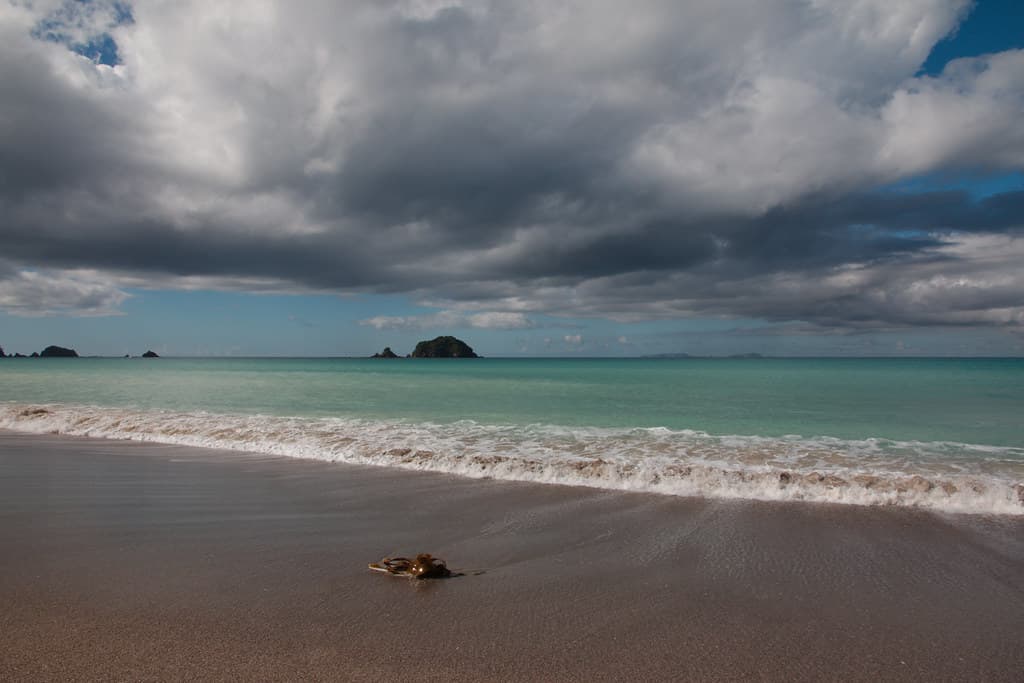
Your feet sink into sand so fine it squeaks with each step—compressed silica that stretches in a generous arc between forested headlands. The northern point bristles with kanuka and coastal mahoe; on calm mornings, tui call from the canopy in notes that tumble down to the tideline. Families colonize the shallows where the seabed slopes so gently that children can wade out twenty metres and still touch bottom, building elaborate sandcastle districts complete with driftwood flags. Kayakers launch from the boat ramp beside the small reserve, paddling toward the scattering of rocky islets that punctuate the bay's entrance. Between the stones, snorkellers fin through gardens of brown kelp where blue mao mao flicker in the filtered light. When wind picks up from the southeast, small waves develop near the northern rocks—nothing overhead, but enough to keep bodyboarders entertained for an afternoon. The water holds warmth through March, sometimes nudging twenty-two degrees in the shallows where sun heats the sandy bottom. A grass reserve backs the central beach, equipped with a single concrete table and a tap that runs cold bore water. Pohutukawa frame the southern end, their December blossoms drawing tui that ignore the picnickers below. At low tide, the bay exhales—exposing fifty metres of ribbed sand where oystercatchers probe for pipi with orange beaks. Locals arrive before breakfast to walk the wet flats; by ten, visiting families claim the high-tide mark with beach tents and coolers, staying until the eastern sun surrenders to afternoon cloud.
Places, rentals, tours and events within walking and driving distance of Oakura Bay Beach.
Photos
Oakura Bay Beach is generally safe for swimming due to its sheltered, east-facing position that protects it from prevailing westerly winds. The calm waters make it suitable for families and less confident swimmers. There are no lifeguard patrols, so swimmers must take personal responsibility for safety. Always check conditions before entering the water and be aware of boat traffic during busy periods. The clear, calm conditions can also make it appealing for snorkeling, though marine life varies. Avoid swimming during storms or when seas are rough.
The best time to visit Oakura Bay Beach is during settled weather, typically in summer (December to February) when temperatures are warmest and conditions most reliable. The sheltered bay performs well in light winds but benefits most from calm, sunny days. Autumn (March to May) can also offer beautiful weather with fewer crowds. Winter visits are possible for scenery and beach walks, though swimming may be uncomfortable due to cold water. Check weather forecasts before traveling, as the experience is significantly enhanced by good conditions.
Oakura Bay Beach is accessed via Oakura Road, which turns off State Highway 10 between Kerikeri and Mangonui in Northland. The bay is approximately 40 minutes' drive from Kerikeri and requires navigating narrow, winding roads typical of rural Northland. A vehicle is essential as there is no public transport to this location. The final approach down to the bay involves a steep hill, so ensure your vehicle has adequate brakes. Parking is available near the beach but can be limited during peak holiday periods.
Oakura Bay is a small holiday settlement with limited commercial facilities. Accommodation consists primarily of private holiday homes and baches available for rent, rather than hotels or motels. There are no restaurants, cafes, or shops directly at the bay, so visitors should bring supplies from larger towns like Kerikeri or Mangonui. Self-catering is the norm for visitors staying in the area. The nearest supermarkets and dining options are a 30-40 minute drive away. Many visitors appreciate this remoteness and peaceful, uncommercial atmosphere.
Oakura Bay Beach stands out for its exceptionally calm, sheltered waters and peaceful atmosphere. The eastern orientation and protective headlands create consistently gentle conditions ideal for relaxation and safe swimming. The bay maintains a quiet, undeveloped character with a small holiday community rather than tourist infrastructure. Its scenic beauty, combined with turquoise waters and pohutukawa-lined shores, offers quintessential Northland coastal charm. The bay's relative remoteness means it rarely gets crowded, even during summer, making it perfect for couples and families seeking tranquility and natural beauty.