Counting the waves…
Counting the waves…
A refined fusion of water purity, environmental stability, and communal vibrancy for Boulder Beach.
View MethodologyAnalyzed via live sensors and environmental data.
Wave height, wind, and atmospheric stability.
Live footfall and crowd balance metrics.
Community reviews and curated sentiment.
“The shoreline clicks and clacks with every wave retreat—not sand but millions of rounded stones, sorted by the ocean into bands of grey, tan, and rust. Gulls pick through kelp tangles while swells hammer the outer rocks.”
Limited recent visitor reports — live OBI telemetry is your best guide for current conditions.
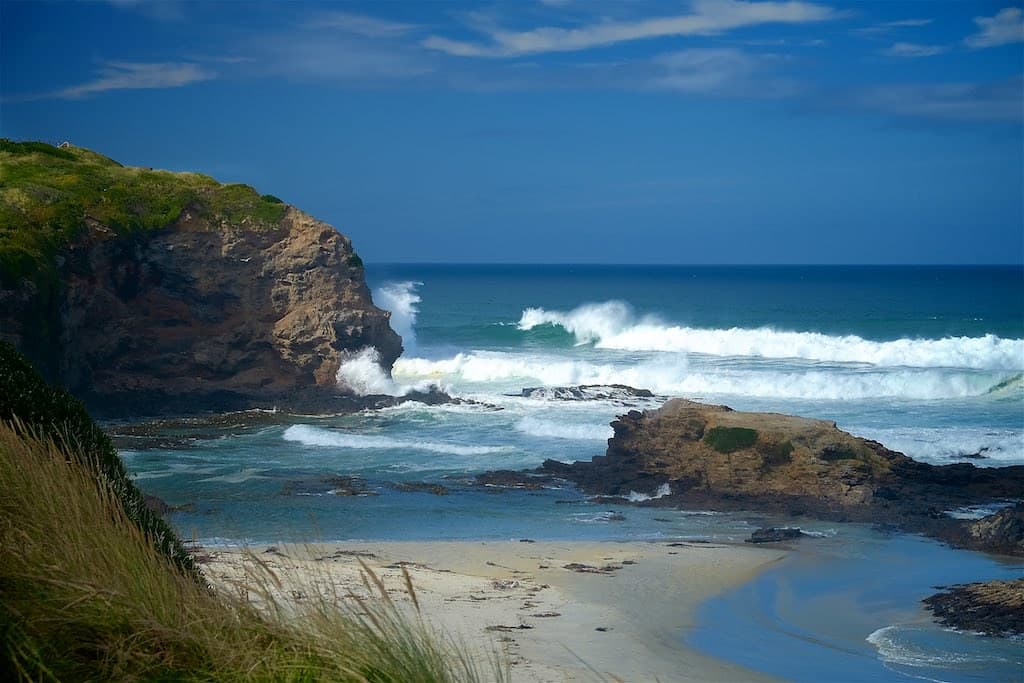
You descend a steep walking track through coastal scrub, and the first thing you hear is the percussion: waves dragging stones down the slope, then surging back up in a rhythmic clatter that carries up the valley. Boulder Beach has no sand—just wave-polished stones ranging from golf-ball to rugby-ball size, smoothed into ovals by decades of tumbling surf. The beach sits in a small cove, hemmed by dark volcanic headlands.
The stones shift underfoot as you walk, making every step deliberate. Driftwood wedges between larger rocks, and the tideline is a wrack of bull kelp, shag feathers, and the occasional cuttlebone. The water here is too rough and cold for swimming; this is a beach for watching the ocean work rather than entering it. Storm swells rearrange the entire stone field, and after big southerlies you'll find the beach reshaped—new rocks exposed, old channels filled.
 Credit: Unsplash
landscape photography of seashore and cave
 Credit: Unsplash
A moody beachscape under a cloudy sky
Wave-polished geology on display
Scrubland and headland views
Offshore colonies visible at distance
Prime Visitation
Best Weather|Less Crowds
Where it is
Boulder Beach
Dunedin, Otago, New Zealand
-45.886500°, 170.663300°
Weather
Loading…
Swell
—
Temp
Warm · Restorative
UV Index
Moderate
Wind
—
Tidal State
Last known
Max Sunlight
—
Ideal Shade
—
Jan - Dec (Peak)
Mar - Nov (Off-season)
Best Weather|Less Crowds
Near Boulder Beach
Explore dining, stays, nightlife, and activities near Boulder Beach in Dunedin, New Zealand. Every listing below is a real place linked to this beach — open a card for reviews, maps, and booking options.
Stays and lodging options near Boulder Beach for your beach trip.
Select a category to load nearby places.
Unlock restaurants, luxury stays and curated maritime experiences within 2km
Boulder Beach is not ideal for swimming due to its pebble and rock composition, potential for slippery surfaces, and exposure to open ocean conditions. The beach lacks sandy entry points, making water access awkward and potentially hazardous. Strong currents and surf conditions typical of the Otago coast pose additional risks. There are no lifeguard services or safety facilities. The beach is better suited for coastal walks, rock pooling, and wildlife observation. If you wish to enter the water, extreme caution is advised—wear appropriate footwear, watch for waves on rocks, and avoid swimming in anything but the calmest conditions.
Boulder Beach can be visited year-round, though summer months (December-February) offer the most comfortable temperatures and longer daylight for exploration. The rugged nature of the beach means it's less dependent on swimming weather than sandy beaches. Autumn and spring provide excellent conditions for coastal walks with fewer visitors and dramatic lighting for photography. Winter visits showcase the raw power of the Otago coast but require warm, windproof clothing. Low tide is generally best for exploring rock pools and the shoreline. Early morning or late afternoon visits often provide the best light and wildlife viewing opportunities.
Boulder Beach is located on the Otago Peninsula, accessible via a drive from Dunedin followed by walking access. The journey typically takes 30-45 minutes by car from central Dunedin, heading toward the peninsula's southeastern coast. Access may involve parking in designated areas and walking along coastal tracks or across farmland. Specific routes can vary, so check locally for current access arrangements and any restrictions. The approach may require walking on uneven terrain, so wear sturdy footwear. Navigation apps may have limited detail for this remote area, so consider obtaining local directions or maps before setting out.
Boulder Beach is a remote location with no facilities whatsoever—no toilets, picnic areas, shops, or services. Visitors must bring all supplies and be prepared for wilderness conditions. The nearest accommodation and dining options are in Dunedin city, approximately 30-45 minutes away, which offers a full range of hotels, motels, backpackers, and restaurants. Some holiday homes and farmstays are scattered across the Otago Peninsula. Portobello village has limited services closer to the peninsula. Pack adequate food, water, and emergency supplies, and be prepared to carry out all rubbish.
Boulder Beach stands out for its rugged, rocky character rather than sandy shores, offering a distinctly different coastal experience from typical beaches. The pebbles and boulders create a dramatic, raw landscape that appeals to those seeking untamed nature rather than sunbathing spots. The remote location and lack of development provide genuine solitude and a strong sense of wilderness. Wildlife including seals and seabirds frequent the area undisturbed. The beach particularly attracts photographers, nature enthusiasts, and couples seeking peaceful isolation. The challenging terrain and access mean crowds are virtually nonexistent, preserving its wild, authentic character.
Photos