Counting the waves…
Counting the waves…
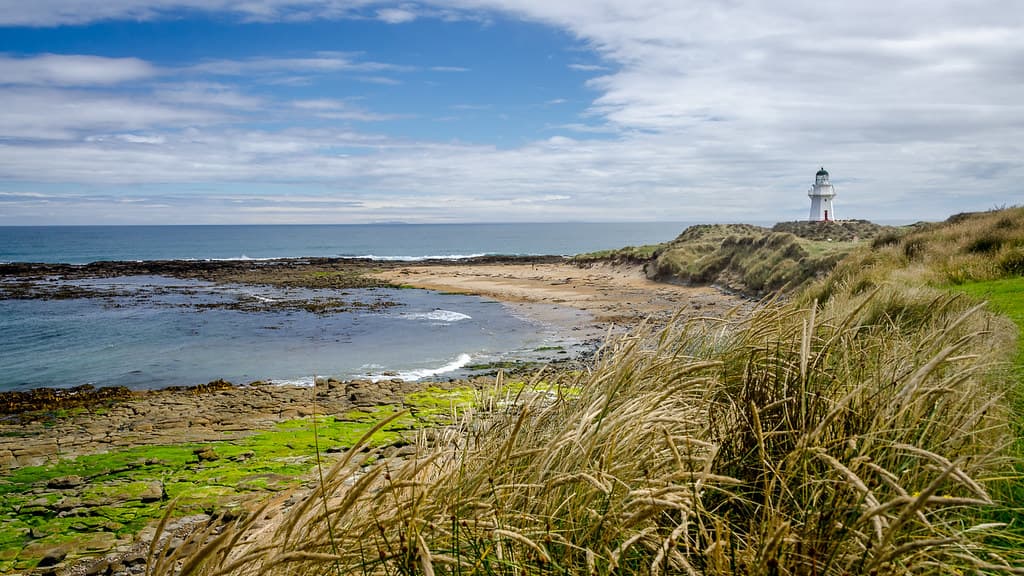
You'll drive through Fortrose—a cluster of baches and a general store—then follow a gravel track to where the road ends at a dune-top car park. Below, Toetoes Bay unfolds in a long, shallow arc, its sand firm and pale, stretching east toward the river mouth and west toward headlands that fade into coastal haze. The beach is broad; at low tide, you can walk a hundred meters from the dune base to the waterline, crossing rippled sand decorated with gull tracks and the occasional stranded jellyfish. The Mataura empties here in a wide, shifting delta, its channels dark with tannin from inland peat. Where river meets sea, the water churns brown and grey, and whitebait fishermen stake their nets on favorable tides. The wind is almost constant—a cold southerly straight off the Southern Ocean—but when it eases, the beach falls into an eerie stillness, the kind of quiet that makes you aware of your own breathing. Sunset transforms the place. The western sky ignites in layers—burnt orange, magenta, violet—and the wet sand becomes a second sky, reflecting clouds and color in high-definition. You'll see few other people; Toetoes Bay doesn't draw crowds. It's too remote, too exposed, too far from anywhere. That's exactly its appeal.
Places, rentals, tours and events within walking and driving distance of Toetoes Bay Beach.
Photos
Toetoes Bay Beach offers relatively safe swimming conditions compared to more exposed Southland coastlines, though caution is always necessary. The bay provides some shelter from prevailing southwesterly swells, creating calmer conditions during favorable weather. Water temperatures remain cold year-round, typically 10-15°C, requiring appropriate preparation. There are no lifeguard services or facilities, and rip currents can occur. The sandy bottom and gradual slope make entry easier than rocky alternatives. Always check conditions before entering the water, supervise children closely, and be aware that weather can change rapidly. Most visitors enjoy paddling and beach walking rather than extended swimming.
Summer months (December-February) provide the warmest temperatures and most stable conditions for visiting Toetoes Bay Beach, with extended daylight perfect for beach exploration. Autumn (March-May) can deliver stunning clear days with excellent sunset viewing opportunities and fewer visitors. Winter brings rougher seas and stronger winds, though dramatic weather appeals to photographers. Spring offers wildlife activity and blooming coastal vegetation. The beach remains quiet throughout the year due to its under-visited status. Sunset visits are particularly rewarding given the western exposure. Always prepare for wind and potential rain regardless of season, typical of Southland's changeable climate.
Toetoes Bay Beach is located near Fortrose in southern Southland, approximately 90 kilometers from Invercargill. Follow State Highway 92 through Fortrose toward Tokanui, then take coastal roads to the bay. Roads are a combination of sealed and gravel surfaces, generally suitable for most vehicles with care. The beach is accessible via short walks from parking areas near the shoreline. From Dunedin, the journey is approximately 170 kilometers via the Southern Scenic Route. Allow extra time for gravel road sections and scenic stops. Fuel up in larger towns as service stations are limited in rural Southland.
Fortrose is a small settlement with very limited commercial services. Basic holiday homes and farmstay accommodation are available in the area but should be booked well in advance. Owaka, approximately 50 kilometers east, offers motels, bed and breakfasts, and holiday parks with more consistent availability. Invercargill, 90 kilometers away, provides comprehensive accommodation and dining options. No restaurants or cafes operate immediately at Toetoes Bay; visitors should bring food supplies. The nearest well-stocked supermarkets are in Invercargill or Owaka. Self-catering accommodation is common in this rural coastal region, requiring advance meal planning.
Toetoes Bay Beach stands out for its expansive, under-visited character stretching between Fortrose and the eastern Catlins coastline. The broad sandy beach offers a sense of space and solitude rarely found at more publicized destinations. Western exposure creates excellent sunset viewing opportunities with unobstructed horizons. The beach represents authentic rural Southland coastal life, free from tourism development and crowds. Its position between recognized attractions means many travelers overlook it, preserving its quiet appeal. The combination of accessibility, natural beauty, and genuine low-key atmosphere makes it ideal for visitors seeking peaceful coastal experiences away from mainstream beach destinations.