Counting the waves…
Counting the waves…

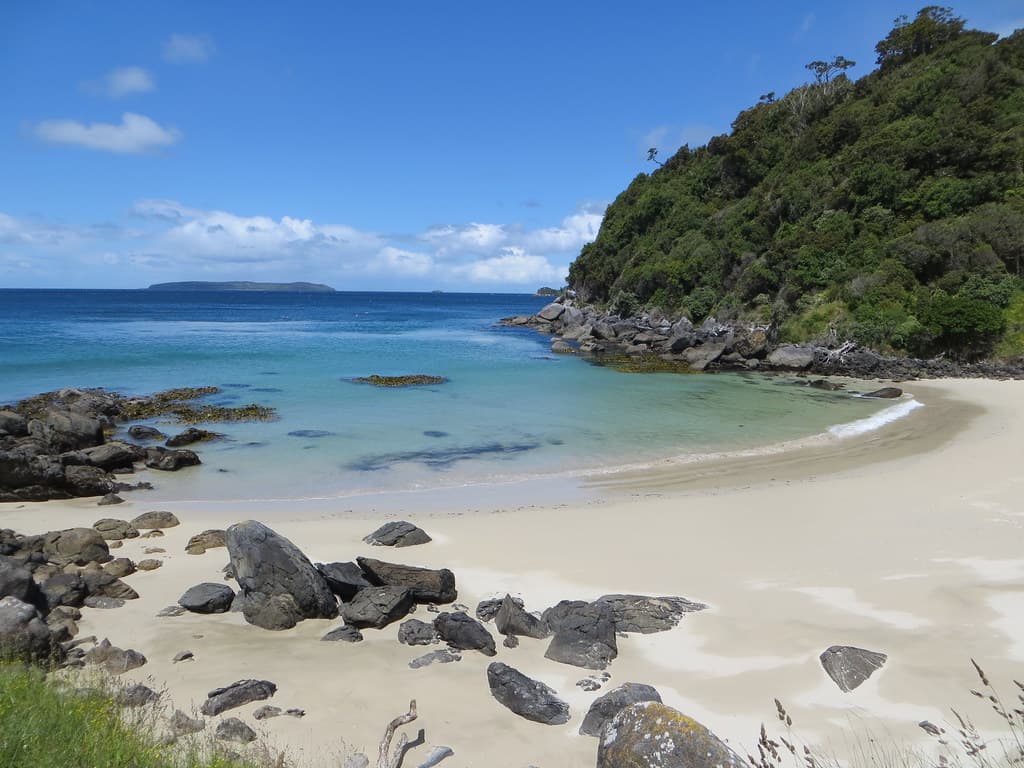
The sand at Lee Bay feels different underfoot—a fine, compacted grain that holds the imprint of your boots as you emerge from the forest corridor. Southern rata branches arch overhead, their gnarled limbs framing a view across the strait where whitecaps catch the wind that never quite stops here. The water temperature hovers around twelve degrees Celsius even in summer, and when you dip your fingers, they sting with the cold clarity of the Southern Ocean. Driftwood logs—massive trunks silvered by salt and time—form natural benches along the high-tide line. You'll notice how the forest simply ends at the sand, no gradual transition: one moment you're beneath the dripping canopy, the next you're exposed to the full sweep of maritime weather. Oystercatchers patrol the wrack line, their orange beaks working over kelp tangles, while blue penguins nest in the coastal scrub if you visit during breeding season. The bay curves gently, sheltering a pocket of relative calm in an otherwise exposed coastline. At low tide, rock platforms emerge slick with Neptune's necklace seaweed, and the air carries that particular Southland scent—salt, decomposing kelp, wet forest floor, and something wilder that belongs to this latitude alone. Most visitors pause here only briefly before shouldering packs for the track ahead, but those who linger find a rare stillness.
Places, rentals, tours and events within walking and driving distance of Lee Bay Beach.
Photos
Swimming at Lee Bay Beach is possible but requires awareness of typical Stewart Island conditions. The clear waters are inviting but cold year-round, ranging from 8-14°C, so wetsuits are recommended for comfort and safety. The beach's location near the Rakiura Track entrance means it's relatively accessible compared to more remote beaches, but facilities and lifeguards are not available. Check conditions before entering the water and be mindful of currents, tides, and underwater features. The forested shoreline provides scenic paddling conditions, making it better suited for wading and exploration than extended swimming.
Lee Bay Beach is most enjoyable during summer months from December through February when weather is warmer and daylight extends into the evening—ideal for photography and exploration. The beach's Instagrammable qualities shine in good light, making clear weather days particularly rewarding. However, Stewart Island's famously changeable weather means you should prepare for rain and wind any time of year. The beach sees relatively few crowds year-round compared to mainland destinations, so even peak summer maintains a peaceful atmosphere. Visit during low tide for the best beachcombing and photographic opportunities along the shoreline.
Lee Bay Beach is located near the start of the Rakiura Track, making it relatively accessible from Oban, Stewart Island's main settlement. You can reach the area by road or walking track—it's a manageable distance from town for most fitness levels. The beach serves as a gateway point near the track entrance, so it's often visited by trampers beginning or ending their journey. The journey from Oban takes less time than many other island beaches. Bring appropriate footwear as paths can be muddy, and consider the forested terrain when planning your visit.
Lee Bay Beach has no onsite facilities, so all services must be accessed in Oban, Stewart Island's only township. Oban offers a variety of accommodation including hotels, lodges, backpackers, and holiday rentals, along with several cafes, restaurants, and a general store for supplies. Given the beach's proximity to Oban and the Rakiura Track entrance, most visitors base themselves in town and visit Lee Bay as a day trip or brief excursion. Book accommodation ahead, especially in summer, as island options are limited. Pack water and snacks for your beach visit as there are no vendors nearby.
Lee Bay Beach stands out for its combination of accessibility and scenic beauty, featuring clear waters and a distinctive forested shoreline that creates excellent photographic opportunities. Its position near the Rakiura Track entrance gives it a gateway character, often serving as hikers' first or last coastal experience on the track. The beach's Instagrammable qualities—crystal-clear water against native forest—make it particularly appealing for photography enthusiasts. Unlike more remote island beaches requiring extensive hiking, Lee Bay offers relatively easy access while still delivering the pristine, wild atmosphere that defines Stewart Island's coastal character.