
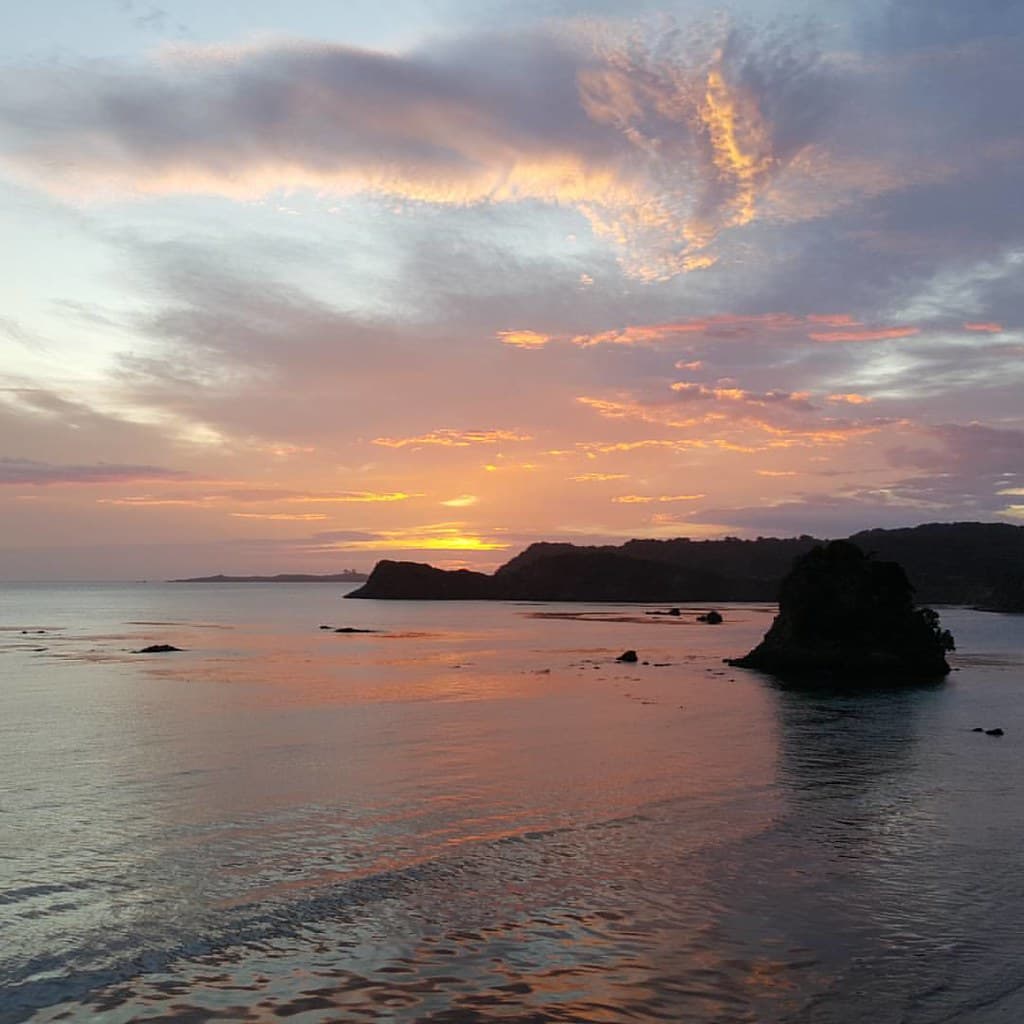
You arrive by dinghy or sea kayak, nudging past kelp beds into a pocket of beach no wider than a tennis court. The sand here is coarse, flecked with shell fragments and the occasional pāua shell worn smooth by the Foveaux Strait currents. Overhead, the canopy forms a ragged green hem—native bush so dense it muffles even the wind.
“One of the few Paterson Inlet beaches accessible solely by watercraft, preserving an intimacy that land routes cannot touch.”
 Credit: Flickr
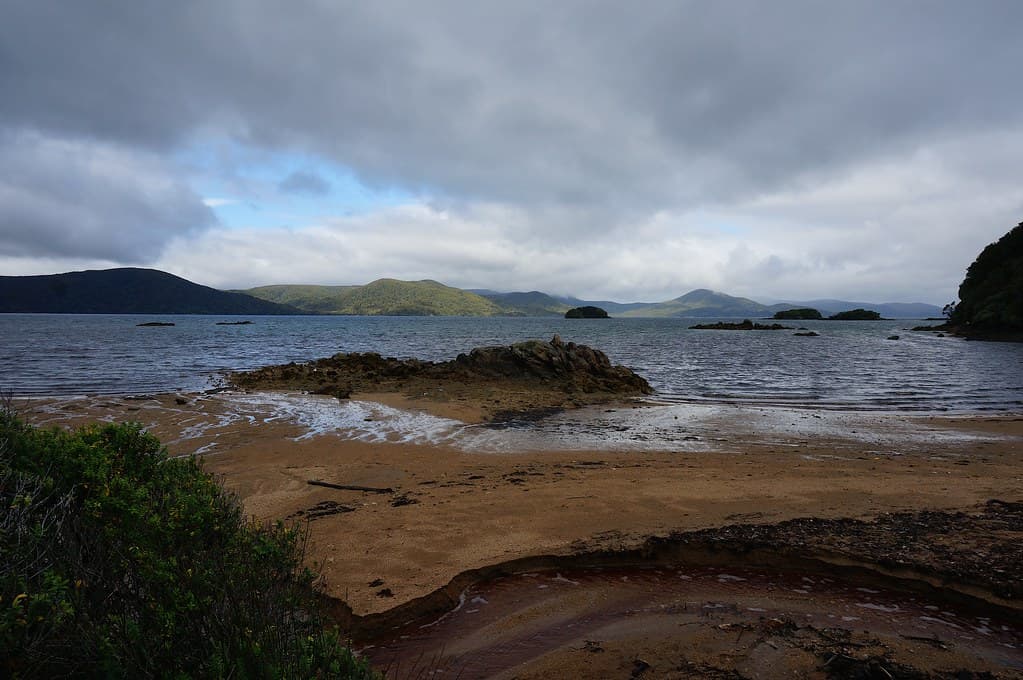
Little Glory Cove — photo by 4nitsirk
Paterson Inlet stretches behind you, a drowned river valley webbed with bays and islets. The water tastes faintly of tannin leached from the surrounding podocarp forest, staining it amber in the shallows. At low tide, granite boulders emerge like the backs of sleeping seals, draped in Neptune's necklace and bladderwrack that pops underfoot.
There are no facilities, no footprints save your own and the three-toed tracks of weka fossicking along the wrack line. You might stay an hour or anchor overnight, lulled by the tide's metronome and the distant boom of surf on the outer coast. When you push off, the cove folds back into anonymity, indistinguishable from a dozen other nameless bights until you consult your chart again.


