

The track from Oban leads you through thickets of muttonbird scrub and wind-pruned rātā, then deposits you onto a beach that feels more like a local's afterthought than a destination. The sand here is coarse underfoot, flecked with shell fragments and the occasional pāua glint. Watercress grows in the freshwater seeps that trickle from the bush margin, giving the place its name and a faint peppery scent when you kneel to inspect the streamlets.
“The freshwater watercress seeps give this beach a botanical signature found nowhere else on Stewart Island's accessible shoreline.”
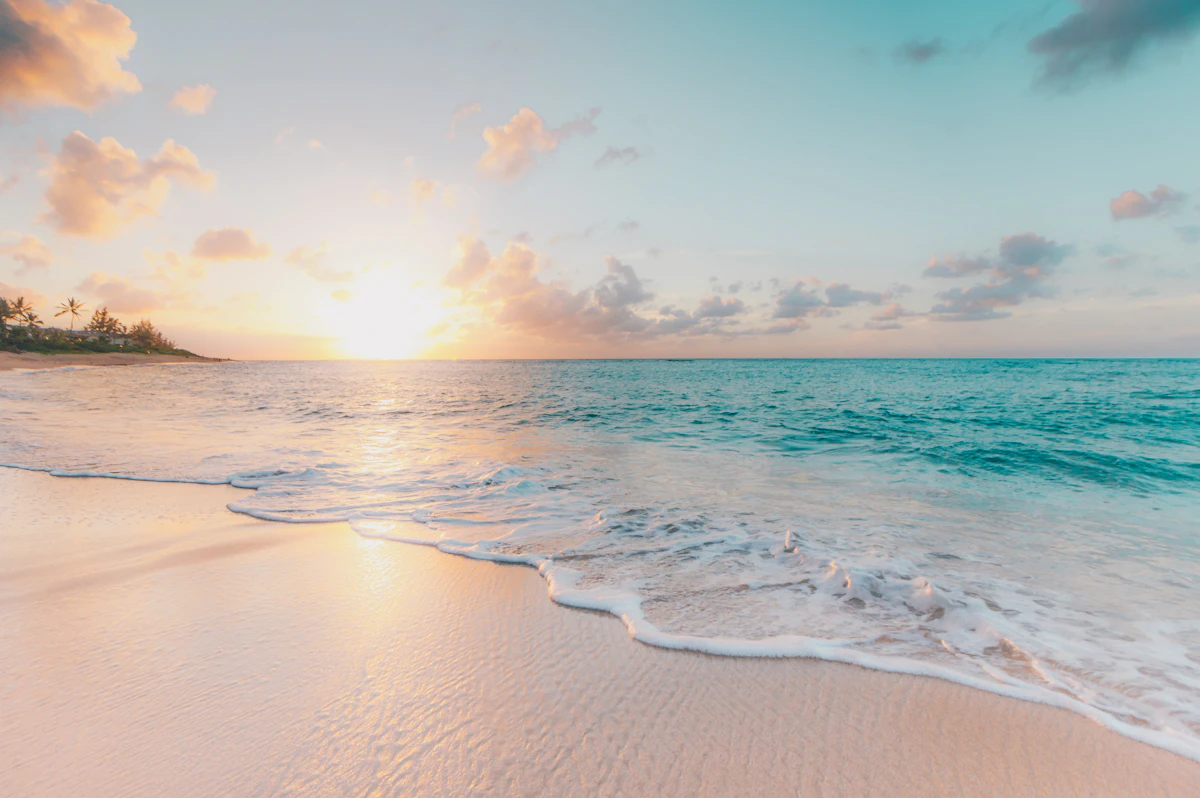 Credit: Unsplash
Aerial view of turquoise tropical bay
You won't see tour groups here. Instead, you might share the strand with a lone fisher checking craypots or a pair of variable oystercatchers stabbing at sandhoppers. The water is the colour of strong tea—tannin-stained runoff from the island's sodden interior—and colder than you expect, even in January. Behind you, the bush presses close, alive with the chatter of tūī and the mechanical tick of bellbirds.
This is a beach for slow walks and pocket-sized discoveries: a bull-kelp stipe thick as your wrist, a blue penguin feather, the triangular silhouette of a mollymawk tilting past offshore. You come here not to swim or sunbathe but to feel the edge of something wilder, where New Zealand's southernmost inhabited island meets the moody swells of the Southern Ocean.


