Counting the waves…
Counting the waves…

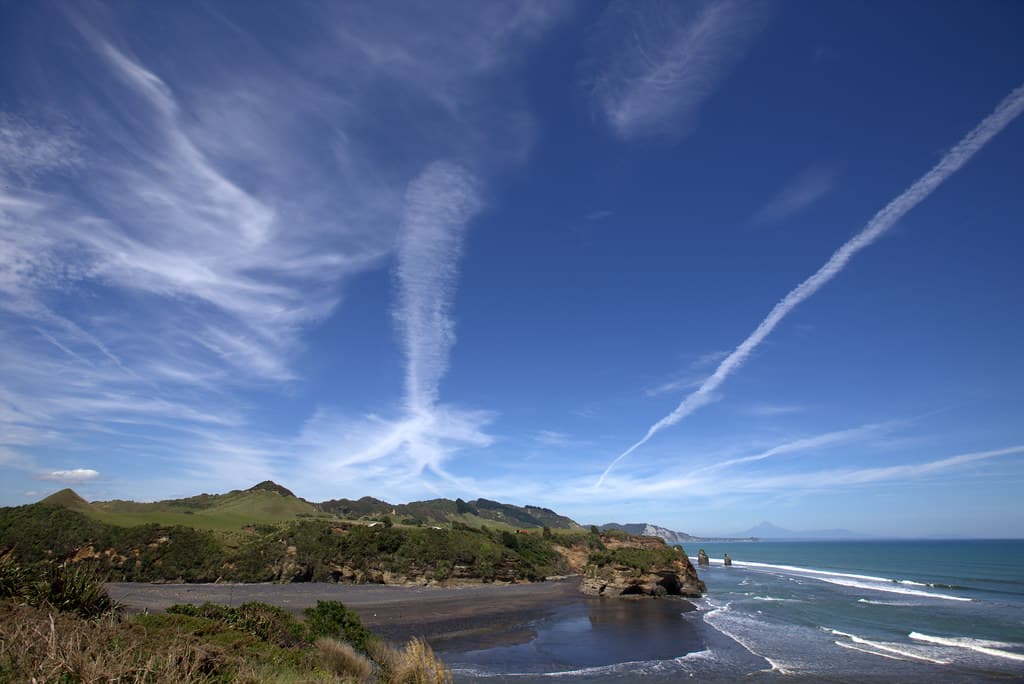
Mimi sits at the point where freshwater cuts a shifting path through black sand to meet Pacific swells, the river mouth migrating seasonally as floods scour new channels and build new sandbars. The settlement clusters around this junction—weathered baches and newer homes arranged along streets that dead-end at the beach, their owners arriving weekends and holidays to fish the gutters where river meets sea. The coastline here lacks the volcanic drama of central Taranaki; instead, it offers gentle beach-break waves, tide pools perfect for children, and long stretches of sand interrupted only by occasional rocky outcrops. On summer afternoons, the settlement comes alive with the particular sounds of a Kiwi beach holiday: screen doors banging, hoses rinsing salt from wetsuits, the thwack of cricket balls against garage doors. The river mouth draws fishermen casting for kahawai, their lines arcing into the mixing waters where baitfish school. You'll see families wading the shallows, teenagers boogie-boarding small waves, retirees walking dogs across sand that changes character with every tide—sometimes firm enough for cycling, sometimes soft and yielding. The beach extends north toward the white-clay cliffs that mark this section of coast, a walk that reveals why locals guard their quiet settlement carefully. Few facilities exist beyond the basics—a boat ramp, a small store—because development here moves at the pace of coastal erosion: slowly, and only when necessary. The settlement's charm lies in what it lacks: crowds, commercialism, urgency.
Places, rentals, tours and events within walking and driving distance of Mimi Beach.
Photos
Mimi Beach is a family-friendly local beach popular with holiday-makers, though it's not patrolled by lifeguards. The sandy beach allows for swimming, but like all west-coast Taranaki beaches, conditions can include surf, rips, and currents. Families should supervise children closely and swim only in calm conditions. Many visitors use the beach for paddling, playing in sand, and beach walks rather than serious swimming. The quiet, residential holiday settlement atmosphere makes it feel safe and community-oriented, though standard beach safety precautions always apply.
Mimi Beach is most popular during summer holidays (December-February) when New Zealand families use their holiday homes, though it never becomes crowded. For the quietest experience, visit during shoulder seasons or weekdays. The beach is accessible year-round and particularly beautiful at sunset throughout all seasons. Budget travellers benefit from visiting outside peak summer weeks when accommodation costs are lower. Weather is generally best November through March. Low tide provides the best conditions for beach walking and exploring the shoreline.
Mimi is located on State Highway 3, approximately 45 minutes north of New Plymouth along the Taranaki coast. From SH3, turn off at the Mimi signpost and follow the road toward the coast. The beach settlement is small and easy to navigate. Parking is available near beach access points. There is no public transport to Mimi, so you'll need a private vehicle. The drive from New Plymouth offers scenic coastal views. Ensure you have fuel and supplies before leaving larger towns.
Mimi is primarily a small holiday settlement with limited commercial services. Accommodation consists mainly of private holiday homes and baches, some available for short-term rental. There are no restaurants, cafes, or shops directly at Mimi Beach. Visitors should bring their own food and supplies or purchase them in Urenui (10 minutes south) or New Plymouth. The nearest town with full services is New Plymouth, approximately 45 minutes away. Self-catering is the norm for Mimi visitors, contributing to the low-key, budget-friendly appeal.
Mimi Beach represents classic Kiwi beach culture, with families returning to the same holiday homes generation after generation. Its low-key, unspoiled character offers authentic local experience rather than tourist development. The beach provides excellent sunset viewing over the Tasman Sea and quiet sand for walking and relaxation. Its northern Taranaki location means fewer visitors than beaches near New Plymouth, creating genuine tranquility. The settlement's unhurried atmosphere and lack of commercialization appeal to those seeking traditional New Zealand coastal holidays away from crowds.