Counting the waves…
Counting the waves…
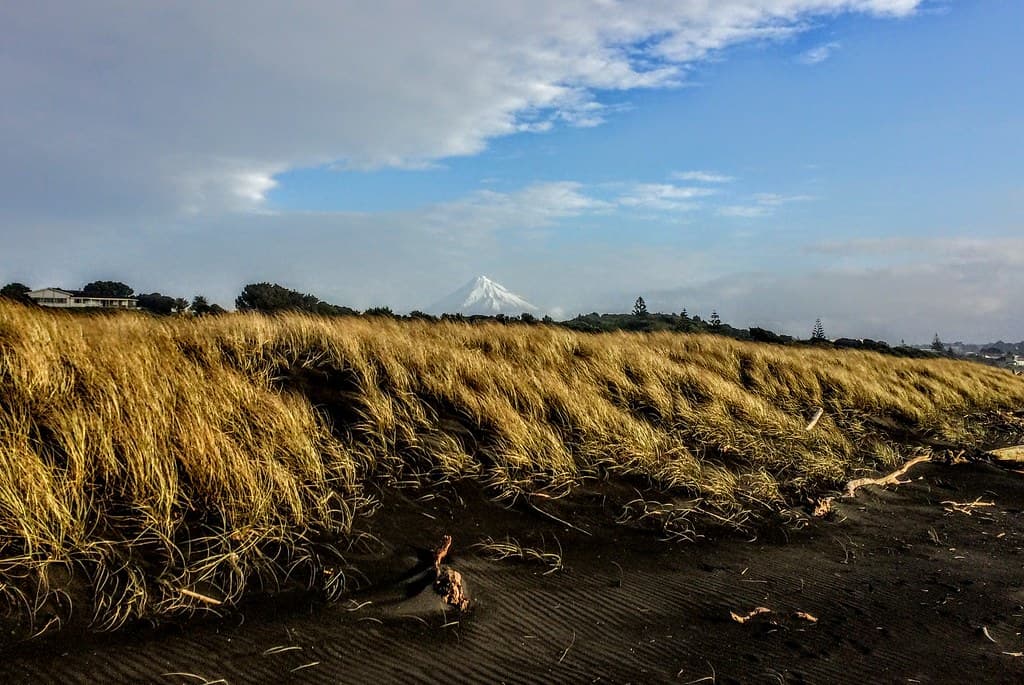
The Waiongana Stream arrives at the ocean without fanfare, spreading across the beach in shallow channels that children hop across on summer afternoons. The sand here is iron-grey, packed firm enough for barefoot running, soft enough to hold the imprint of your steps until the next tide. Marram grass anchors the dunes behind you, rustling in the onshore breeze that never quite stops. You reach the beach via a short track from the road, emerging onto a shore that feels provisional, as if it might be reclaimed by farmland if people stopped visiting. But they do visit—Waitara residents with toddlers and grandparents, teenagers after school, dog walkers at dawn. The scale is intimate. You can see both ends of the beach without turning your head, and the gentle gradient means the waves arrive tired, spent from their journey across the Tasman. Evening light softens everything. The stream reflects the sky, turning silver-pink, and Mount Taranaki appears to the southwest when clouds permit. You'll share these sunsets with perhaps three other people, all of you silent, watching the light drain westward. There's a picnic table, a rubbish bin, nothing else—infrastructure stripped to what's actually needed.
Places, rentals, tours and events within walking and driving distance of Waiongana Beach.
Photos
Waiongana Beach is generally suitable for families, being a small, sheltered local beach near the river mouth. However, like all Taranaki beaches, it's not patrolled by lifeguards. River mouth areas can have currents and changing conditions, so supervise children closely and swim only in calm conditions. Many families prefer paddling and playing in shallow areas rather than deep swimming. The beach's quiet, local character means fewer crowds, which can be safer for children. Always check weather and tide conditions before visiting.
Waiongana Beach is accessible year-round, making it suitable for anytime visits. Summer months (December-February) offer the warmest weather for beach activities, though the beach remains quiet even then. Weekdays provide the most peaceful experience. Low tide is best for walking and exploring the beach area. Sunset is particularly scenic along this coast. Because it's a local beach rather than a tourist destination, you'll find it uncrowded in all seasons, making it ideal for those seeking tranquility without timing constraints.
Waiongana Beach is located just west of Waitara township, easily accessed via Waiongana Road off State Highway 3. From Waitara's main street, follow local signage toward the coast. The beach is a short drive from the town centre. Parking is available near the beach access point. Waitara itself is approximately 15 minutes northeast of New Plymouth along SH3, making Waiongana an easy day trip from the city. A private vehicle is necessary as public transport doesn't service the beach directly.
Waitara township, just minutes away, offers basic services including cafes, takeaways, a supermarket, and dairy. Accommodation in Waitara includes motels and holiday parks. For more extensive dining and lodging options, New Plymouth is only 15 minutes south with full tourist facilities, hotels, restaurants, and shops. Most visitors to Waiongana Beach stay in New Plymouth and visit for a few hours. The beach itself has no facilities, so bring any supplies you need for your visit.
Waiongana Beach offers an authentic local experience rather than a tourist destination. Its position near the Waiongana River mouth creates a distinctive coastal environment favoured by locals for quiet beach time, fishing, and sunset watching. Unlike busier Taranaki beaches such as Fitzroy or Oakura, Waiongana remains largely undiscovered by visitors, offering genuine tranquility. Its proximity to Waitara provides convenient access while maintaining a hidden, low-key character. The beach represents traditional Kiwi coastal culture without commercial development or crowds.