Counting the waves…
Counting the waves…
A refined fusion of water purity, environmental stability, and communal vibrancy for Coquille Bay.
View MethodologyAnalyzed via live sensors and environmental data.
Wave height, wind, and atmospheric stability.
Live footfall and crowd balance metrics.
Community reviews and curated sentiment.
“You'll round the headland from Marahau and find Coquille Bay in the shadows of kanuka and beech. The shore curves gently, the sand holds warmth underfoot, and the stillness feels earned.”
Limited recent visitor reports — live OBI telemetry is your best guide for current conditions.
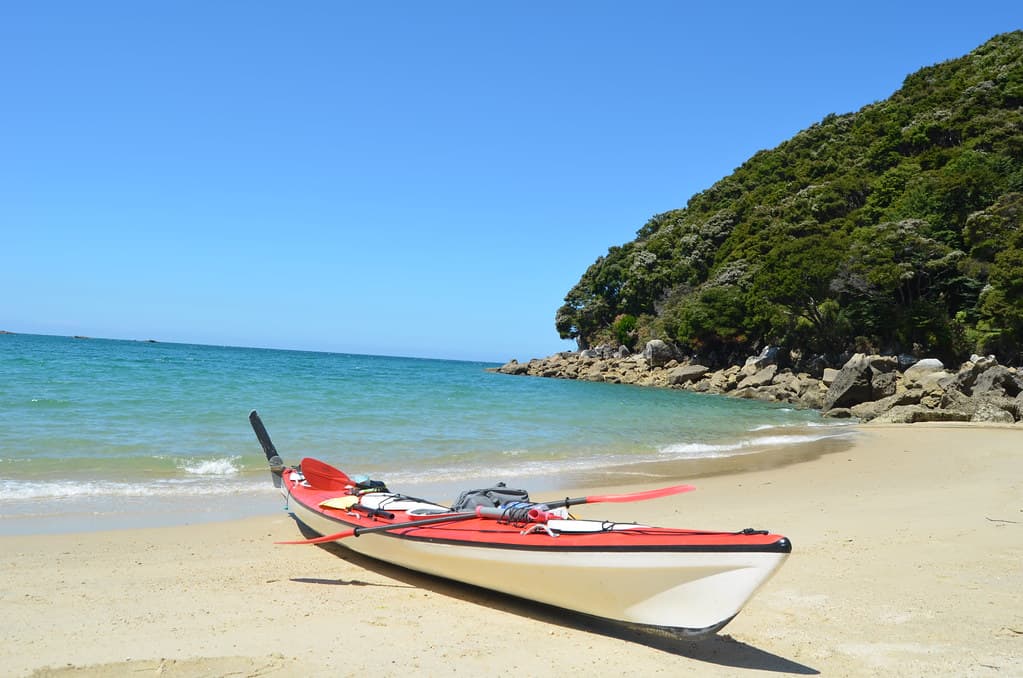
Coquille Bay sits just beyond the park's busiest entry point, yet it absorbs only a fraction of the footfall. The cove opens to Astrolabe Roadstead, framed by low headlands thick with native scrub. At low tide, the sand stretches wide and firm; at high, the water laps at the tree line, leaving little margin between forest and sea. You'll hear bellbirds in the canopy and the occasional slap of a kayak paddle against hull.
The bay's orientation shelters it from southwesterlies, so the surface stays glassy on days when neighbouring beaches churn. If you arrive by water taxi, the skipper will nose the bow onto the sand and you'll step directly onto shore. If you walk in from Marahau, the track dips through coastal scrub before emerging at the tide line. Either way, you're likely to have the place to yourself for stretches at a time.
 Credit: Unsplash
aerial photography of lake during daytime
 Credit: Unsplash
people on beach during daytime
Calm water near the shore
Glassy conditions most days
Easy coastal track access
Prime Visitation
Best Weather|Less Crowds
Where it is
Coquille Bay
Abel Tasman National Park, Tasman, New Zealand
-40.971700°, 173.047800°
Weather
Loading…
Swell
—
Temp
Warm · Restorative
UV Index
Moderate
Wind
—
Tidal State
Last known
Max Sunlight
—
Ideal Shade
—
Jan - Dec (Peak)
Mar - Nov (Off-season)
Best Weather|Less Crowds
Select a category to load nearby places.
Unlock restaurants, luxury stays and curated maritime experiences within 2km
Coquille Bay offers generally safe swimming conditions within the sheltered cove, though it's less accessible than main Abel Tasman beaches. The protected bay usually has calm waters suitable for swimming and snorkeling. Water clarity is typically good, allowing for underwater visibility. There are no lifeguards or facilities, so swimmers must be self-sufficient and assess conditions independently. Currents are generally minimal within the cove but can exist near the entrance. The rocky shoreline requires careful entry and exit. Always wear appropriate footwear and check weather forecasts before visiting this remote location.
The best weather for Coquille Bay occurs from December through March when conditions are warmest and most settled. Visiting during shoulder seasons (November or April) offers fewer crowds while still providing pleasant weather. Early summer and late autumn provide excellent opportunities for a quieter experience in this already secluded spot. Calm sea conditions are essential for safe boat access, so plan visits during stable weather windows. Mid-morning to early afternoon typically offers the best light and warmest temperatures. Check tides if planning to explore the shoreline extensively.
Coquille Bay requires boat access as it's not accessible by the Abel Tasman Coast Track. Water taxis operate from Marahau, Kaiteriteri, and other points, offering drop-off services to this small cove. Private kayakers can paddle to Coquille Bay from Marahau, though it requires intermediate paddling skills and favorable conditions. The bay is located near Marahau in the southern section of Abel Tasman National Park. Always arrange return transport in advance and communicate plans with your water taxi operator. Check weather and sea conditions before departure as rough seas make access difficult or impossible.
Coquille Bay has no facilities, accommodation, or food services as it's a remote cove within Abel Tasman National Park. Visitors must bring all necessary supplies including food, water, and safety equipment. The nearest amenities are in Marahau, approximately 20 minutes by boat, which offers cafés, restaurants, and various accommodation types. Camping is not permitted at Coquille Bay. This is a day-visit destination only. Pack out all rubbish following Leave No Trace principles. For overnight stays, book Department of Conservation huts or campsites at designated locations elsewhere in the park.
Coquille Bay offers a quieter, more secluded alternative to busy Abel Tasman beaches like Anchorage or Torrent Bay. Its boat-only access naturally limits visitor numbers, providing a more intimate wilderness experience. The small cove creates a hidden, sheltered atmosphere ideal for peaceful swimming and relaxation. Visitors seeking solitude and a sense of discovery will appreciate this lesser-known spot. The scenic beauty matches that of famous Abel Tasman beaches but without crowds. It's perfect for those willing to make extra effort for a more exclusive coastal experience within the national park.
Photos