Counting the waves…
Counting the waves…
A refined fusion of water purity, environmental stability, and communal vibrancy for Otama Beach.
View MethodologyAnalyzed via live sensors and environmental data.
Wave height, wind, and atmospheric stability.
Live footfall and crowd balance metrics.
Community reviews and curated sentiment.
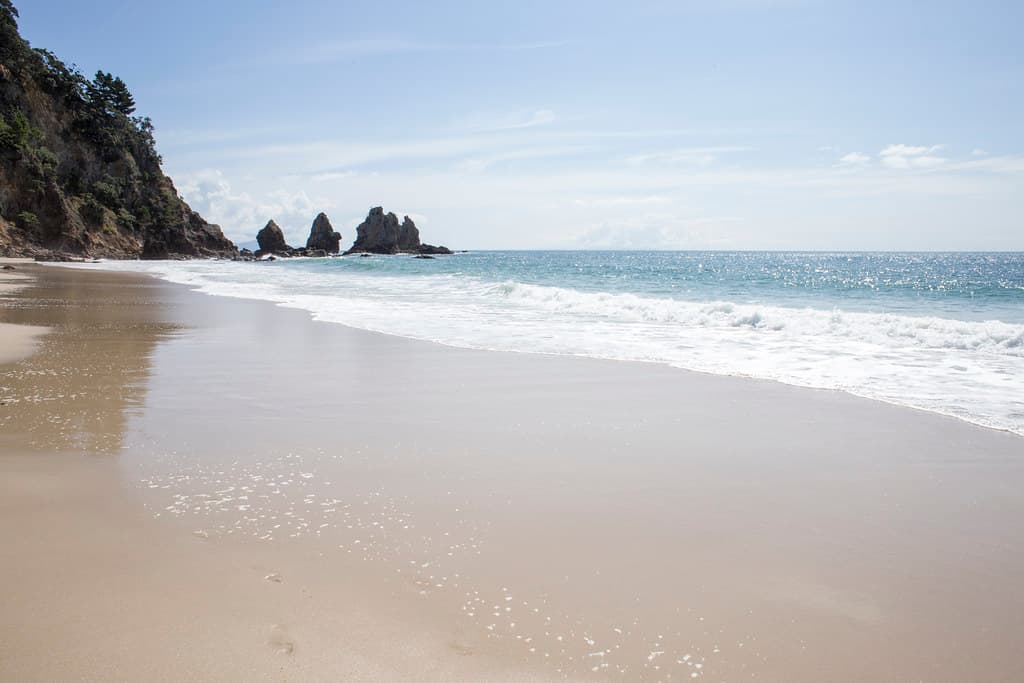
“The beach unfurls in a long arc where footprints disappear with each incoming tide. Native bush tumbles down hillsides to meet sand so fine it squeaks underfoot, while the Coromandel's signature blue water laps at the…”
Limited recent visitor reports — live OBI telemetry is your best guide for current conditions.
You'll find Otama tucked between two forested headlands, accessible via a winding gravel road that keeps the tour buses at bay. The sand here possesses an almost luminous quality—pale grains composed of weathered shell and quartz that warm quickly under the summer sun. Pohutukawa trees lean in from the dunes, their gnarled roots creating natural seats where you can watch incoming swells roll across the bay.
The water shifts colour throughout the day as clouds drift overhead and light changes angle. Morning brings glassy conditions ideal for swimming beyond the shore break, while afternoon winds often stir up small waves that draw bodyboarders to the southern end. At low tide, tide pools collect in the volcanic rock platforms flanking the beach, revealing colonies of sea anemones and the occasional crayfish.
 Credit: Unsplash
coastal dunes and beach at sunset
 Credit: Unsplash
a body of water with a hill in the background
Glassy conditions before noon
Sweeping bay and forest views
Native forest and birdlife
Prime Visitation
Less Crowds|Best Weather
Where it is
Otama Beach
Kūaotunu, Waikato Region, New Zealand
-36.717600°, 175.776900°
Weather
Loading…
Swell
—
Temp
Warm · Restorative
UV Index
Moderate
Wind
—
Tidal State
Last known
Max Sunlight
—
Ideal Shade
—
Jan - Dec (Peak)
Mar - Nov (Off-season)
Less Crowds|Best Weather
Select a category to load nearby places.
Unlock restaurants, luxury stays and curated maritime experiences within 2km
Otama Beach generally offers good swimming conditions, particularly during calm weather in the summer months. The white sand and clear turquoise water make it appealing for swimmers, though it can experience ocean swells and currents typical of open beaches. There are no lifeguard patrols, so swim at your own risk and always assess conditions before entering. The beach is more exposed than sheltered coves, so wave conditions can vary. Swimmers should stay within their comfort zone and avoid swimming alone. During rough weather or after storms, conditions can become hazardous with stronger currents and larger waves.
Otama Beach is less crowded than many Coromandel beaches throughout most of the year due to its somewhat hidden location. For the best combination of good weather and minimal crowds, visit during weekdays in the shoulder seasons of November or March-April. Summer months (December-February) offer the warmest weather but attract more visitors, especially during school holidays and weekends. Early mornings any time of year provide the most peaceful experience. The beach's relative remoteness means even peak season sees fewer people than popular tourist beaches. Mid-week visits outside New Zealand school holidays offer the quietest experience.
Otama Beach is located between Kūaotunu and Opito Bay on a gravel road that can be narrow and winding. From either town, follow local signage toward Otama Beach; the drive typically takes 10-20 minutes depending on your starting point. The access road is unsealed and can be rough in places, though most standard vehicles can manage in dry conditions. A vehicle with good clearance is preferable. Drive carefully and watch for oncoming traffic on narrow sections. Parking is available near the beach but limited. Check locally for current road conditions, especially after heavy rain.
Otama Beach has very limited facilities, maintaining its natural, undeveloped character. There are some basic amenities like toilets, but no shops, cafes, or commercial services directly at the beach. Accommodation in the area consists mainly of private holiday homes and baches available for rent. The nearest towns, Kūaotunu and Opito Bay, offer limited services, while Whitianga provides more comprehensive options about 30-40 minutes away. Visitors should bring all necessary supplies including food, water, and sun protection. Plan to be self-sufficient and pack out all rubbish to help preserve the beach's pristine condition.
Otama Beach stands out for its stunning white sand and remarkably turquoise water, creating a tropical-like appearance rare on New Zealand's coast. The beach's relative isolation has helped preserve its natural beauty and pristine condition. The combination of white sand contrasting with clear turquoise water provides exceptional scenic beauty and photography opportunities. The colors are particularly vivid on sunny days when light illuminates the shallow water. Unlike more developed beaches, Otama maintains an unspoiled character with minimal human impact. This natural beauty combined with fewer crowds creates an exclusive, paradise-like experience for those willing to venture off the main tourist routes.
Photos