Counting the waves…
Counting the waves…
A refined fusion of water purity, environmental stability, and communal vibrancy for Onemana Beach.
View MethodologyAnalyzed via live sensors and environmental data.
Wave height, wind, and atmospheric stability.
Live footfall and crowd balance metrics.
Community reviews and curated sentiment.
“Onemana trades the adolescent energy of Whangamatā for a slower rhythm—retirees walking labradors at dawn, children netting flounder in the estuary, beach cricket stumps planted in firm sand below the dunes.”
Limited recent visitor reports — live OBI telemetry is your best guide for current conditions.
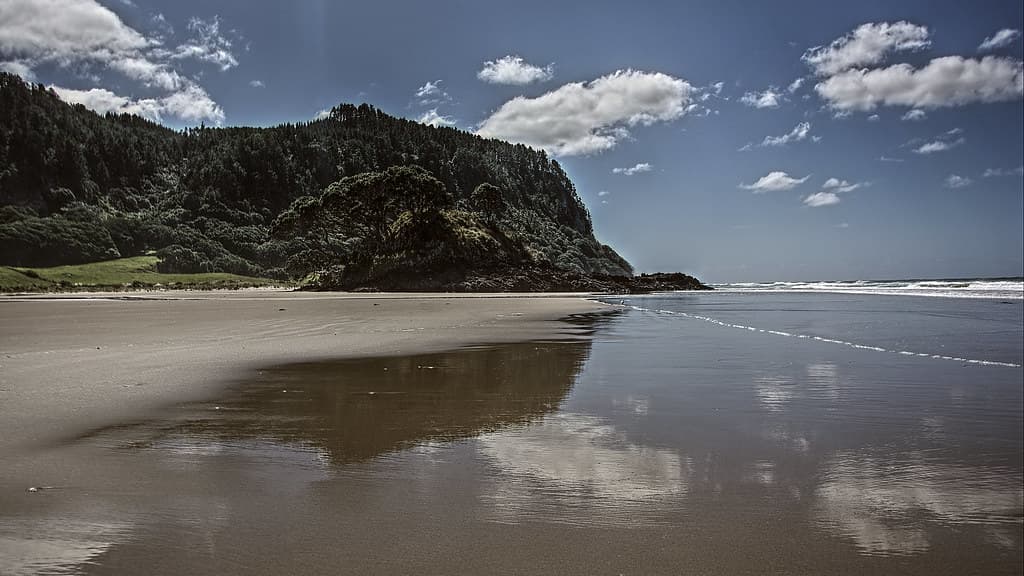
The beach runs north for two kilometers, backed by marram-grass dunes and a scattering of holiday homes that maintain respectful distance from the high-tide line. Sand quality is fine enough for comfortable barefoot walking, with a gentle slope that keeps the shore break manageable for swimmers still building confidence in ocean currents. The southern end borders Wharekawa Harbour, where the estuary drains across the beach at low tide, creating warm shallows popular with families whose children aren't yet ready for the open water.
Surf conditions rarely exceed chest-high, even in solid swells—the offshore reef and island configuration filter out the bulk of South Pacific energy before it reaches the beach. What arrives is usually peaky and forgiving, perfect for longboarders and soft-tops. Water clarity varies with tide and recent weather; after several clear days, you can watch your feet disappear into sand with each step in knee-deep water.
 Credit: Unsplash
person walking on sea carrying surfboard
 Credit: Unsplash
orange sunset in ocean
Gentle waves, gradual seabed
Reserve picnic spots available
Wharekawa Harbour exploration route
Prime Visitation
Best Weather|Less Crowds
Where it is
Onemana Beach
Onemana, Waikato Region, New Zealand
-37.148600°, 175.878500°
Weather
Loading…
Swell
—
Temp
Warm · Restorative
UV Index
Moderate
Wind
—
Tidal State
Last known
Max Sunlight
—
Ideal Shade
—
Jan - Dec (Peak)
Mar - Nov (Off-season)
Best Weather|Less Crowds
Select a category to load nearby places.
Unlock restaurants, luxury stays and curated maritime experiences within 2km
Onemana Beach is generally considered family-friendly with relatively calm conditions compared to more exposed surf beaches. The beach has a gentle slope and sandy bottom suitable for children, though it remains an ocean beach where conditions can change. There are no permanent lifeguard patrols, so parents must supervise children closely and assess conditions before swimming. The beach typically experiences lighter surf than nearby Whangamatā, contributing to its reputation as a calmer holiday destination. Standard ocean safety applies: watch for rips, avoid swimming alone, and be cautious during rough weather or high surf conditions.
The best time to visit Onemana Beach is during the summer months (December-February) for warm weather and ideal beach conditions, though this is peak holiday season. For fewer crowds while maintaining good weather, visit during November or March. The beach's reputation as a quieter alternative to Whangamatā means it stays relatively peaceful even during busy periods. Autumn (April-May) offers mild weather with minimal crowds. Winter is very quiet but swimming is less appealing due to cooler temperatures. Weekdays throughout summer provide a more relaxed experience than weekends and public holidays.
Onemana Beach is located on the Coromandel Peninsula's east coast, just north of Whangamatā. From Whangamatā township, drive approximately 10 minutes north via Onemana Drive. From Auckland, expect roughly a 2.5-hour drive via State Highway 2 to Waihi, then State Highway 25 south. From Thames, it's about 1.5 hours via SH25. The beach has parking areas near the main access points, though spaces can fill during peak summer periods. Roads are sealed and well-maintained. Public transport is virtually non-existent in this area, so private vehicle access is necessary for most visitors.
Onemana is primarily a residential holiday village with limited commercial facilities. Accommodation consists mainly of private holiday homes (baches) available for rent through various agencies, with a small motor camp also available. There are no restaurants, cafes, or significant shops directly at Onemana Beach—visitors will find only basic supplies at a small store. For dining out, supermarkets, and more accommodation options, nearby Whangamatā township (10 minutes away) provides full services including restaurants, cafes, and shops. Most Onemana visitors self-cater and appreciate the quiet, uncommercialised residential character of this beach village.
Onemana Beach offers a noticeably calmer, more residential holiday atmosphere compared to the busier, more commercialised Whangamatā. While Whangamatā features shops, cafes, restaurants, and a livelier scene, Onemana maintains a quieter village feel with mainly holiday homes and minimal development. Onemana typically experiences gentler surf and fewer crowds, making it popular with families seeking a peaceful retreat. The beach is smaller and more intimate than Whangamatā's long stretch. Visitors choose Onemana specifically for its relaxed character while still being close enough to access Whangamatā's amenities when needed.
Photos