Counting the waves…
Counting the waves…
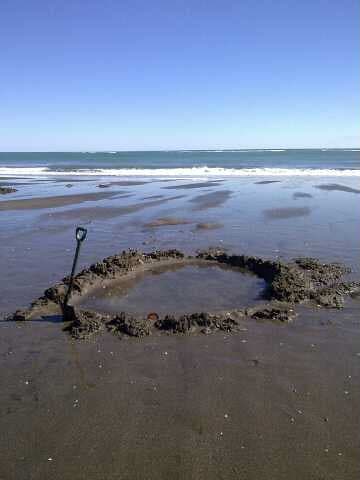
The phenomenon seems improbable even as you feel it—digging through cool surface sand with a borrowed spade, then watching your hole fill with water that grows progressively hotter as you excavate deeper. Within ten minutes you've created a personal hot pool, its temperature controlled by the depth you dig and how much cold seawater you allow to mix in. Families cluster along a hundred-meter stretch of sand, each group engineering their own soaking pool while the Tasman crashes a few meters away. Kawhia Hot Water Beach exists in the shadow of its more famous Coromandel namesake, which suits locals perfectly. You'll share this black-sand beach with perhaps twenty other pool-diggers at peak low tide, versus the hundreds that mob the Coromandel version. The setting amplifies the experience—the historic harbourside village behind you, bush-covered hills rising from the water's edge, the Kawhia harbor entrance visible to the north where it meets the open ocean. Mineral smell mingles with salt air as you sink into your excavated pool, adjusting depth and position until the temperature reaches that perfect threshold between relaxing and scalding. The window is narrow. Arrive more than two hours before low tide and the springs sit beneath too much water. Wait too long after low tide and the incoming surge floods your carefully engineered pool, forcing you to dig frantically to maintain the hot-cold balance. You'll see the same scene repeated around you—people timing their soak to the tide, reluctantly abandoning their pools as the ocean reclaims the beach, already planning their return for tomorrow's low tide.
Places, rentals, tours and events within walking and driving distance of Kawhia Hot Water Beach.
Photos
Hot pools can only be dug during the two hours either side of low tide when the geothermal springs are accessible on the beach. Outside this window, the springs are underwater. Tide times vary daily, so check local tide charts before visiting. The hot water is most concentrated in a specific zone near Te Puia Springs, marked by steam rising from the sand. Arrive early during peak season as good spots fill quickly. Bring a shovel to dig your pool in the black sand.
The beach can be family-friendly with proper precautions. The hot spring water can be extremely hot, sometimes scalding, so always test the temperature before entering and mix in cooler seawater. Supervise children closely as temperatures vary across the pool and water depth can change. The ocean itself has typical west coast conditions with waves and currents. Avoid digging pools too close to the incoming tide. The black sand can also get very hot in summer sun, so footwear is advisable.
From Kawhia village, drive or walk along Kawhia Harbour toward Ocean Beach Road. The hot water beach (Te Puia Springs) is located at the southern end of Ocean Beach, accessed via a short walk from the car park. Kawhia itself is reached via State Highway 31 from Te Awamutu or Otorohanga, roughly 50-60 kilometers on winding rural roads. The journey takes about an hour from these towns. The final approach to the beach is on unsealed road but generally suitable for normal vehicles.
Kawhia village, a few minutes' drive from the hot water beach, offers limited but authentic options. The Kawhia Hotel provides meals and accommodation. There are also holiday homes, a motor camp, and basic shops for supplies. The famous Kawhia Kai food truck often operates from the wharf, serving fresh fish and chips and local seafood. For more extensive dining and lodging choices, visitors typically base themselves in Raglan or Otorohanga and make Kawhia a day trip destination.
Unlike commercial hot pools, Kawhia offers a completely natural, DIY geothermal experience where you dig your own private spa in the volcanic black sand. The springs flow from underground, creating free, accessible thermal bathing directly on the beach. The remote, uncommercial setting gives it an authentic, hidden-gem quality. The combination of geothermal activity meeting the Tasman Sea is rare. This beach also holds cultural significance to local Māori, being near historic Kawhia Harbour where the Tainui waka (canoe) landed centuries ago.