Counting the waves…
Counting the waves…
A refined fusion of water purity, environmental stability, and communal vibrancy for Whale Bay.
View MethodologyAnalyzed via live sensors and environmental data.
Wave height, wind, and atmospheric stability.
Live footfall and crowd balance metrics.
Community reviews and curated sentiment.
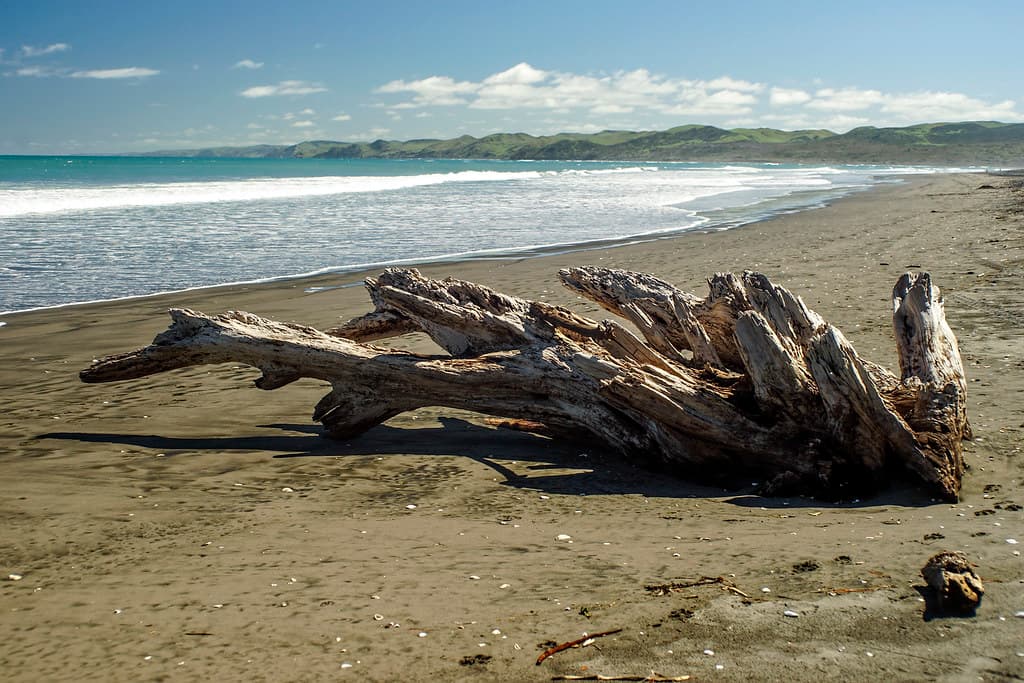
“The coastal track deposits you on a narrow strip of black sand wedged between cliff faces and the churning Tasman. Dark volcanic rocks the size of cars punctuate the shore, remnants of ancient eruptions now softened by…”
Limited recent visitor reports — live OBI telemetry is your best guide for current conditions.
Whale Bay announces itself with sound before sight—the bass rumble of sets detonating on the outer reef carries up the access track, building anticipation with each step. You emerge from the pohutukawa canopy to find surfers stroking into long left walls that wrap around the rocky point, their lines traced against dark water and darker stone. The bay takes its name from the occasional southern right whales that shelter here during migration, though you're more likely to see dolphins surfing the lineup or seals hauled out on the volcanic platforms.
The reef break works with mechanical consistency when the swell hits two meters-plus from the west or southwest. Waves peel for two hundred meters on the best days, offering multiple sections and barrel opportunities for skilled surfers who know the takeoff zone. The rocks add consequence to every session—you navigate between boulders on the paddle out, dodge shallow inside sections, and time your exit through the channel with precision. Photographers colonize the southern rocks, capturing the classic Raglan lineup silhouetted against late-afternoon light.
 Credit: Unsplash
man and woman sitting on grass field near lake during daytime
 Credit: Unsplash
bird's eye view of body of water near mountain
Two-hundred-meter walls on swells
Volcanic rocks frame breaking waves
Pohutukawa forest and ocean views
Prime Visitation
Anytime|Best Weather
Where it is
Whale Bay
Raglan, Waikato, New Zealand
-37.797900°, 174.806900°
Weather
Loading…
Swell
—
Temp
Warm · Restorative
UV Index
Moderate
Wind
—
Tidal State
Last known
Max Sunlight
—
Ideal Shade
—
Jan - Dec (Peak)
Mar - Nov (Off-season)
Historical data suggests peak visibility and stable sea temperatures occur during the prime visitation window.
Near Whale Bay
Explore dining, stays, nightlife, and activities near Whale Bay in Raglan, New Zealand. Every listing below is a real place linked to this beach — open a card for reviews, maps, and booking options.
Food, cafés, and dining close to Whale Bay — curated from places linked to this beach.
Stays and lodging options near Whale Bay for your beach trip.
Activities, tours, and attractions near Whale Bay.
Select a category to load nearby places.
Unlock restaurants, luxury stays and curated maritime experiences within 2km
Whale Bay is not recommended for casual swimming. The bay is known for powerful surf breaking over volcanic rock shelves, creating dangerous conditions for non-surfers. Strong currents, sudden wave sets, and the rocky bottom make it hazardous for swimmers. There are no lifeguard services at this remote beach. Even experienced surfers need to respect the powerful waves and shallow rock ledges. Visitors who aren't surfing should enjoy the dramatic scenery from shore and leave the water to experienced wave riders who understand the risks.
Whale Bay can be visited year-round, with different seasons offering varied experiences. For surfing, autumn and winter (March-September) typically bring the largest swells and best wave conditions. Summer offers more stable weather for spectators and photographers wanting to capture the dramatic coastline. Early morning often provides offshore winds and better surf conditions, plus beautiful light for photography. The bay's volcanic rock formations and powerful waves create stunning scenery regardless of season, though weather can be unpredictable on the west coast.
Whale Bay is located along Wainui Road, approximately 7-8 kilometers southwest of Raglan town, just beyond Manu Bay. The drive takes about 15 minutes on sealed road. Park at the designated area and take the short walking track down to the bay. The path involves some steps and uneven terrain but is manageable for most fitness levels. The bay sits between Manu Bay and Indicators surf breaks along Raglan's famous coastline. Signage is limited, so using GPS or asking locals for directions is helpful.
Whale Bay has no facilities—no toilets, showers, food outlets, or fresh water. Visitors should bring everything needed from Raglan town, which is the nearest service center. Raglan offers cafes, restaurants, supermarkets, and various accommodation options from camping grounds to motels and vacation rentals. Most visitors stay in Raglan and drive to Whale Bay for surfing or sightseeing. The lack of development preserves the bay's natural character but requires preparation. Pack out all rubbish and respect the pristine environment.
Whale Bay is renowned for its powerful, hollow waves breaking over volcanic rock ledges, creating challenging and photogenic surf. The bay produces fast, barreling waves that require skill and courage to ride successfully. The dramatic setting with dark volcanic rocks and powerful Tasman Sea swells creates an impressive natural amphitheater. While less consistent than neighboring Manu Bay, when conditions align, Whale Bay offers world-class waves. The combination of raw power, scenic beauty, and technical difficulty has earned it legendary status in New Zealand's surf culture and international recognition.
Photos