Counting the waves…
Counting the waves…
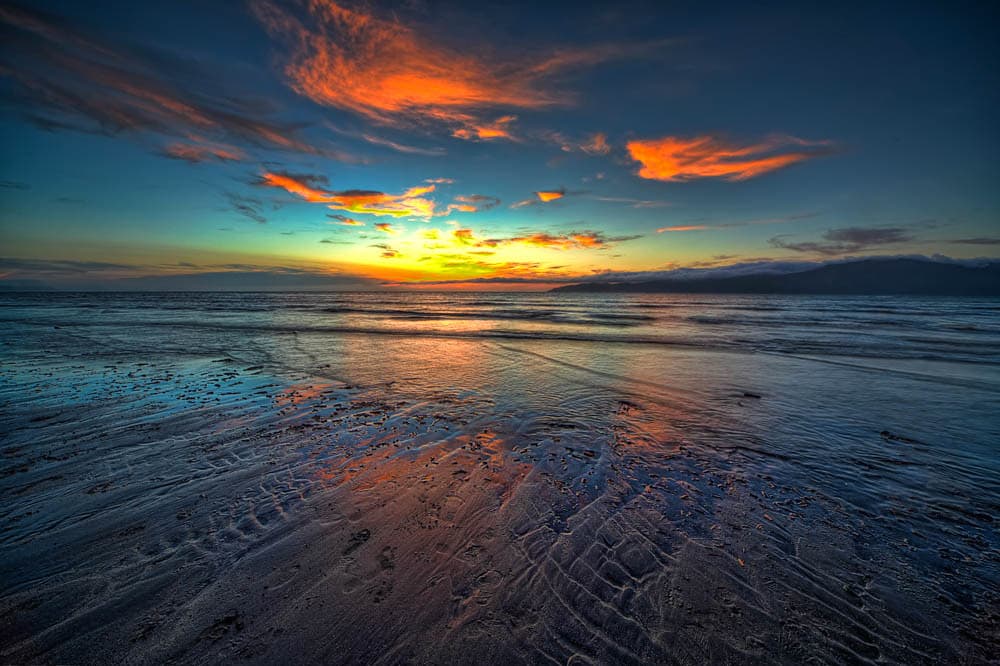
You'll approach through the riverside track, passing beneath kanuka trees where tui chatter in the canopy. The path emerges where the Waikanae River spreads wide and shallow across its final hundred meters, braiding through sand and shingle before surrendering to the sea. On your left, the estuary proper shelters behind a natural berm—a quiet lagoon where black swans glide between reflected clouds and juvenile flounder dart through ankle-deep water the color of pale tea. The beach proper runs straight and level in both directions, its sand fine-grained and firm underfoot when the tide's out. Small waves fold over in neat lines, their wash racing up the slope before retreating with a hiss that sounds like static. Families claim patches of dry sand above the drift line, while dogs chase gulls in great looping arcs. The estuary side remains calmer, warmer, better for small children who aren't yet ready for the Tasman's insistence. Late afternoon brings the light that photographers wait for—low sun turning the shallow estuary gold, the river mouth glowing amber where fresh water meets salt. Oystercatchers work the margins in small flocks, their orange beaks stabbing between wavlets. Behind you, Kapiti Island anchors the horizon, its forested ridgeline darkening to silhouette as the day softens into evening. The air smells of sand and salt grass, of river water and seaweed warming in the last of the sun.
Places, rentals, tours and events within walking and driving distance of Waikanae Estuary Beach.
Photos
The estuary environment creates generally calmer conditions than open coast beaches, making it family-friendly on settled days. However, the river mouth can have currents and changing depths, particularly around high tide and after rainfall. The sandy bottom is suitable for paddling and shallow swimming. This beach is better for wading, exploring rockpools, and estuary activities than serious swimming. Always supervise children closely, especially near the river channel, and be aware of tidal changes.
Visit during mid to high tide for better water coverage and swimming conditions, though low tide reveals interesting estuary features for exploration. Summer months (December-February) offer the warmest weather, but this beach's sheltered nature makes it pleasant year-round with fewer crowds than more popular Kāpiti beaches. Early morning and late afternoon provide excellent light for the scenic estuary setting and potential wildlife viewing. Weekdays are quieter than weekends for families seeking peaceful beach time.
The beach is located in Waikanae, approximately 50 minutes north of Wellington via State Highway 1. From the highway, take the Waikanae exit and follow signs toward the beach and river mouth. Parking is available near the estuary area off Jim Cooke Memorial Park. The beach is also accessible by train on the Kāpiti Line to Waikanae station, followed by a walk or short bus ride to the coast. Local streets provide pedestrian access to the beach.
Waikanae township, just a few minutes inland, has cafés, restaurants, takeaways, and supermarkets for provisions. The nearby shopping area along Te Moana Road offers various dining options. Accommodation includes motels, holiday rentals, and bed and breakfasts throughout Waikanae. The beach itself has limited facilities, mainly toilets and picnic areas, so plan to bring supplies or visit town. Neighbouring Paraparaumu (five minutes south) provides additional restaurant and accommodation choices.
The defining feature is its unique estuary environment where the Waikanae River meets the sea, creating diverse habitats for birdlife and marine species. Unlike the more developed beaches nearby, this offers a more natural, quieter coastal experience with opportunities for estuary exploration and nature observation. The river mouth creates interesting landscapes that change with tides and seasons. It's particularly appealing for families seeking gentle waters and those interested in coastal ecology rather than surfing or busy beach scenes.