Counting the waves…
Counting the waves…
A refined fusion of water purity, environmental stability, and communal vibrancy for Cape Foulwind Beach.
View MethodologyAnalyzed via live sensors and environmental data.
Wave height, wind, and atmospheric stability.
Live footfall and crowd balance metrics.
Community reviews and curated sentiment.
“Cape Foulwind Beach stretches north of the rocky cape itself, a raw expanse of charcoal sand hammered by swells that have crossed the Tasman without obstruction. The beach exists in a state of constant rearrangement,…”
Limited recent visitor reports — live OBI telemetry is your best guide for current conditions.
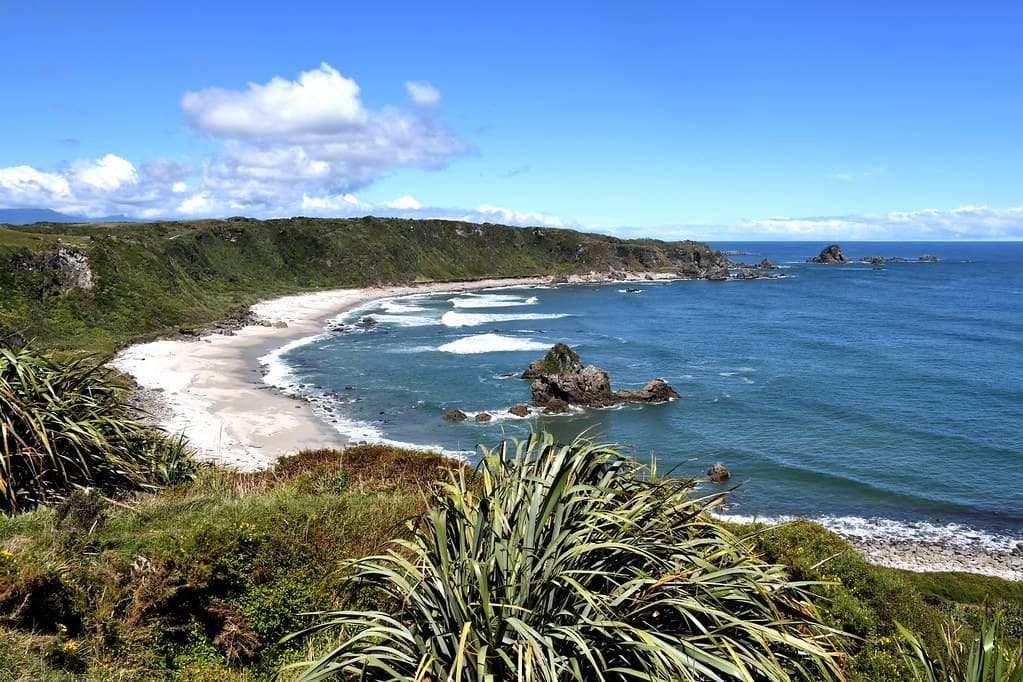
You reach the beach via a track that descends through coastal scrub—stunted ngaio and taupata bent inland by prevailing westerlies. The sand appears suddenly, dark and heavy, scattered with pumice stones that float here from distant Pacific volcanoes. Swells approach in long, organized lines before jacking up sharply and breaking with the kind of force that shakes the ground beneath your feet. Foam runs up the beach in sheets, sinking into sand so black it looks wet even when dry.
The cape itself looms to the south, a buttress of rock where a seal colony sprawls across platforms lashed by spray. To the north, the beach extends for kilometers, backed by dunes that give way to farmland where cattle graze within sight of breakers. Driftwood tangles at the high-tide mark—entire trees stripped of bark, bleached and polished by sand and salt. The wind here is relentless, coming off the Tasman with enough force to sandblast exposed skin and turn conversations into shouting matches.
 Credit: Unsplash
sea view during daytime
 Credit: Unsplash
a sandy beach with grass and bushes in the foreground
Heavy Tasman swells, shifting sandbars
Cape platform with fur seals
Swells meeting volcanic black sand
Prime Visitation
Best Weather
Where it is
Cape Foulwind Beach
Cape Foulwind, West Coast, New Zealand
-41.752700°, 171.476200°
Weather
Loading…
Swell
—
Temp
Warm · Restorative
UV Index
Moderate
Wind
—
Tidal State
Last known
Max Sunlight
—
Ideal Shade
—
Jan - Dec (Peak)
Mar - Nov (Off-season)
Historical data suggests peak visibility and stable sea temperatures occur during the prime visitation window.
Select a category to load nearby places.
Unlock restaurants, luxury stays and curated maritime experiences within 2km
Cape Foulwind Beach is an exposed, rugged open-coast beach facing the full force of the Tasman Sea, making it generally unsafe for swimming. The area experiences powerful surf, strong currents, rips, and cold water temperatures throughout the year. There are no lifeguards or safety facilities. The beach's name itself—given by Captain Cook in 1770—reflects the harsh weather conditions common here. Swimming is strongly discouraged; enjoy the beach for walking, surfing (experienced only), and scenic appreciation instead.
For the most favorable weather, visit during summer months (December-February) when temperatures are warmest and conditions generally calmer, though weather can still be unpredictable. The West Coast experiences high rainfall year-round, so waterproof gear is essential anytime. Early morning often provides clearer skies before afternoon cloud develops. Winter brings dramatic storm-watching opportunities and powerful surf displays. The nearby Cape Foulwind walkway to the seal colony is accessible year-round, with seal viewing best during breeding season (September-November).
Cape Foulwind is located approximately 10-12km west of Westport on the West Coast. From Westport, follow Cape Foulwind Road toward the lighthouse. The beach access is separate from the more popular Tauranga Bay. You'll need a vehicle as public transport is extremely limited in this area. Roads are sealed but can be narrow and winding. Allow 15-20 minutes driving from Westport. Look for beach access points along the cape road, though signage may be minimal.
The Cape Foulwind area itself has limited accommodation options, mainly holiday homes and small lodges. Westport, the nearest town, offers the best range of hotels, motels, backpackers, and holiday parks, plus supermarkets, cafes, and restaurants. There are no facilities directly at Cape Foulwind Beach—no shops, toilets, or cafes—so bring everything you need. Pack food and water for your visit, and plan to return to Westport for meals and supplies. The area is remote and requires self-sufficiency.
Cape Foulwind Beach offers consistent, powerful surf thanks to its exposed position on the open West Coast, receiving uninterrupted Tasman Sea swells. However, this is strictly for experienced surfers only—the waves are powerful, the currents strong, and conditions can be heavy and unpredictable. The rugged, wild setting provides a raw surfing experience away from crowds. The beach's separate location from the more family-friendly Tauranga Bay means it attracts those seeking serious surf rather than casual beach visits. Always check conditions and surf with others.
Photos