Counting the waves…
Counting the waves…
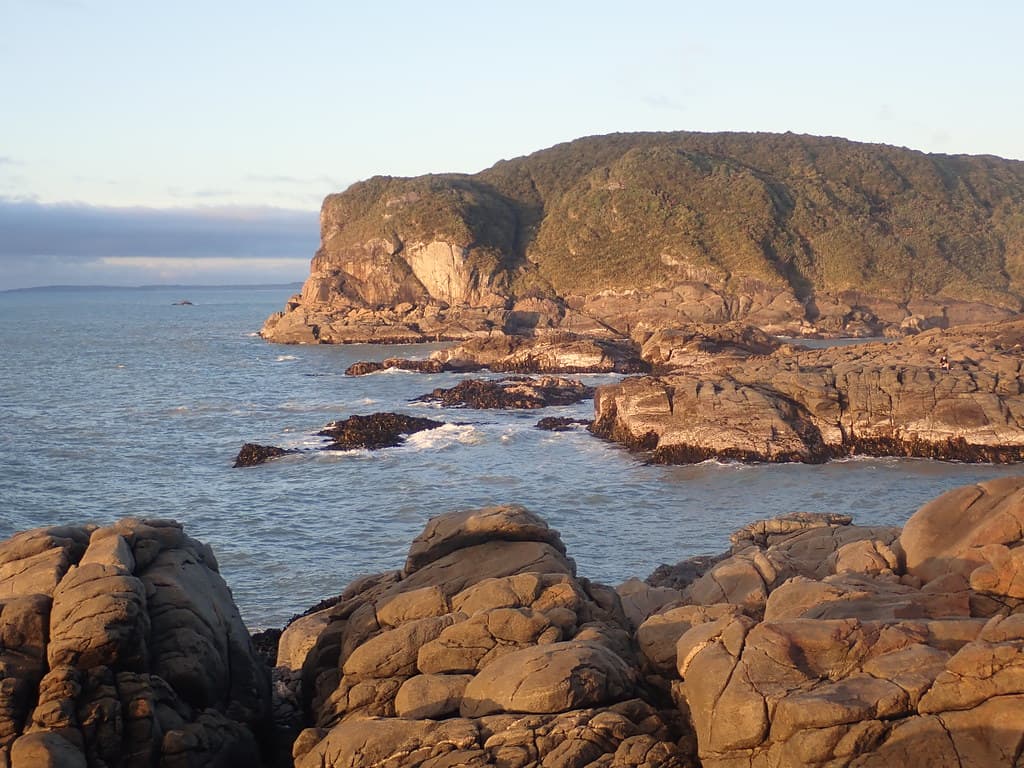
Joyce Bay sits just beyond Charleston's scatter of houses, accessible via a short track that drops through coastal scrub. The bay itself is smaller than a football field, bound by limestone headlands that rise in layered grey strata, each band recording millions of years of marine deposition. The sand is coarse and limited—at high tide, the beach nearly disappears, replaced by wave-washed rock platforms and surging whitewater. What makes Joyce Bay compelling is its geology in miniature. The limestone here contains fossil fragments—ancient shells and marine organisms compressed into rock—and solution cavities pock the headlands where rainwater has slowly dissolved calcium carbonate. At low tide, rockpools form in the platforms, each one a self-contained ecosystem of crabs, anemones, and small fish. The water is rarely calm enough for swimming, but on protected days it shifts through shades of green and turquoise, colors that seem impossible against the grey stone. You'll visit Joyce Bay for its concentrated beauty rather than for lounging. This is a beach for exploration—poking into crevices, watching waves explode against headlands, running fingers over rock that predates human existence by geological epochs. The scale is intimate, the setting dramatic, and the likelihood of having it to yourself remarkably high. Charleston's visitors rush north to Pancake Rocks or south to the Fox River caves, leaving Joyce Bay to those who actually look at maps.
Places, rentals, tours and events within walking and driving distance of Joyce Bay.
Photos
Joyce Bay shares the typical hazards of West Coast beaches, including cold water, strong currents, and unpredictable surf conditions. As a compact bay along the limestone coast, it may offer some natural shelter, but the Tasman Sea remains powerful and dangerous. There are no lifeguards, facilities, or designated swimming zones. The rocky nature of the coastline adds additional hazards. Swimming is not recommended unless you're experienced with wild ocean conditions and never swim alone.
Summer months (December-February) provide the most favorable weather, with warmer temperatures and relatively lower rainfall, though the West Coast receives significant precipitation year-round. For solitude, weekdays and shoulder seasons (autumn and spring) offer the best chance to have this hidden bay to yourself. Low tide typically provides better access to explore the limestone formations. Check local tide tables and weather forecasts before visiting, as conditions change rapidly along this exposed coastline.
Joyce Bay is located near Charleston village on the West Coast. Being a lesser-known spot often missed by broader beach lists, access may require local knowledge or careful navigation. Charleston is positioned on State Highway 6 between Westport and Punakaiki. Given the bay's compact size and limestone coastal setting, access may involve walking from Charleston or navigating unmarked paths. It's advisable to inquire locally or use detailed maps, as signage for smaller bays is often minimal.
Joyce Bay itself has no facilities—no toilets, parking areas, or amenities. Charleston village offers very limited services, with basic supplies available but few dining options. You'll need to be self-sufficient, bringing all necessary food, water, and supplies. The nearest towns with proper supermarkets, cafes, and restaurants are Westport (approximately 30km north) and Punakaiki (around 50km south). Plan ahead and stock up before arriving in the Charleston area.
Joyce Bay remains relatively unknown because it doesn't appear on many mainstream beach guides and lacks obvious signage or developed access points. The West Coast's more famous attractions like Pancake Rocks at Punakaiki and larger beaches draw most visitors' attention. The bay's compact size and location beside Charleston's limestone coast make it easy to overlook unless you're specifically seeking hidden coastal spots. This obscurity is exactly what appeals to travelers looking for authentic, uncrowded experiences away from tourist trails.