Counting the waves…
Counting the waves…
A refined fusion of water purity, environmental stability, and communal vibrancy for Hokitika Beach.
View MethodologyAnalyzed via live sensors and environmental data.
Wave height, wind, and atmospheric stability.
Live footfall and crowd balance metrics.
Community reviews and curated sentiment.
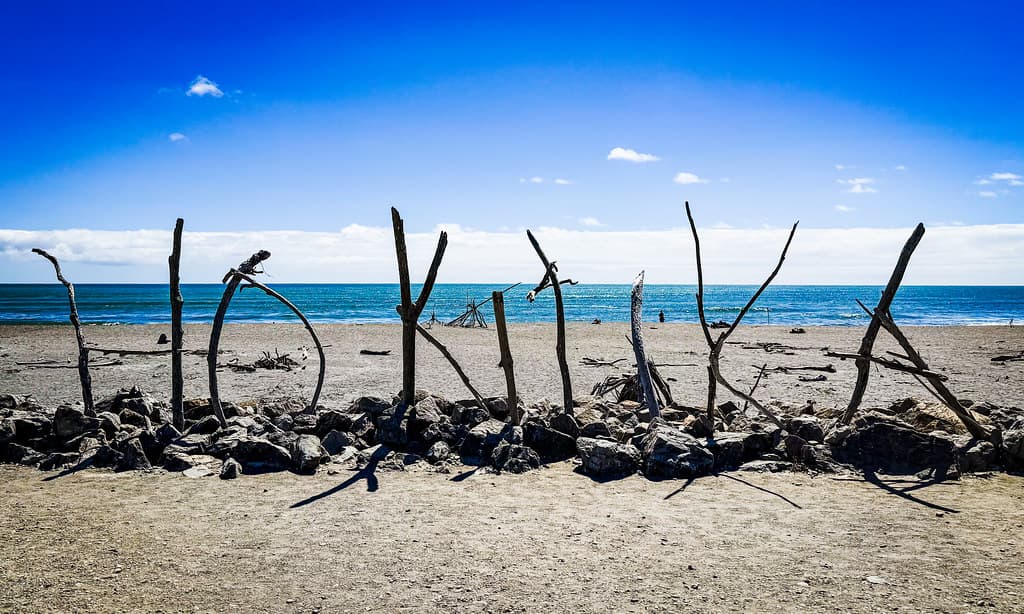
“Walk through the 'HOKITIKA' sign built from weathered timber and you're on a beach that has perfected the art of the West Coast aesthetic. Expect iron-grey sand, stacked driftwood sculptures, and sunsets that justify…”
Higher weekend density may affect water purity and crowd scores temporarily.
The sand beneath your feet is dark and firm, packed hard by tidal action and loaded with black iron minerals that glitter when the light hits right. Hokitika Beach runs for miles in both directions from the town center, but everyone congregates near the driftwood installations—letters ten feet tall spelling 'HOKITIKA,' plus an ever-changing collection of spontaneous structures built by visitors. Some are simple teepees; others are elaborate spirals and archways that last until the next king tide reclaims the wood.
The Southern Alps stack up on the eastern horizon, their snow-capped peaks visible on clear mornings before the coastal haze builds. The Tasman here is reliably turbulent, its surf lines marching in from the west with metronomic consistency. You'll see dog walkers, families with kites, and couples timing their arrival to the sunset forecast. The beach is thoroughly accessible—a short stroll from Gibson Quay means you can park in town and walk to the sand in five minutes.
 Credit: Unsplash
a driftwood on a beach with a cloudy sky in the background
 Credit: Unsplash
a chair sitting on top of a sandy beach next to the ocean
Driftwood sign at golden hour
Miles of unrestricted shoreline
Build your own structure
Prime Visitation
Anytime
Where it is
Hokitika Beach
Hokitika, West Coast, New Zealand
-42.718300°, 170.963100°
Weather
Loading…
Swell
—
Temp
Warm · Restorative
UV Index
Moderate
Wind
—
Tidal State
Last known
Max Sunlight
—
Ideal Shade
—
Jan - Dec (Peak)
Mar - Nov (Off-season)
Historical data suggests peak visibility and stable sea temperatures occur during the prime visitation window.
Near Hokitika Beach
Explore dining, stays, nightlife, and activities near Hokitika Beach in Hokitika, New Zealand. Every listing below is a real place linked to this beach — open a card for reviews, maps, and booking options.
Food, cafés, and dining close to Hokitika Beach — curated from places linked to this beach.
Stays and lodging options near Hokitika Beach for your beach trip.
Activities, tours, and attractions near Hokitika Beach.
Select a category to load nearby places.
Unlock restaurants, luxury stays and curated maritime experiences within 2km
Hokitika Beach is generally not recommended for swimming due to strong currents, rips, and unpredictable West Coast surf conditions. The beach is unpatrolled with no lifeguard services. While paddling in shallow water can be safe on calm days, entering deeper water is risky. The waves and currents can be deceptively powerful, and the water is cold year-round. Many visitors enjoy walking along the shore and wading, but serious swimming should be avoided. Children should be closely supervised near the water's edge. The beach is primarily valued for its scenic beauty, sunsets, and photography rather than water activities.
Hokitika Beach is famous for spectacular sunsets, best experienced during summer evenings (December-February) when sunset occurs later and weather is often clearer. However, dramatic sunsets can occur year-round. Arrive at least 30 minutes before sunset to find the famous 'HOKITIKA' driftwood sign and position yourself for photos. The beach faces west, providing unobstructed Tasman Sea sunset views. Check sunset times and weather forecasts beforehand, though even cloudy conditions can create atmospheric effects. Early mornings also offer beautiful light and fewer crowds. The beach is photogenic anytime, but golden hour lighting makes it truly Instagram-worthy.
Hokitika Beach is easily accessible from Hokitika town centre, located just a few minutes' walk or short drive from the main street. Head toward the waterfront and follow signs to the beach. There's ample free parking in designated areas near the beach access points, including near the Sunset Point lookout. The beach stretches for several kilometres, with multiple access points. Most visitors park near the central area where the famous HOKITIKA sign is located. The walk from town takes roughly 10-15 minutes. The beach is fully accessible and well-signposted, making it easy to find for first-time visitors.
Hokitika town offers a good selection of cafes, restaurants, and pubs within easy walking distance of the beach. You'll find everything from casual fish and chips to fine dining, with local specialties including West Coast whitebait when in season. Accommodation options range from budget backpackers to motels, boutique hotels, and holiday parks, many offering ocean views. Some beachfront properties provide direct beach access. The town centre has supermarkets for self-catering supplies. Given Hokitika's compact size, virtually all accommodation is convenient to the beach. Book ahead during peak summer season and during the annual Wildfoods Festival in March.
The large 'HOKITIKA' sign spelled out in driftwood on the beach has become one of New Zealand's most photographed and Instagrammed landmarks. Created and maintained by locals using natural driftwood collected from the beach, the sign changes appearance as pieces are replaced and rearranged. It perfectly captures the West Coast's rugged character and creative spirit. Positioned for stunning sunset backdrops with the Tasman Sea beyond, it's become an essential photo opportunity for visitors. The sign represents Hokitika's identity and community pride, transforming a beautiful but otherwise typical West Coast beach into an iconic destination that attracts photographers and travellers worldwide.
Photos