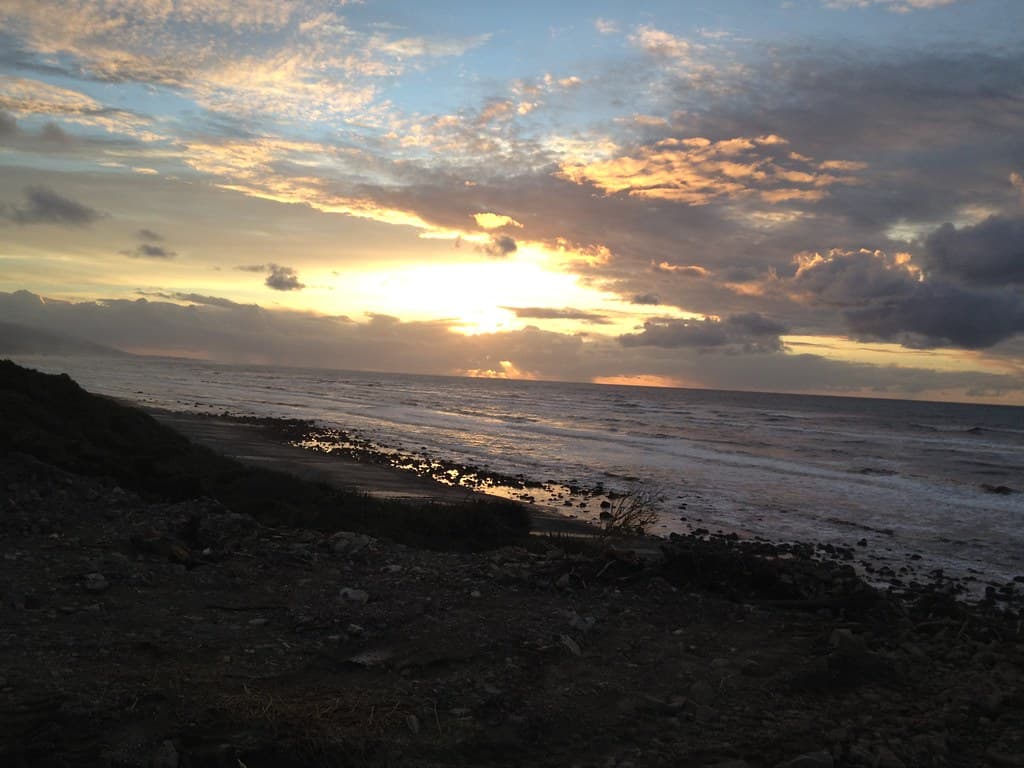
Counting the waves…
Counting the waves…
The Mokihinui River broadens as it approaches the sea, creating a complex estuary system that shifts with every flood. The beach forms the western boundary: dark sand that curves north and south in a generous arc, backed by dunes colonized by pingao and marram. On the southern arm, the settlement clings to the hillside—a handful of residences, a former coal-loading site, the historical footprint of an extractive economy now mostly memory. You can walk both the ocean beach and the calmer estuary edges, each offering different character. The sea-facing strand receives the Tasman's full energy: consistent swells, often windblown, the surf loud and continuous. The river side provides gentler water, popular with families who let children paddle in the shallows while adults fish the channels for flounder and kahawai. At low tide, the estuary reveals extensive sandbars and mudflats where oystercatchers and godwits probe for invertebrates. The surrounding landscape is quintessential West Coast: dense native bush clothing the ranges, the Mokihinui Gorge cutting inland toward the hydroelectric controversy that drew national attention years ago. Walking the beach, you see layers of history—coal seams in the cliff faces, remnants of mining infrastructure, the ever-present reminder that this coast has always been about extraction and survival. Yet the natural systems persist: tidal rhythms, bird migrations, river flow meeting ocean current in eternal negotiation.
Places, rentals, tours and events within walking and driving distance of Mokihinui Beach.
Photos
Swimming at Mokihinui Beach requires caution due to strong currents, rips, and unpredictable Tasman Sea conditions. The river mouth creates additional hazards with changing sandbars and outflows. There are no lifeguards or facilities, and the beach is remote with limited mobile coverage. Most visitors prefer paddling in the calmer river areas or simply enjoying coastal walks. Always check weather and tide conditions before visiting, and never swim alone in these wild West Coast waters.
The best time to visit Mokihinui Beach is during summer and early autumn (December to April) when weather is more settled and days are longer for fishing and walking. However, the West Coast experiences rain year-round, so be prepared for changeable conditions. Visiting on weekdays or outside school holidays offers fewer crowds and a more peaceful experience. Early mornings and late afternoons provide the best light for photography and wildlife spotting along this scenic coastline.
Mokihinui Beach is located approximately 25 kilometres north of Westport along State Highway 67. Turn off the highway at the small settlement of Mokihinui and follow the signs toward the coast. The final approach involves a short unsealed road suitable for most vehicles in dry conditions. The beach is relatively remote with no public transport options, so a private vehicle is essential. Allow extra travel time as the coastal highway is winding, and weather can affect road conditions.
Mokihinui is a tiny settlement with very limited services. There are no shops, cafes, or restaurants at the beach itself. The nearest accommodation and dining options are in Westport, 25 kilometres south, which offers motels, hotels, cafes, and supermarkets. Some visitors bring their own food and supplies for beach picnics. A small number of holiday homes exist in the area, sometimes available for rental. Always stock up on essentials before leaving Westport or larger towns.
Mokihinui Beach is particularly valued by local anglers for river-mouth fishing where the Mokihinui River meets the Tasman Sea. The mixing of fresh and salt water attracts kahawai, salmon (in season), and other species. The river itself offers whitebait fishing during spring runs, a West Coast tradition. The remote location means less fishing pressure than more accessible beaches. However, always check current fishing regulations, size limits, and seasonal restrictions before casting a line in this area.