
Counting the waves…
Counting the waves…

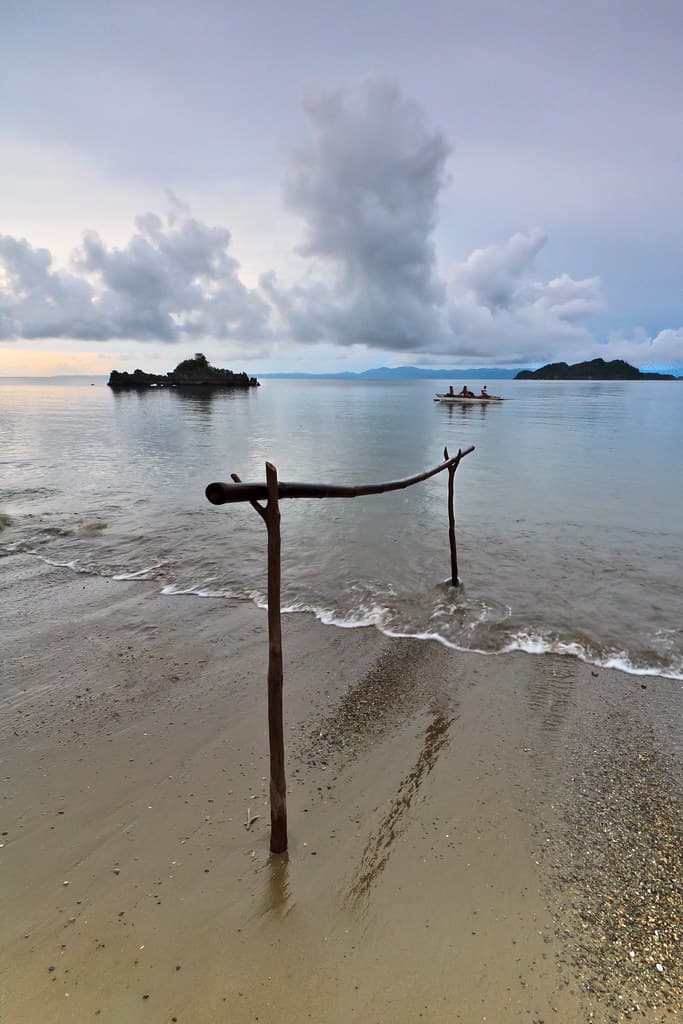
You'll enter through a gap between cliffs barely wide enough for a single banca, the walls close enough to touch on both sides. Then the cove opens suddenly into a protected bowl where the water goes still except for the gentlest surface movement. The rock faces show layers of geological time—ash deposits, coral limestone, volcanic intrusions all stacked and tilted at odd angles. The beach itself is a narrow strip, more pebble than sand, where the limestone has broken down into smooth white fragments the size of your thumbnail. It crunches underfoot and radiates heat by midday, sending you into the water for relief. Snorkeling here means following the walls down where they continue underwater, riddled with small caves and overhangs that shelter schools of juvenile fish. Above, the cliff tops bristle with pandanus and coastal scrub that's somehow found purchase in the cracks. Swiftlets nest in the higher caves, and you'll hear their clicking calls echoing off the stone all afternoon. The cove traps sound the way it traps water—voices carry strangely, and the slap of wavelets against rock seems amplified. When bancas leave, their motor noise bounces around the walls for minutes after they've disappeared through the entrance.
Places, rentals, tours and events within walking and driving distance of Hunongan Cove.
Photos
Hunongan Cove generally offers calm, protected waters that are safe for swimming, thanks to its sheltered cove formation. The enclosed nature of coves typically means less wave action and milder currents compared to open beaches. However, always assess conditions upon arrival, as weather and tides can affect safety. The remote location means limited emergency services, so swim cautiously and never alone. Water depth can vary, so be mindful if you're not a strong swimmer. Check with local guides or boatmen about any specific hazards. Bring your own flotation devices if needed, as facilities are minimal.
The ideal time to visit Hunongan Cove is during the dry season from March to May, when weather is most stable and seas are calmest for boat travel. December to February also offers good conditions with cooler temperatures, though occasional rain is possible. Avoid the wet season from June to November when monsoon rains and rough seas can make boat trips uncomfortable or dangerous, and visibility for photography decreases. Early morning visits offer the best lighting for the cove's scenic beauty and calmer waters. Always monitor weather forecasts before planning your trip to this relatively remote location.
Hunongan Cove is accessed via boat from Guijalo Port in Caramoan. First, reach Caramoan town by flying to Naga City or Virac, then taking a van or bus (3-4 hours from Naga). Alternatively, take a bus from Manila to Sabang Port, then a ferry to Guijalo Port. From Guijalo, hire a private boat or join an island-hopping tour that includes Hunongan Cove. Boat travel takes approximately 30-60 minutes depending on weather and vessel type. Tours are the most common option, combining several Caramoan destinations. Arrange boats through local tour operators or your accommodation.
Hunongan Cove itself has no accommodations or restaurants due to its remote, undeveloped nature. Visitors stay in Caramoan town or at Guijalo Port area, where various resorts, guesthouses, and homestays are available. Most island-hopping tours include packed lunches or arrange beachside cooking. Accommodations in Caramoan range from budget to mid-range, with some beachfront resorts offering full amenities and restaurants. It's advisable to book accommodation in advance, especially during peak season. Bring snacks and water for day trips, though tours typically provide meals. Caramoan town has small restaurants and stores for supplies.
Hunongan Cove stands out for its dramatic natural beauty, featuring towering limestone cliffs that encircle a pristine white sand beach and crystal-clear turquoise waters. The cove's enclosed geography creates a stunning amphitheater-like setting that's particularly photogenic. It's often considered one of Caramoan's most scenic spots, despite being less visited than some other islands. The combination of dramatic rock formations, fine sand, and protected waters makes it ideal for swimming, photography, and peaceful relaxation. Its underrated status means fewer crowds compared to more famous Caramoan destinations, offering a more serene experience for those who make the journey.