Counting the waves…
Counting the waves…
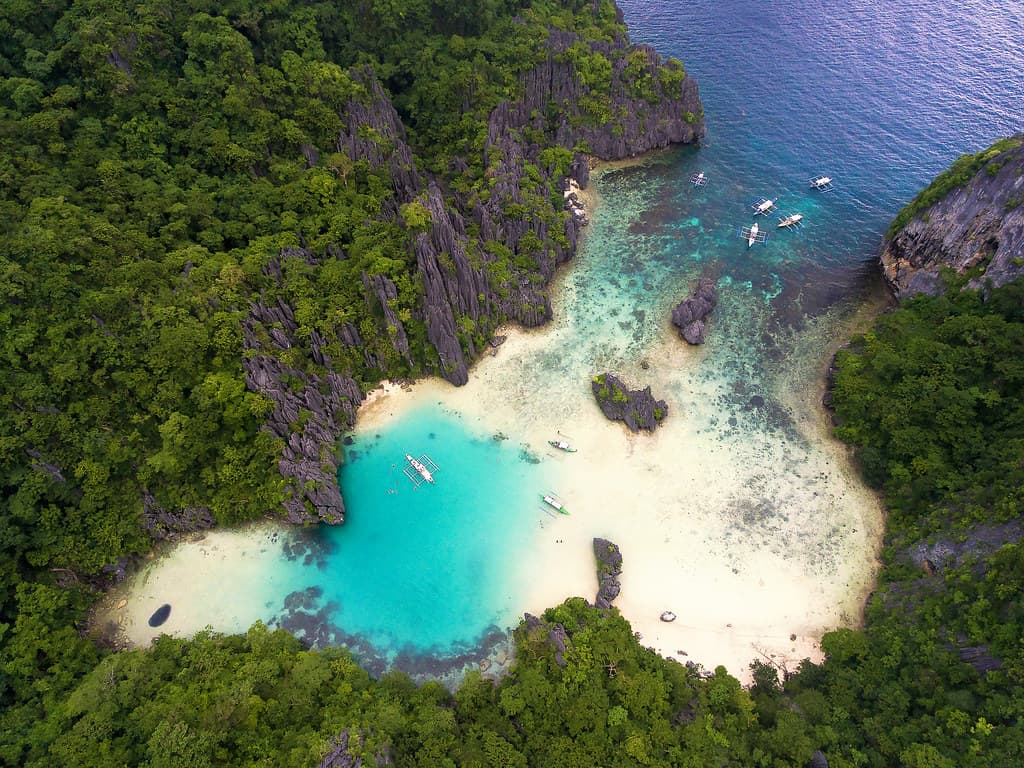
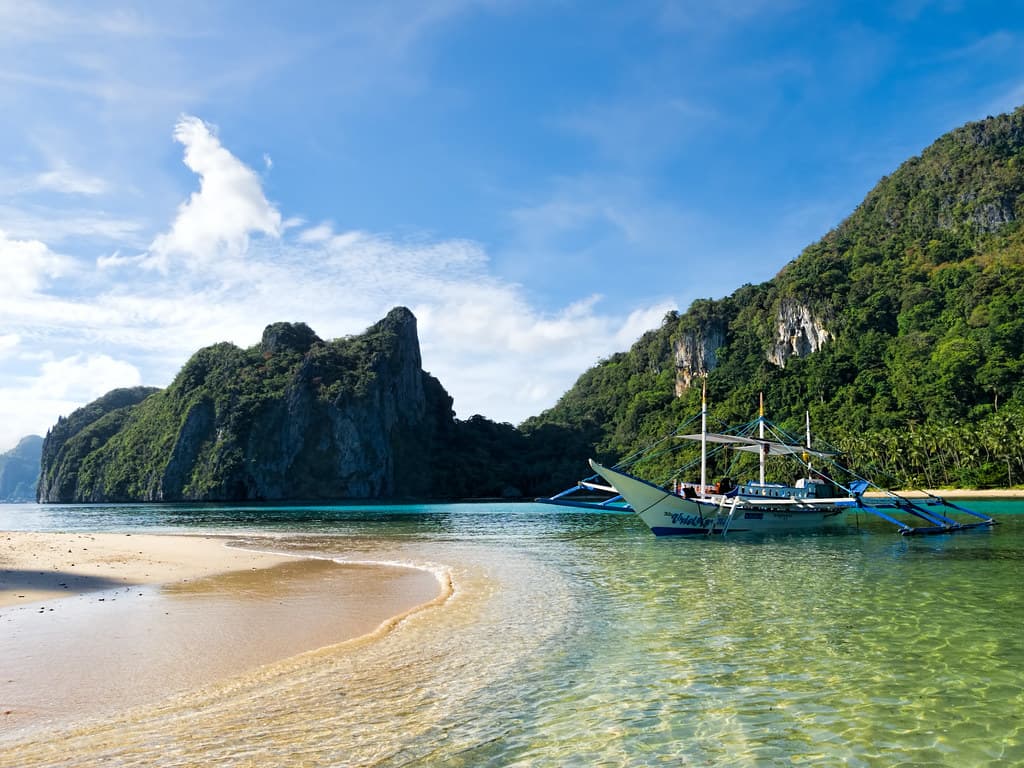
The moment your banca scrapes against the shore, you're struck by the scale: limestone massifs dwarf the narrow beach, their flanks cloaked in vines and pitcher plants. Forty-meter cliffs frame a 200-meter strand where the sand feels talc-soft underfoot, warm but not scalding even at midday. The beach earned its name from seven Filipino soldiers who sought refuge here during World War II, and that sense of enclosure remains—you're cradled between stone giants, the Sulu Sea stretched out in bands of color from mint to sapphire. Wade in and the water temperature hovers near 28°C, bathwater-warm, clarity good enough to watch sergeant majors dart around your ankles. Snorkeling gear reveals branching corals just ten meters offshore, though the real spectacle is topside: the interplay of light on those towering karsts, shadows pooling in vertical fissures, frigate birds circling the thermals above. Most island-hopping tours anchor here for forty minutes—enough time to swim, enough time to feel small. By early afternoon, a dozen bancas line the beach, guides grilling skewered fish over charcoal on the sand. The scent of sinugba mingles with sunscreen and salt. There's a simplicity to the rhythm here—arrive, swim, eat, depart—but the verticality of the landscape lodges in memory long after you've motored away, the cliffs shrinking to silhouettes against the haze.
Places, rentals, tours and events within walking and driving distance of Seven Commandos Beach.
Photos
Seven Commandos Beach is generally safe for swimming, especially during the dry season (November-May) when seas are calm. The beach has a gentle slope with sandy bottom and clear turquoise waters, making it suitable for swimmers of all levels. The area is sheltered enough to provide relatively calm conditions most of the year. However, there are no lifeguards on duty, so swim responsibly. During island-hopping tours, wear life jackets during boat transfers. Be mindful of boat traffic as tour boats anchor offshore. Check weather conditions before visiting during monsoon season.
The ideal time to visit Seven Commandos Beach is during El Nido's dry season from November to May, particularly December through March for the most stable weather. The beach is included in popular Tour A island-hopping packages, which typically run year-round. To avoid peak crowds, consider visiting early morning or requesting your tour operator to adjust the itinerary sequence. Weekdays are generally less crowded than weekends. The beach can get very busy between 11am-2pm when multiple tour groups arrive simultaneously. Avoid monsoon season (June-October) for the most comfortable experience.
Seven Commandos Beach is accessible only by boat and is a standard stop on El Nido's Tour A island-hopping itinerary. Book tours through agencies in El Nido town, with most departing around 9am and returning by 4-5pm. Group tours are affordable and widely available, while private tours offer more flexibility but at higher cost. The beach is located relatively close to El Nido, typically 20-30 minutes by boat depending on conditions. Some visitors combine multiple tour routes or arrange custom itineraries. All necessary boat arrangements are handled by tour operators.
Seven Commandos Beach has no permanent restaurants or accommodation as it's a day-trip destination on an uninhabited island. However, there are usually local vendors selling fresh coconuts, snacks, and cold drinks directly on the beach, though availability and prices vary. Most Tour A packages include a lunch stop at another location during the day. You must stay in El Nido town or surrounding areas, which offer extensive accommodation options from budget hostels to upscale resorts. Bring extra water and any personal snacks you prefer for the beach visit.
The beach is named after seven Japanese soldiers who reportedly hid on this island during World War II after their forces withdrew from the area. According to local lore, these soldiers remained hidden for some time before eventually being discovered or surrendering. While historical details vary in different retellings, the name has stuck and adds historical intrigue to this beautiful location. Today, the beach is famous not for its wartime history but for its stunning white sand, crystal-clear turquoise waters, and picturesque setting, making it one of El Nido's most photographed and visited island-hopping destinations.