Counting the wavesβ¦
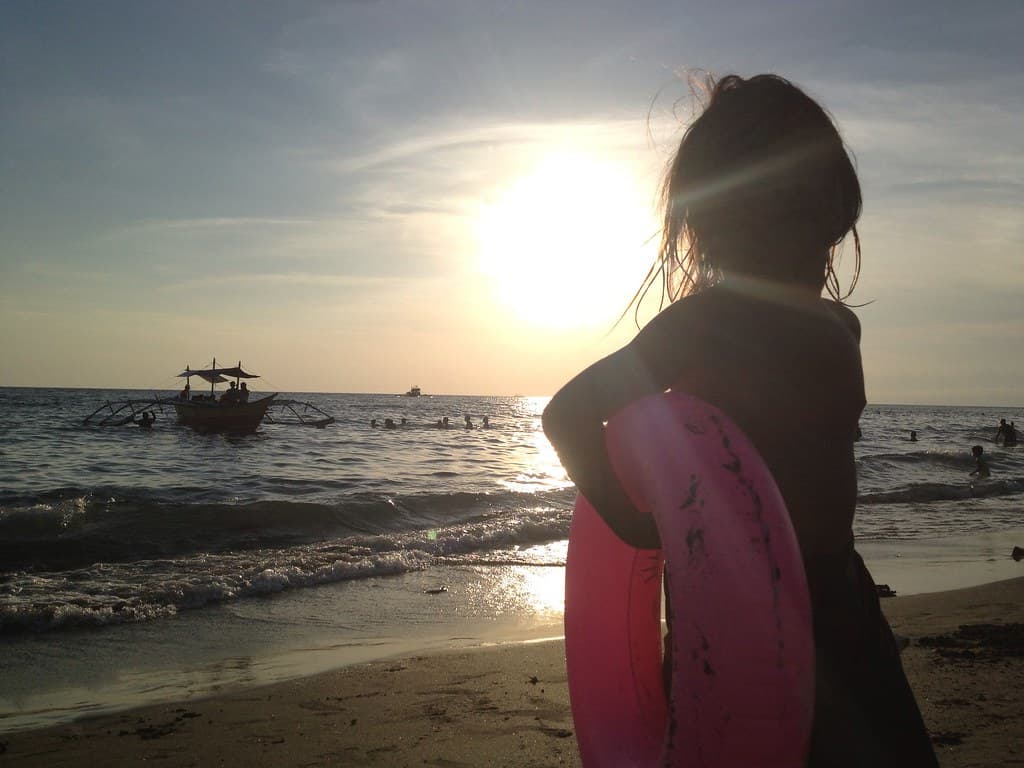
Cabangan Beach spreads along the town's western edge, a working shoreline where fishing remains visible rather than picturesque. Outriggers rest on their sponsons above the high-tide line, their hulls painted in fading blues and greens, their nets spread for repair on weathered bamboo racks. You'll step around coiled rope and plastic floats, the everyday infrastructure of a coast that feeds people before it entertains them. The sand here carries the gray tint of volcanic origin, firm underfoot and broad enough that low tide exposes a wide apron where children play soccer and families set up folding chairs at safe distance from the water. Vendors appear in late afternoon, pushing carts loaded with buko juice and fried squid balls, their calls mixing with the voices of students who arrive after classes end. The scene has the unpolished rhythm of a place where the beach is simply there, used without ceremony. Sunset transforms the ordinary into something worth stopping for. The sky layers itself in bandsβsalmon, then orange, then a bruised purple that spreads across the West Philippine Sea. You'll stand with townspeople who pause their conversations to watch, who know exactly where the sun will drop behind the horizon because they've seen it hundreds of times. The air cools quickly once the light goes, and the beach empties except for a few silhouettes and the dogs nosing through the tide wrack.
Places, rentals, tours and events within walking and driving distance of Cabangan Beach.
Photos
Cabangan Beach is generally safe for swimming, especially during calm weather. As a town beach frequented by local families, the waters are typically gentle with gradual depths suitable for children and casual swimmers. However, always remain vigilant about changing weather conditions and observe local advisories. The beach may have minimal lifeguard presence, so supervision of children is essential. Water conditions are calmest during the dry season. Avoid swimming during storms or when waves are unusually high. The beach's community atmosphere means locals are usually around if assistance is needed.
Cabangan Beach is accessible and enjoyable year-round, making it perfect for budget travelers who can visit anytime. The dry season from November to April offers the most reliable weather with calm seas and clear skies. However, the beach remains pleasant even during other months, with occasional rain showers. Sunsets are beautiful throughout the year, particularly from March to May. Weekdays are quieter than weekends when local families gather. Since it's not a major tourist destination, prices remain consistent and affordable regardless of season, making any time budget-friendly.
From Manila, take a bus bound for Cabangan, Zambales via the Subic-Clark-Tarlac Expressway (SCTEX). The journey takes approximately 4-5 hours depending on traffic. Bus companies like Victory Liner service this route. Once in Cabangan town, hire a tricycle to reach the beach area, typically a short 10-15 minute ride. If driving privately, take SCTEX and follow signs to Cabangan. The town is smaller and less touristy than other Zambales destinations, so asking locals for specific beach directions is recommended upon arrival.
Cabangan Beach has limited beachfront facilities as it's primarily a local town beach. Basic food options include small local eateries (carinderias) and sari-sari stores near the beach and in town, serving affordable Filipino meals and snacks. For more dining variety, explore Cabangan town proper. Accommodation is modest, with simple lodging houses and homestays available in town rather than beach resorts. Many visitors opt for day trips. Bringing your own refreshments is advisable. For more developed amenities, consider staying in nearby towns like Iba or San Antonio.
Cabangan Beach stands out as an authentic town beach largely untouched by commercial tourism, offering visitors a genuine glimpse into local Filipino coastal life. Unlike resort-dominated beaches, Cabangan is where townspeople gather, especially on weekends and holidays, creating a community atmosphere. The beach features dark volcanic sand and offers excellent sunset views over the West Philippine Sea. Its off-the-beaten-path location means fewer crowds and very affordable experiences. The beach serves as a peaceful retreat for those seeking simplicity and cultural immersion rather than tourist amenities and activities.