Counting the waves…
Counting the waves…
A refined fusion of water purity, environmental stability, and communal vibrancy for Chintsa West Beach.
View MethodologyAnalyzed via live sensors and environmental data.
Wave height, wind, and atmospheric stability.
Live footfall and crowd balance metrics.
Community reviews and curated sentiment.
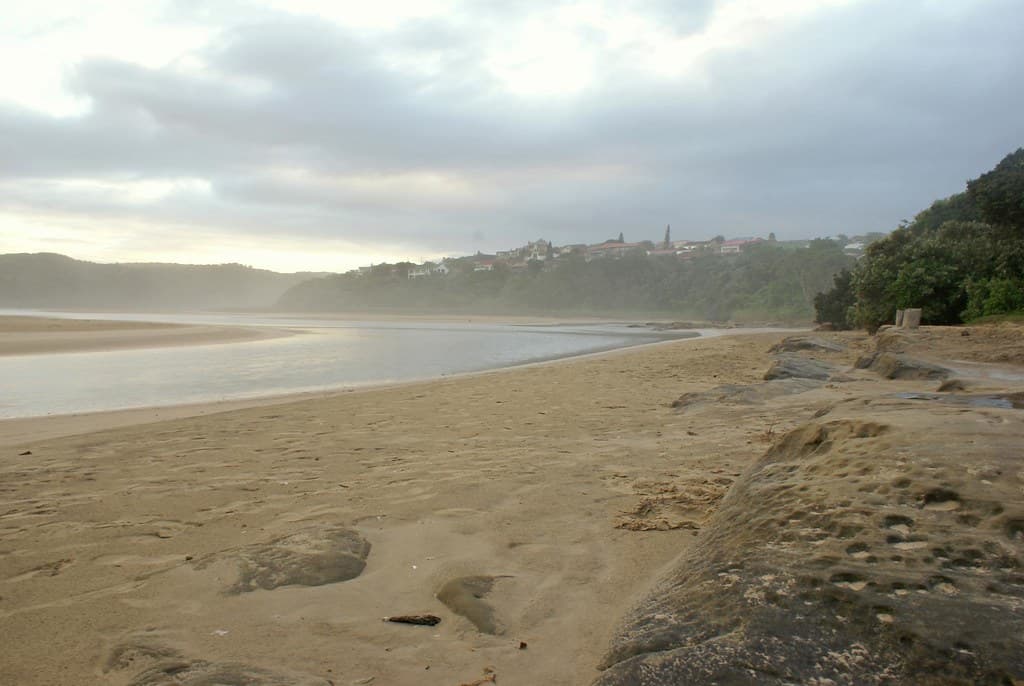
“Escape the everyday at Chintsa West Beach, a serene stretch of sand where the Kwelera River estuary spills into the sea. Here, the rhythm of the tides dictates your day, offering a quiet retreat from the bustle. It's a…”
Limited recent visitor reports — live OBI telemetry is your best guide for current conditions.
Nestled on the western flank of Chintsa, this beach offers a distinct kind of coastal charm. The Kwelera River, a ribbon of silver, meanders through verdant banks before merging with the ocean, creating a dynamic landscape of sandbars and tidal pools. This confluence of river and sea provides a unique ecosystem, teeming with birdlife and offering a different perspective on the Wild Coast.
Walk the expansive sands, feeling the cool grit beneath your bare feet as the sun dips below the horizon, painting the sky in fiery hues. The estuary's calm waters are perfect for a gentle paddle or a quiet moment of reflection, watching the egrets stalk their prey. Unlike its more bustling eastern counterpart, Chintsa West retains a secluded, almost untouched feel, making it ideal for those seeking solitude.
 Credit: Unsplash
a beach with waves crashing on it
 Credit: Unsplash
photography of seashore during daytime
Capture vibrant skies
Explore riverbanks
Calm estuary waters
Prime Visitation
Best Weather|Less Crowds
Where it is
Chintsa West Beach
Chintsa, Eastern Cape, South Africa
-32.839800°, 28.092500°
Weather
Loading…
Swell
—
Temp
Warm · Restorative
UV Index
Moderate
Wind
—
Tidal State
Last known
Max Sunlight
—
Ideal Shade
—
Jan - Dec (Peak)
Mar - Nov (Off-season)
Best Weather|Less Crowds
Select a category to load nearby places.
Unlock restaurants, luxury stays and curated maritime experiences within 2km
Swimming at Chintsa West Beach requires caution due to typical Wild Coast conditions including waves, currents, and tides. The beach generally lacks permanent lifeguard services, so swimmers should assess conditions carefully and never swim alone. The estuary area can have varying currents depending on tidal flow. Families should supervise children closely and stick to shallow areas. Local advice about current conditions is valuable, so consult accommodation hosts or experienced locals before entering the water.
Chintsa West Beach enjoys the best weather during South African summer (November-March) with warm temperatures and longer days. For fewer crowds and a more peaceful experience, shoulder seasons of April-May and September-October offer pleasant conditions without peak holiday congestion. The beach's westward orientation makes it particularly appealing for sunset viewing year-round. Winter months are cooler but can provide dramatic coastal scenery and opportunities for whale watching along the coast during migration season.
Chintsa West Beach is accessible from East London, located approximately 40 kilometers to the southwest. Drive north on the N2 highway and take the Chintsa turnoff, following signs toward Chintsa West. The journey typically takes 40-50 minutes by car. Roads include both tarred and gravel sections, generally suitable for standard vehicles. Personal transport is recommended as public transport to this coastal area is very limited. East London Airport serves as the nearest air travel hub for visitors from further afield.
Chintsa West provides accommodation options including guesthouses, self-catering cottages, and small lodges, many with estuary or ocean views. The area has a quieter, more residential character than Chintsa East, with fewer but well-regarded establishments. Dining options are available at select lodges and guesthouses, often featuring fresh local seafood. Some visitors choose self-catering, so bringing supplies from East London is advisable. The intimate scale means booking ahead during peak seasons is recommended.
Chintsa West Beach offers a quieter, more laid-back atmosphere than its eastern counterpart, with estuary scenery adding landscape variety beyond the ocean beach. The westward orientation provides excellent sunset viewing opportunities that Chintsa East lacks. The beach tends to attract visitors seeking a more relaxed, residential coastal experience with fewer crowds and amenities. The nearby estuary creates diverse environments for birdwatching and nature appreciation. This beach suits travelers preferring tranquility over active beach resort scenes.
Photos