Counting the waves…
Counting the waves…
A refined fusion of water purity, environmental stability, and communal vibrancy for Boulders Beach.
View MethodologyAnalyzed via live sensors and environmental data.
Wave height, wind, and atmospheric stability.
Live footfall and crowd balance metrics.
Community reviews and curated sentiment.
“Step into a world where waddling penguins are the main attraction, and the ocean is a calm, inviting turquoise. Boulders Beach is a unique natural sanctuary, famous for its resident colony of African penguins and its…”
Limited recent visitor reports — live OBI telemetry is your best guide for current conditions.
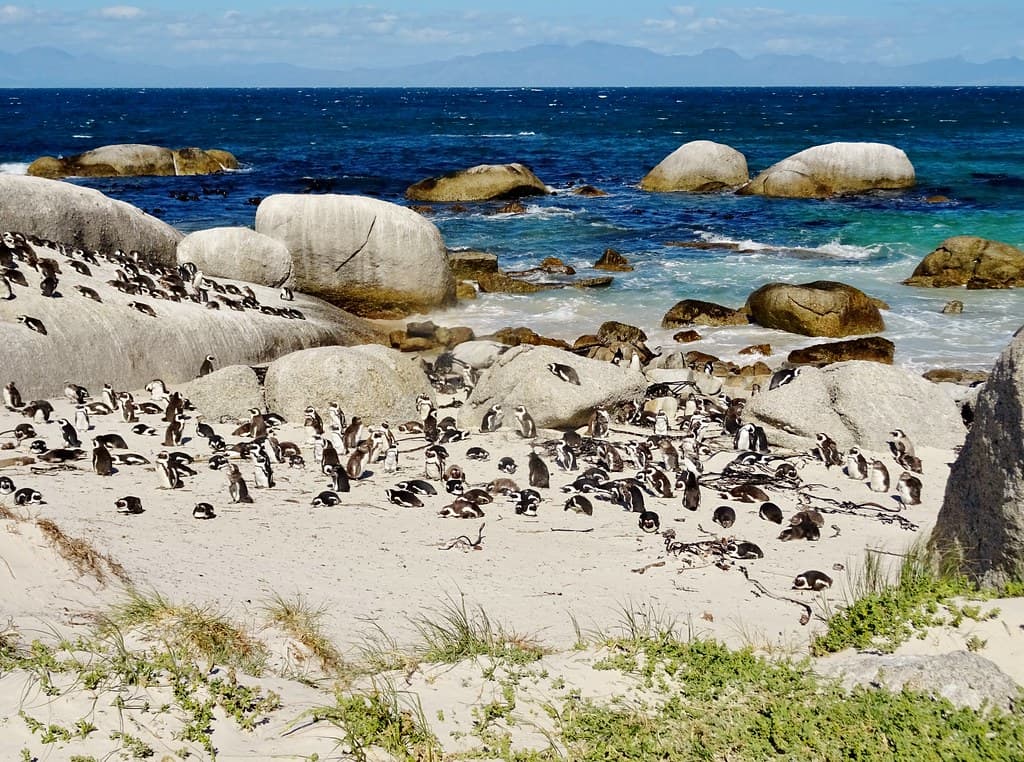
Boulders Beach is a truly extraordinary destination, world-renowned for its thriving colony of African penguins. Nestled within the Table Mountain National Park Marine Protected Area, this series of sheltered coves is characterized by ancient granite boulders that provide both protection from the wind and a natural habitat for the charismatic birds.
Wooden boardwalks guide visitors through the fynbos vegetation, offering respectful viewing points of the penguins as they waddle, preen, and nest. The real magic, however, lies in the opportunity to swim alongside them in the clear, calm waters. The coves are shallow and protected, making them ideal for families and those seeking a gentle dip in the invigorating Atlantic.
 Credit: Unsplash
Pebble beach with calm turquoise water and green hills
 Credit: Unsplash
Pebble beach with ocean waves and green hills
Observe African penguins
Gentle dips in coves
Explore clear, calm waters
Prime Visitation
Best Weather
Where it is
Boulders Beach
Simon’s Town, Western Cape, South Africa
-34.197900°, 18.451800°
Weather
Loading…
Swell
—
Temp
Warm · Restorative
UV Index
Moderate
Wind
—
Tidal State
Last known
Max Sunlight
—
Ideal Shade
—
Jan - Dec (Peak)
Mar - Nov (Off-season)
Historical data suggests peak visibility and stable sea temperatures occur during the prime visitation window.
Select a category to load nearby places.
Unlock restaurants, luxury stays and curated maritime experiences within 2km
Swimming is permitted at Boulders Beach, and the water is generally safe with calm conditions due to the sheltered cove and granite boulders that break wave action. However, direct interaction with the endangered African penguins is prohibited—they can bite if approached, and disturbance is harmful. Designated swimming areas are separate from main penguin colonies, though penguins may swim nearby occasionally. The water is cold (12-18°C) year-round. Lifeguards are not always present, so supervise children carefully. Facilities include boardwalks for penguin viewing without entering their space. Respect all barriers and wildlife regulations.
Penguins are present at Boulders Beach year-round, making any time suitable for viewing. However, the breeding season (February to August) offers the most activity, including nest-building, chick-rearing, and increased colony size. Summer (December to February) provides warmer weather for swimming, though it's the busiest tourist season—visit early morning (8-9am) or late afternoon to avoid crowds. Penguins are most active during feeding times in early morning and late afternoon. Winter months offer fewer crowds and good viewing, though swimming is cold. The beach opens daily from 8am, with last entry before closing time.
Boulders Beach is located in Simon's Town on the False Bay coast, approximately 45 kilometers south of Cape Town's city center—about an hour's drive. Follow the M3 then M4 coastal road through Muizenberg and Fish Hoek. Ample parking is available near the beach. Entry requires purchasing a South African National Parks (SANParks) ticket: fees typically apply for adults, with discounts for children and South African residents (check current rates as they change annually). The Wild Card (annual parks pass) provides free entry. Trains run from Cape Town to Simon's Town station, followed by a 15-minute walk.
Boulders Beach has basic facilities including restrooms, changing rooms, and boardwalks for penguin viewing. A small visitor center provides information about African penguins. No restaurants exist directly at the beach, but Simon's Town's charming main road (five minutes' walk) offers numerous cafes, restaurants, pubs, and shops serving fresh seafood and diverse cuisines. Popular spots include The Salty Sea Dog and Bertha's Restaurant. Accommodation options range from guesthouses to hotels throughout Simon's Town. The nearby Seaforth Restaurant overlooks the ocean. Bring snacks and water for the beach, as no vendors operate on-site.
Boulders Beach hosts one of only a few land-based colonies of endangered African penguins worldwide. The colony established naturally in 1982 when two breeding pairs settled, growing to over 3,000 birds at its peak. The sheltered cove provides ideal conditions: calm waters for fishing, granite boulders offering nest sites and shade, and protection from predators and rough seas. The area became part of Table Mountain National Park, ensuring protection. African penguins are native to South African waters, and Boulders represents a rare accessible viewing opportunity. Conservation efforts here help protect this threatened species, making visits both educational and impactful.
Photos