Counting the waves…
Counting the waves…
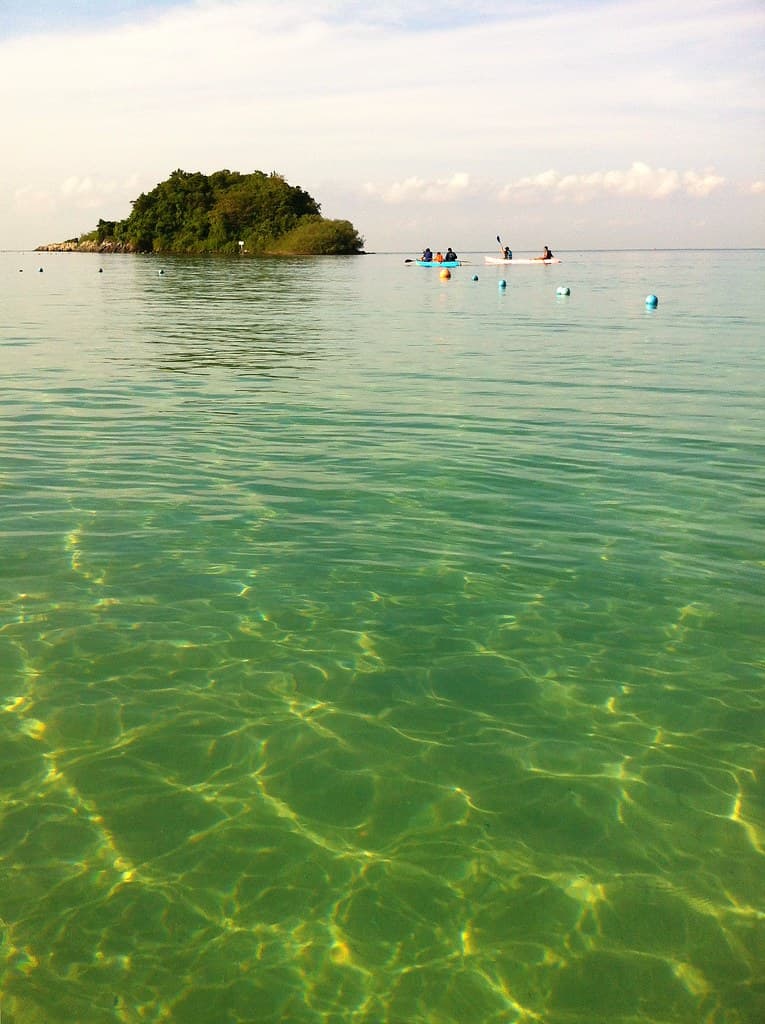
The military presence isn't subtle—you're passing through an active Royal Thai Navy base to reach the beach, guards checking identification before waving you toward parking areas that feel more organized than most civilian beaches manage. But that oversight has preserved conditions: the sand genuinely runs lighter in color than neighboring stretches, and the water clarity improves noticeably once you wade in, showing your feet instead of swallowing them in murk. Casuarina pines and manicured grass buffer the beach, with concrete tables and shelters dotting the maintained grounds. The atmosphere splits between service families and day-trippers from Chonburi, everyone enjoying the comparative cleanliness and order that institutional management provides. The swimming zone stays marked and monitored, the sand gets raked, and vendors operate under tighter regulation than the free-for-all typical of public beaches. Weekends draw crowds aware of Sai Kaew's reputation as Sattahip's quality option, but the beach absorbs numbers better than its length suggests. The water stays calm and shallow—standard Gulf behavior—but with visibility that actually lets you watch small fish dart around your ankles. It's still the Gulf of Thailand, not the Andaman, so temper expectations accordingly. But within the eastern seaboard's offerings, Sai Kaew delivers a noticeably upgraded experience, even if you're trading spontaneity for security checkpoints.

Places, rentals, tours and events within walking and driving distance of Sai Kaew Beach.
Photos
Sai Kaew Beach is generally safe for swimming and well-suited for families. The beach is managed by the Royal Thai Navy, which helps maintain cleanliness and security. Waters are typically calm with gentle waves, making it appropriate for children. Lifeguards may be present during peak times. However, always supervise children closely and check local conditions before entering the water. The military management means the beach maintains good safety standards, and facilities like restrooms are available for families visiting with young ones.
The best time to visit Sai Kaew Beach is during Thailand's cool and dry season from November to February, when you'll enjoy pleasant temperatures, low humidity, and minimal rainfall. March to May brings hotter weather but still good beach conditions. Avoid the monsoon season from June to October when heavy rains and rough seas are common. Weekdays are less crowded than weekends, as the beach is popular with local Thai families. Early mornings offer the most peaceful atmosphere and cooler temperatures for beach activities.
From Bangkok, drive approximately 150 kilometers southeast via Highway 3 and Route 332 toward Sattahip, taking roughly 2-3 hours depending on traffic. From Pattaya, it's about 30-40 kilometers south, a 45-minute drive. Note that Sai Kaew Beach is located within a military area, so you'll pass through a checkpoint where you may need to show identification. Public transportation is limited; hiring a private car, taking a taxi, or renting a vehicle is recommended. Some tour operators offer day trips from Pattaya that include this beach.
Sai Kaew Beach has limited on-site dining options, typically small food stalls and vendors selling Thai snacks, fresh seafood, and beverages. Because it's a military-managed beach, commercial development is restricted. Most visitors bring their own food or purchase from local vendors. For accommodation, you'll need to stay in nearby Sattahip town or return to Pattaya, as there are no hotels directly on the beach. The beach is best experienced as a day trip, allowing you to enjoy the natural setting before returning to more developed areas for meals and lodging.
Sai Kaew Beach stands out for its military management by the Royal Thai Navy, which keeps it cleaner and less commercialized than typical tourist beaches. The sand is notably whiter and finer than surrounding Sattahip beaches, and the water tends to be clearer. The military oversight limits overdevelopment, preserving a more natural atmosphere. Access through a naval checkpoint adds a unique element and helps control crowds. The beach attracts more local Thai visitors than international tourists, offering an authentic experience. Its protected status means fewer vendors and a more tranquil environment compared to commercial beaches.