Counting the waves…
Counting the waves…
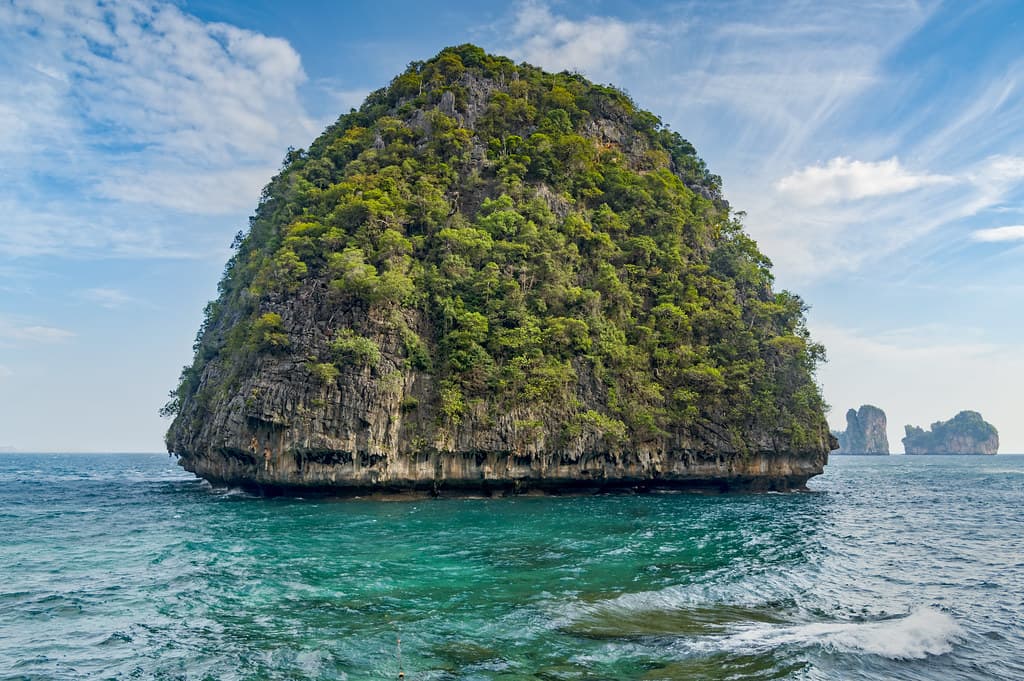
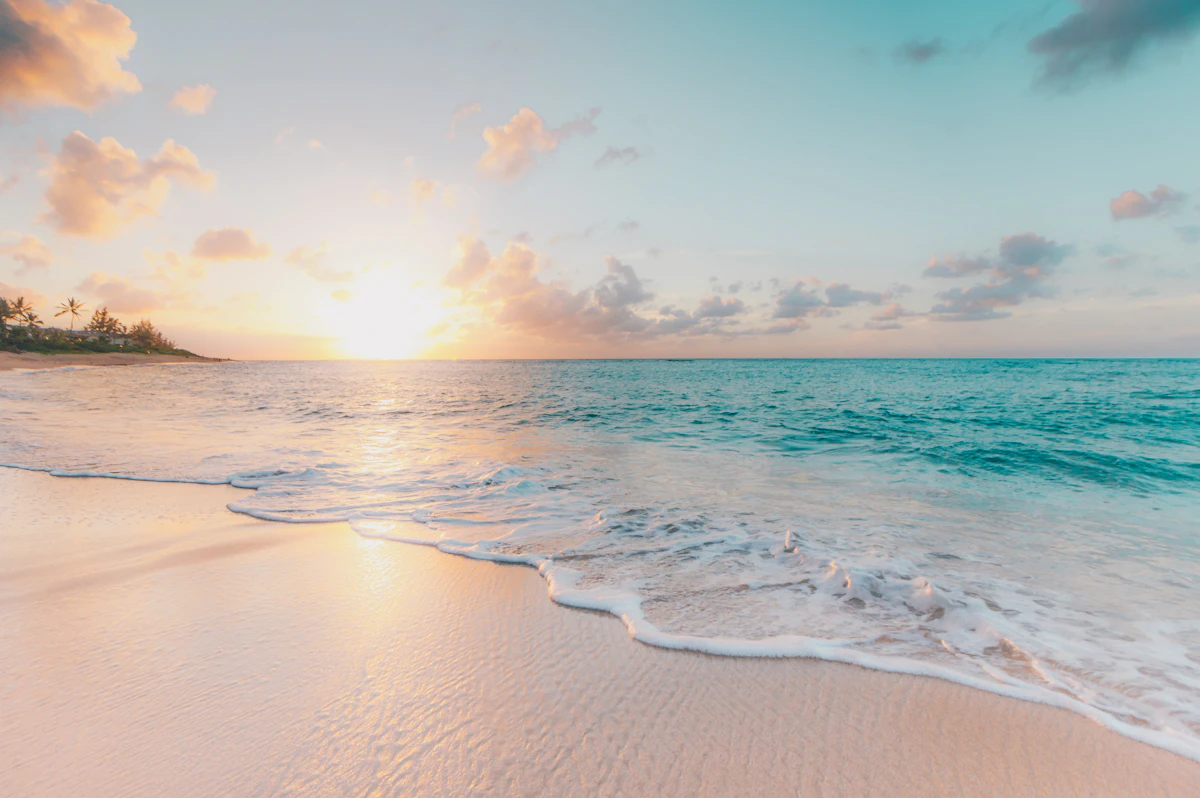
Koh Poda's beach curves for nearly 600 meters, wide enough that even when tour boats arrive in mid-morning clusters, you can claim space. The northern end stays quieter—walk past the longtails pulled up on shore and the temporary vendors selling grilled squid and mango, and you'll find stretches where the only footprints are yours and the occasional reef heron's. The sand here is different from Railay's coarser grains; it's been ground to powder by generations of wave action, fine enough to film your phone screen if you're careless with your beach bag. The limestone stack dominates every sightline, impossible to exclude from photographs whether you're waist-deep in the shallows or sheltering under the casuarinas at the beach's southern edge. The rock's surface is pocked with tidal erosion, home to black crabs that emerge at low tide to scavenge the waterline. Around the stack's base, the reef shelf drops from two meters to twelve within a few fin kicks—bring your mask to watch fusiliers school above table corals, their silver bodies flashing in synchronized turns when larger fish pass below. You'll want to arrive before 10 a.m., when the light is softer and the tour boats haven't yet made their rounds. By early afternoon, Koh Poda becomes a floating lunch stop for four-island tours—longtails anchor offshore, passengers wade in with boxed meals and rental snorkeling gear, and the beach population triples. The vendors multiply too, appearing with coolers of Chang beer and plastic bags of sliced pineapple. By 3 p.m., the exodus begins. If you can negotiate a late pickup, you'll have sunset nearly alone.
Places, rentals, tours and events within walking and driving distance of Koh Poda.
Photos
Swimming at Koh Poda is generally very safe during the high season (November-April) when seas are calm and waters are crystal clear. The main beach has a gentle sandy bottom ideal for swimmers of all abilities. Snorkelers should stay aware of boat traffic as this is a popular day-trip destination. During monsoon season (May-October), rougher seas can make access difficult or impossible, and most tours don't operate. There are no lifeguards on duty, so swim responsibly. The clear water provides excellent visibility, and the absence of strong currents near the beach makes it family-friendly during good weather conditions.
The ideal time to visit Koh Poda is during the dry season from November through April, with December to March offering the most consistent sunshine and calm seas. Early morning visits (arriving by 9-10 AM) provide the best experience before large tour groups arrive around midday. Late afternoon visits (after 2 PM) offer beautiful light for photography as crowds thin out. The island can get busy between 11 AM and 2 PM with day-trippers. Avoid monsoon season (May-October) when rough weather often prevents boat access. Visiting during weekdays typically means fewer crowds than weekends when Thai families often visit.
Koh Poda is accessible only by boat from Krabi's mainland beaches. Most visitors join organized island-hopping tours from Ao Nang Beach or Railay, typically costing 1,000-1,800 baht and including multiple islands, snorkeling equipment, and sometimes lunch. The boat journey takes approximately 20-30 minutes from Ao Nang. You can hire a private longtail boat from Ao Nang or Noppharat Thara Beach for 1,500-2,500 baht (entire boat, up to 6-8 people). Speedboat tours are faster and more expensive. Tours are widely available through hotels, travel agencies, or beachfront operators. Book with reputable operators for safety and service quality.
Koh Poda is an uninhabited island with very limited facilities. Basic restroom facilities are available near the main beach area, but there are no permanent restaurants or shops. During high season, you may find a simple beach vendor selling drinks, snacks, and fresh fruit at inflated prices, but this isn't guaranteed. Most visitors bring their own food and drinks or join tours that include meals. No accommodation exists on the island, as it's a day-trip destination only. Shaded areas are minimal, so bring sun protection. Plan to bring all necessary supplies and take your rubbish with you to preserve the pristine environment.
Koh Poda is renowned for its iconic limestone karst rock formation rising dramatically from one end of the island, creating one of the Andaman Sea's most photographed landscapes. The powdery white sand beach is exceptionally soft and pristine, consistently ranking among Krabi's most beautiful beaches. The surrounding coral reefs offer excellent snorkeling with diverse marine life visible just offshore in shallow, clear waters. Being uninhabited and undeveloped, the island maintains an untouched, natural character. Its compact size means you can explore the entire coastline easily. The combination of stunning scenery, excellent snorkeling, and pristine conditions makes it a standout destination.