Counting the waves…
Counting the waves…
A refined fusion of water purity, environmental stability, and communal vibrancy for Nai Thon Beach.
View MethodologyAnalyzed via live sensors and environmental data.
Wave height, wind, and atmospheric stability.
Live footfall and crowd balance metrics.
Community reviews and curated sentiment.
“You'll share this half-moon bay with a handful of vendors and families who know better than to fight the crowds down south. The water stays shallow for thirty meters, warm as bathwater most mornings.”
Limited recent visitor reports — live OBI telemetry is your best guide for current conditions.
The casuarina pines lean landward here, shaped by decades of monsoon winds that sculpt the northern headland. You'll plant your feet in sand the color of wet cardboard, coarser than Patong's talc, dotted with fragments of branching coral that wash up after storms. A vendor grills satay under a tarp shelter, smoke drifting toward the motorcycle parking area where scooters bake in the afternoon sun.
Wading into the bay, you'll notice how the bottom stays visible even when the water reaches your waist—sand ripples and the occasional sea cucumber moving like a dark sausage across the flats. Local families arrive after school lets out, children shrieking as they chase each other through the shallows while someone's golden retriever paddles in lazy circles. The northern rocks hold tide pools where hermit crabs skitter between anemones that pulse with the wave surge.
 Credit: Unsplash
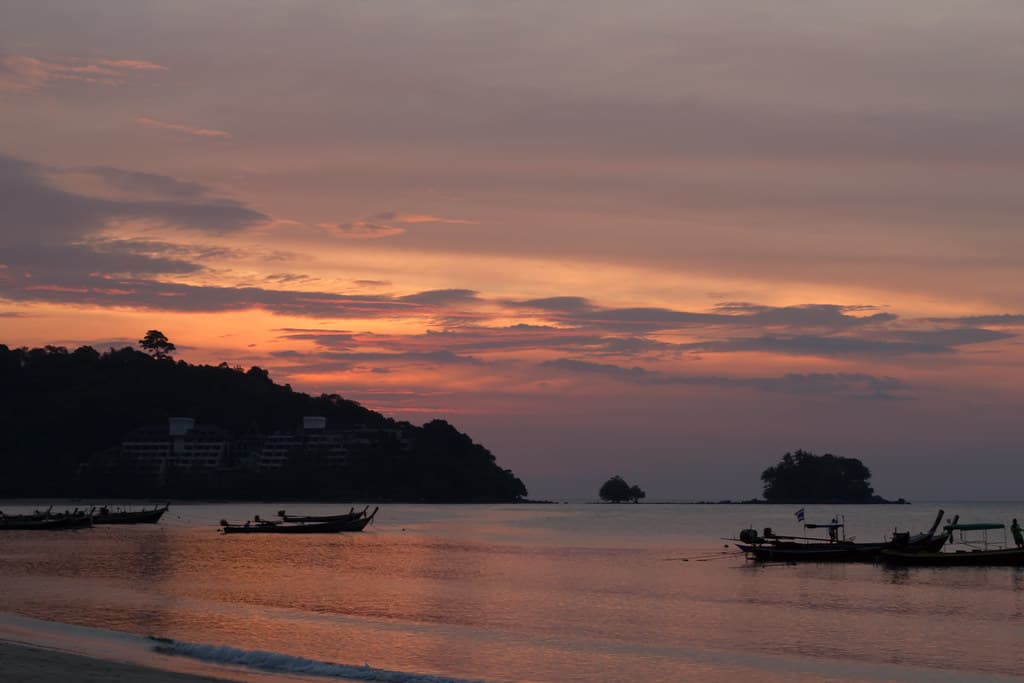
a boat in the water near a beach
 Credit: Unsplash
green body of water near brown rock formation during daytime
Shallow water stretches far out
Rest under whispering casuarinas
Northern point holds marine life
Prime Visitation
Best Weather
Where it is
Nai Thon Beach
Takua Pa, Phang Nga, Thailand
8.106000°, 98.303000°
Weather
Loading…
Swell
—
Temp
Warm · Restorative
UV Index
Moderate
Wind
—
Tidal State
Last known
Max Sunlight
—
Ideal Shade
—
Jan - Dec (Peak)
May - Nov (Off-season)
Historical data suggests peak visibility and stable sea temperatures occur during the prime visitation window.
Select a category to load nearby places.
Unlock restaurants, luxury stays and curated maritime experiences within 2km
Nai Thon Beach is generally safe for swimming during the dry season (November to April) when waters are calm and clear. The beach features gentle slopes with shallow areas ideal for children, making it family-friendly. However, swimming conditions change dramatically during monsoon season (May to October) when strong currents, undertows, and large waves make swimming dangerous. Red flags indicate when swimming is prohibited. Lifeguards may not always be present, so exercise caution. The relatively quiet, less commercialized atmosphere means fewer safety nets than major tourist beaches. The beach's family-friendly reputation stems from its calm high-season conditions and relaxed vibe rather than extensive facilities.
The ideal time to visit Nai Thon Beach is November through April, Phuket's dry season, when weather is sunny, seas calm, and swimming conditions excellent. December to February offers the most pleasant temperatures and is considered peak season, though Nai Thon remains less crowded than nearby Patong or Kamala beaches. March and April become hotter but still enjoyable. May through October brings monsoon conditions with rough seas, frequent rain, and beach erosion, making swimming unsafe and many beachfront businesses closing. For the best balance of good weather and fewer crowds, consider visiting in November or early December before peak holiday season, or in March before temperatures soar.
Nai Thon Beach is located on Phuket's northwest coast, approximately 30-40 minutes from Phuket Airport depending on traffic. From the airport, taxis and ride-hailing services are the most convenient options, costing around 500-700 baht. Rental cars and motorbikes provide flexibility for exploring the area. From Phuket Town or popular beaches like Patong, expect 45-60 minute drives through mountainous roads with scenic viewpoints. No public buses serve Nai Thon directly, though some travelers take buses to nearby areas and arrange local transport. The beach is well-signposted, and the approach road winds through hills offering beautiful coastal views before descending to the bay.
Nai Thon Beach offers limited but quality accommodation options, from boutique resorts and hotels to guesthouses and vacation rentals, maintaining a quieter atmosphere than major tourist areas. Several beachfront restaurants and cafes serve fresh seafood, Thai cuisine, and international dishes, though options are fewer than at busier beaches. Most establishments operate during high season (November-April), with some closing during monsoon months. A small village behind the beach has a few local eateries, minimarts, and massage shops. For extensive dining and shopping, visitors typically drive to nearby Surin Beach or Bang Tao. The limited development is precisely what attracts travelers seeking tranquility and a more authentic beach experience.
Nai Thon Beach distinguishes itself as one of Phuket's less developed, more peaceful beaches despite being relatively close to the airport. The beach retains a local village atmosphere with fewer crowds, limited commercialization, and no jet skis or parasailing operations that dominate busier Phuket beaches. Its crescent-shaped bay backed by forested hills provides natural beauty without high-rise development. The beach welcomes dogs, making it popular with pet owners—unusual for Thai beaches. While facilities are basic compared to major tourist areas, this appeals to travelers seeking authentic relaxation over resort amenities. The combination of accessibility, family-friendly shallow waters during high season, and tranquil atmosphere makes it a hidden gem for those escaping Phuket's tourist intensity.
Photos