Counting the waves…
Counting the waves…
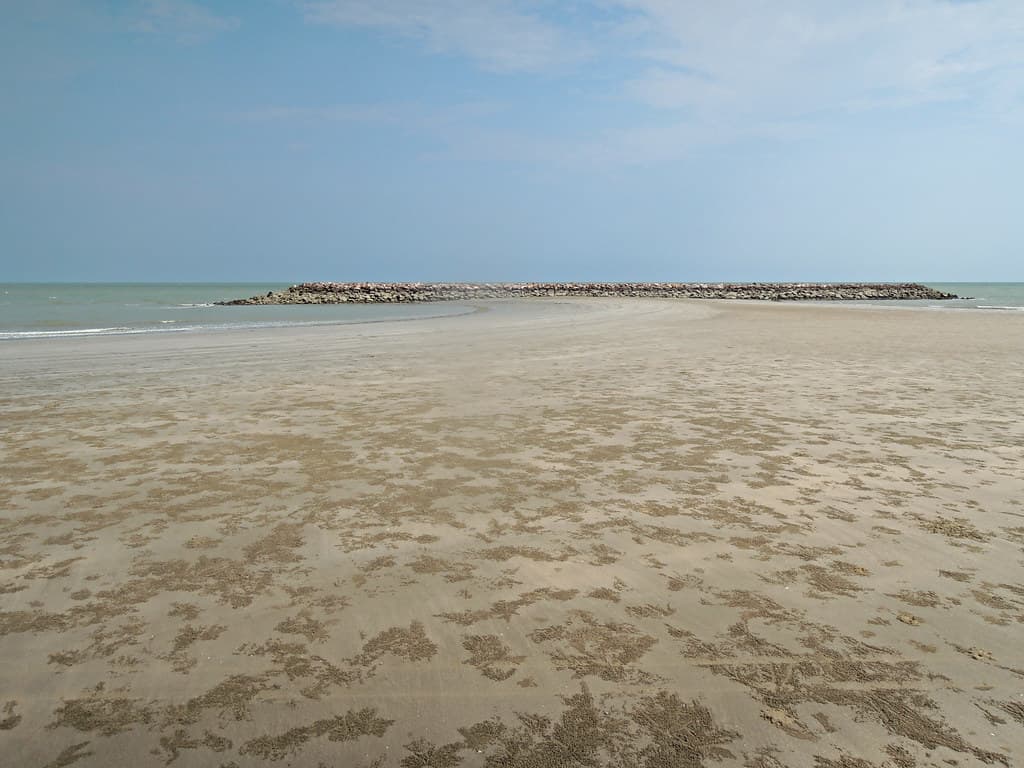
The sand here is functional rather than aesthetic, coarse and gray-gold, textured with tidal patterns and crab holes that perforate the surface like Swiss cheese. Fishing platforms extend into the shallows on bamboo stilts, their nets hanging slack at low tide, submerged at high. The river mouth creates complex currents where fresh water and salt water mix, turning the Gulf a silty brown that clears to green only offshore. Local boats cluster near the channel—working vessels painted in fading primaries, loaded with ice chests and tangle nets, distinctly unglamorous. Bird life dominates the sensory experience. Herons stalk the tidal flats, egrets cluster in mangrove branches, and during migration season the sky fills with species moving between feeding grounds. Serious birders appear with telephoto lenses and field guides, the only tourists you're likely to encounter. The smell is estuarine—mud, salt, vegetation, and the faint diesel trace from boat engines. It's not unpleasant but it's honest, the olfactory signature of an ecosystem built on the exchange between land and sea. Sunsets achieve remarkable color because of the suspended sediment—the low sun ignites the murky water into copper and rose gold, silhouetting fishing platforms against burning sky. Village life proceeds along the shore: women sort catches, men repair nets, children pedal bicycles along the coastal road. You're witnessing a version of coastal Thailand that predates tourism, where the beach remains integrated into daily economic life rather than separated as leisure space. It's profoundly unglamorous and, for exactly that reason, fascinating.
Places, rentals, tours and events within walking and driving distance of Laem Luang Beach.
Photos
Swimming conditions at Laem Luang Beach vary depending on tides and weather. As a working coast area near river mouths, water clarity can be affected by sediment, especially during rainy season. The beach is generally calm, but it's advisable to check local conditions before entering the water. Always watch for fishing boats operating in the area. The beach lacks lifeguards and tourist infrastructure, so swimmers should exercise caution and avoid swimming alone or during rough weather conditions.
The best time to visit Laem Luang Beach is during the cool, dry season from November to February when weather is pleasant and you'll encounter fewer tourists. This hidden gem offers budget-friendly travel opportunities during off-peak months. The beach is particularly beautiful at sunset, making late afternoon visits ideal. Avoid the rainy season from May to October when seas can be rough and river runoff affects water quality. Weekdays are quieter than weekends when some local visitors may arrive.
Laem Luang Beach is located in Phetchaburi Province, approximately 150 kilometers south of Bangkok. The easiest way to reach it is by private car or motorbike, as public transport options are limited to this less-touristed area. From Phetchaburi town, follow coastal roads toward the Laem Luang area. The journey from Bangkok takes about 2-3 hours by car. Alternatively, take a bus to Phetchaburi and arrange local transport from there. GPS navigation is recommended as signage may be limited in this working fishing community area.
Laem Luang Beach is a working fishing area with limited tourist infrastructure. Accommodation options are basic and budget-friendly, primarily consisting of simple guesthouses or homestays in the local community rather than beach resorts. For dining, expect authentic local seafood restaurants frequented by residents, offering fresh catches at reasonable prices. Fine dining and international cuisine are not available here. For more accommodation and restaurant choices, consider staying in nearby Cha-am or Hua Hin and visiting Laem Luang as a day trip to experience its authentic, unspoiled character.
Laem Luang Beach stands out as an authentic working-coast destination largely untouched by mass tourism. Unlike the developed resorts of nearby Hua Hin and Cha-am, this beach retains its traditional fishing village character with active fishing communities and boats. Visitors experience genuine local life rather than tourist attractions. The beach sits near river mouths, creating unique coastal ecosystems. It's ideal for travelers seeking budget-friendly, off-the-beaten-path experiences and stunning sunsets without crowds. The lack of commercial development means natural scenery and cultural authenticity remain intact, offering a glimpse into traditional Thai coastal life.