Counting the wavesβ¦

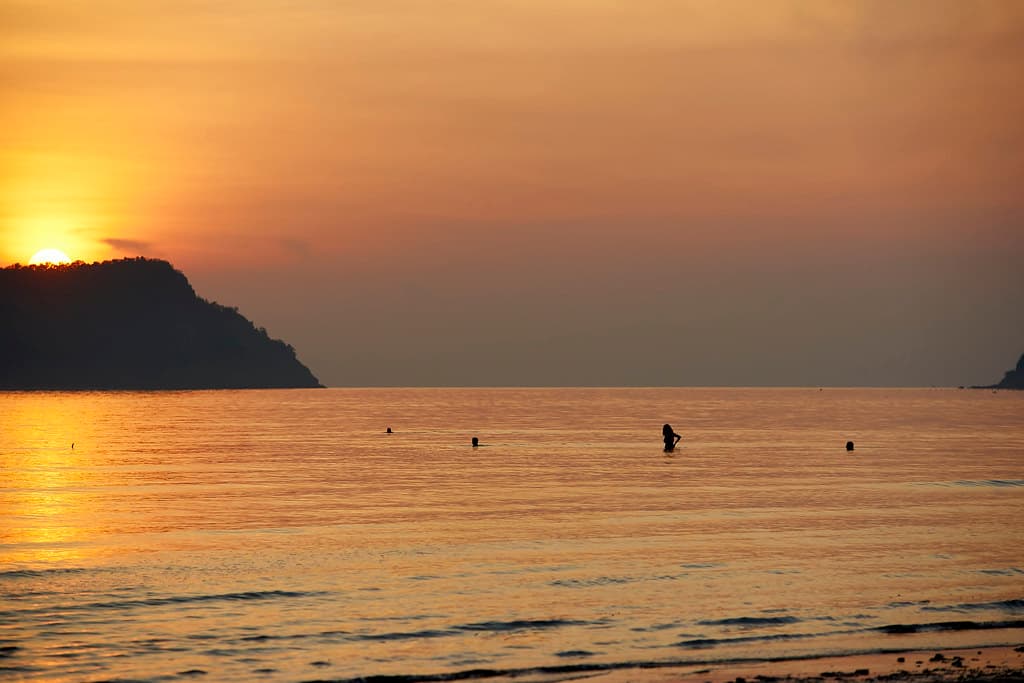
You'll step onto Bang Pu with sand that's more beige than blonde, watching longtail captains idle their engines while tourists negotiate rides across the bay. The beach curves gently, backed by casuarina trees and a scattering of weathered guesthouses where ceiling fans battle the Gulf humidity. Children from the village wade in shallows the color of milky jade, and the air carries salt, two-stroke exhaust, and the fermented punch of fish sauce drying in the sun. This is functional coastline. Wooden piers jut into the water at odd angles, their planks sun-bleached and barnacle-crusted. You'll share the sand with coils of rope, plastic crates stamped with Thai script, and the occasional stray dog seeking shade. The limestone cliffs of Sam Roi Yot rise behind the village like broken teeth, their karst peaks softened by distance and haze. Most visitors use Bang Pu as a transit lounge, waiting for boat departures to the national park's postcard beaches. But if you linger past the morning ferry rush, you'll find a rhythm hereβfishermen mending nets, grandmothers selling grilled squid from charcoal braziers, the tide erasing footprints as reliably as the next longtail arrives. It's the Gulf of Thailand stripped of pretense, where tourism and local life overlap without merging.
Places, rentals, tours and events within walking and driving distance of Bang Pu Beach.
Photos
Bang Pu Beach within Sam Roi Yot National Park typically has calm, shallow waters suitable for swimming, particularly during the dry season. The beach is protected and generally safe for families, though facilities like lifeguards are limited given its small village setting. Water conditions are usually tranquil, but always observe local weather and tide patterns. As this is a natural park area, be mindful of jellyfish during certain seasons and avoid swimming during monsoon periods when seas can be rougher. Local fishermen and park visitors are usually around during daylight hours.
November to February offers the most pleasant conditions with dry weather, comfortable temperatures, and calm seas ideal for beach activities and boat trips to Laem Sala. March through May is hotter but still suitable for visits with fewer tourists. The monsoon season from June to October brings regular rainfall and rougher seas, though the park remains accessible and less crowded. Visit early morning for the calmest waters and to arrange boat transport to nearby attractions. Weekdays provide the most peaceful experience as this national park beach sees modest visitor numbers.
Bang Pu Beach is located within Sam Roi Yot National Park, approximately 60 kilometers south of Hua Hin. Drive or take a bus to Sam Roi Yot district, then follow signs to Bang Pu within the park. From Hua Hin, the journey takes about one hour by private vehicle. Local boats to Laem Sala Beach can be arranged directly with fishermen at Bang Pu Beach, typically costing a few hundred baht depending on group size and negotiation. The national park has an entrance fee. Having your own transportation provides the most flexibility for exploring this area.
Bang Pu is a small fishing village with limited but authentic dining options. Simple local restaurants serve fresh seafood and traditional Thai dishes at modest prices. Accommodation is basic, consisting primarily of homestays and simple guesthouses that cater to national park visitors and those seeking quiet coastal stays. Facilities are far more rustic than resort areas like Hua Hin. For more dining variety and upscale lodging, visitors often stay in Sam Roi Yot town or along Dolphin Bay, using Bang Pu primarily as a day-trip destination or boat departure point.
Bang Pu Beach serves primarily as the traditional access point for boat trips to the stunning Laem Sala Beach and Phraya Nakhon Cave, one of Thailand's most photographed cave temples. Visitors come here to arrange longtail boat transport into the national park's coastal areas. The village itself offers an authentic glimpse of local fishing community life without tourist development. It's ideal for travelers seeking to explore Sam Roi Yot National Park's coastal attractions while experiencing a genuine, uncommercialised Thai village atmosphere. The beach itself is pleasant but secondary to its role as a gateway.