Counting the waves…
Counting the waves…
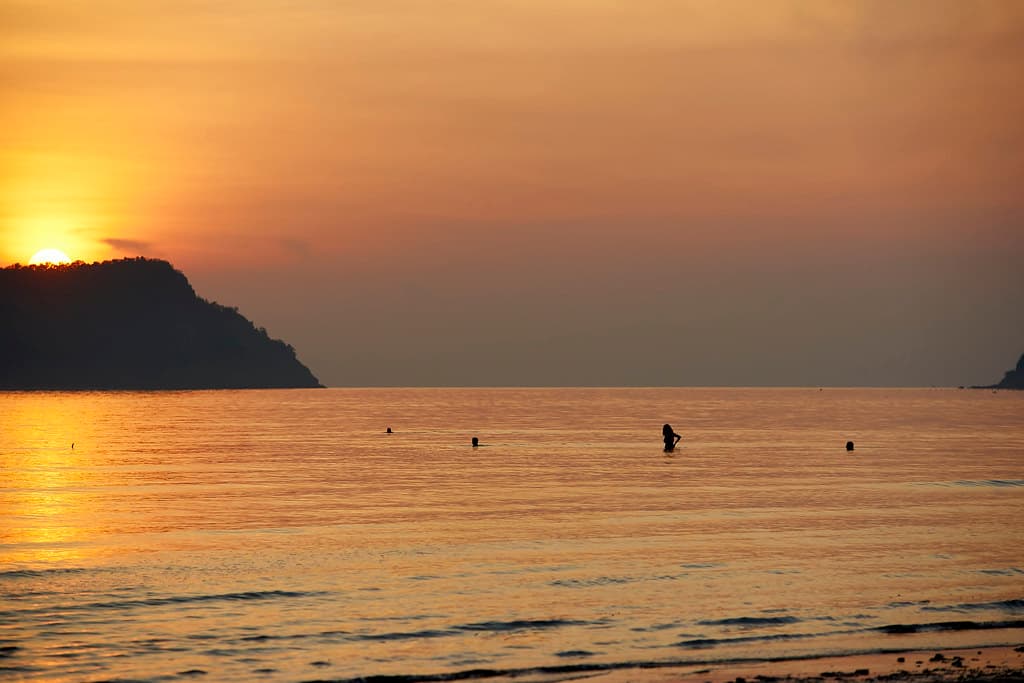
The village announces itself through smell before sight: drying fish on wooden racks, shrimp paste fermenting in clay vessels, salt air carrying the complex signature of a working coast. The beach runs pale gold, littered with the operational debris of small-scale fishing—frayed ropes, Styrofoam buoys, plastic crates stacked above the tide line. You'll share the sand with boat builders repairing hulls in the shade of beachfront palms, their hammering providing rhythm to the afternoon. The water stays shallow and calm, protected by offshore sandbars that create natural lagoons at low tide. Sunset here carries particular weight. The limestone peaks inland catch the last light first, turning orange-pink against darkening sky while the Gulf water shifts through progressive shades—sapphire to pewter to charcoal. Fishing boats motor out for night runs, their lanterns creating a floating constellation beyond the breakers. Village families emerge, planting themselves on the sand with thermoses of whiskey and bags of som tam, children racing hermit crabs while adults discuss catches and prices. You'll be invited to join with a gesture and a smile, expected to accept at least one drink. The village infrastructure is minimal—a handful of guesthouses, a 7-Eleven, restaurants with hand-lettered menus serving whatever came off the boats that morning. Monks from the inland temple walk the beach at dawn collecting alms, their orange robes bright against morning mist. It's the kind of place where your presence gets noted but not commodified, where you're welcome to witness daily rhythms without those rhythms adjusting to accommodate you.
Places, rentals, tours and events within walking and driving distance of Phu Noi Beach.
Photos
Phu Noi Beach is generally safe for swimming, particularly during calm weather conditions typical of the Gulf of Thailand. The sandy beach has gentle slopes making it suitable for families with children. However, always check local conditions as waves can occasionally pick up during monsoon season. Jellyfish may appear seasonally, so ask locals before entering the water. The beach village atmosphere means fewer lifeguards compared to resort beaches, so supervise children closely and swim during daylight hours when local fishermen are around.
The ideal time to visit Phu Noi Beach is between November and April when weather is dry and pleasant with lower humidity. This period avoids the monsoon season that typically runs May through October. For budget travelers and those seeking fewer crowds, visiting during weekdays or shoulder months like November or April offers better value and a more authentic local experience. Sunset viewing is particularly rewarding year-round, though dry season offers clearer skies. Early mornings provide the most peaceful atmosphere before day-trippers arrive.
Phu Noi Beach is located north of Sam Roi Yot National Park headquarters, approximately 60 kilometers south of Hua Hin. From Bangkok, drive south on Highway 4 (Petchkasem Road) for about 250 kilometers, then follow local roads toward the coast. Public transportation is limited; renting a car or motorbike from Hua Hin provides the most flexibility. Alternatively, hire a taxi or use ride-hailing apps from Hua Hin. The journey from Hua Hin takes roughly one hour by car, passing through Sam Roi Yot town.
Phu Noi Beach maintains a local village character with simple, budget-friendly accommodations including small guesthouses and basic bungalows rather than large resorts. Dining options feature authentic Thai seafood restaurants and local eateries serving fresh catches and traditional dishes at reasonable prices. Most establishments are family-run and casual. For more extensive accommodation choices, consider staying in nearby Sam Roi Yot town or Dolphin Bay area, both within short driving distance. Advance booking is rarely necessary except during Thai holidays when domestic tourists visit.
Phu Noi Beach stands apart for its authentic fishing village atmosphere, largely untouched by mass tourism despite being near Sam Roi Yot National Park. Unlike the more developed Dolphin Bay to the south, this stretch maintains traditional coastal life with fishing boats, local markets, and genuine community interaction. The beach offers excellent sunset views over the Gulf of Thailand without crowds. Its location provides a quieter alternative for travelers wanting to experience Thai coastal culture authentically while still having access to national park attractions nearby.