Counting the waves…
Counting the waves…
A refined fusion of water purity, environmental stability, and communal vibrancy for Koh Rawi Beach.
View MethodologyAnalyzed via live sensors and environmental data.
Wave height, wind, and atmospheric stability.
Live footfall and crowd balance metrics.
Community reviews and curated sentiment.
“Koh Rawi sits northwest of Lipe, its main beach a pristine arc that sees perhaps fifty visitors on busy days. The island belongs to the national park, meaning no development beyond basic facilities and rules enforced by…”
Limited recent visitor reports — live OBI telemetry is your best guide for current conditions.
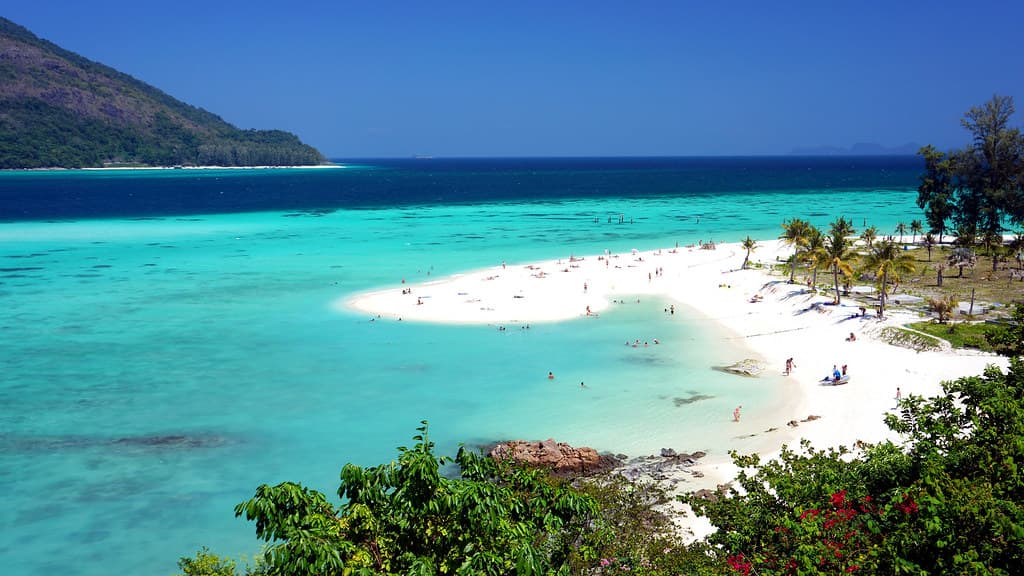
The longtail anchors in chest-deep water and you wade ashore with your daypack held overhead. Koh Rawi's beach curves for nearly a kilometer, backed by intact coastal forest where you can hear but not see the ranger station generator. The sand here contains high quartz content, producing an audible squeak with each step—locals call it singing sand, though it sounds more like cork against glass.
You drop your gear under trees and survey the water. It grades from pale jade near shore to deep sapphire at the reef line, so clear you can count individual fish from the beach. Wade in and the bottom stays sandy for twenty meters before the first coral heads appear like submerged monuments. Snorkeling the outer reef requires confidence—the drop-off plunges to depths where light fades to blue dimness—but you can spend hours exploring the shallower gardens closer to shore, where parrotfish crunch coral and moorish idols drift in paired formation.
 Credit: Unsplash
trees beside body of water during daytime
 Credit: Unsplash
brown cottage near coconut trees
Deep water coral walls
Squeaking beach walks
High visibility bathing
Prime Visitation
Best Weather|Less Crowds
Where it is
Koh Rawi Beach
Koh Lipe, Satun, Thailand
6.376900°, 99.235500°
Weather
Loading…
Swell
—
Temp
Warm · Restorative
UV Index
Moderate
Wind
—
Tidal State
Last known
Max Sunlight
—
Ideal Shade
—
Jan - Dec (Peak)
May - Nov (Off-season)
Best Weather|Less Crowds
Select a category to load nearby places.
Unlock restaurants, luxury stays and curated maritime experiences within 2km
Koh Rawi Beach is generally safe for swimming during the high season (November-April) when sea conditions are calm. The beach features pristine, clear waters with a gradual depth progression suitable for most swimmers. However, as this is a remote, uninhabited island within Tarutao National Marine Park, there are no lifeguards, safety equipment, or emergency services. Visitors should swim cautiously, stay close to shore, never swim alone, and be mindful of boat traffic. Avoid visiting during monsoon season (May-October) when seas can be rough and boat access is unreliable or unavailable.
Koh Rawi Beach remains relatively uncrowded year-round due to its remote location, but the best time for solitude is during the shoulder months of November and late March through April. Weekday visits see fewer people than weekends when some day-trippers arrive. The island receives significantly fewer visitors than nearby Koh Lipe, though some snorkeling tours include it in their itineraries. Arrive early morning if possible, before tour boats typically reach the island around mid-morning. Peak season (December-February) brings moderately more visitors but the beach rarely feels crowded given its size and isolation.
Koh Rawi is located northwest of Koh Lipe and accessible only by boat, with the journey taking approximately 30-45 minutes depending on sea conditions. The most practical option is joining an organized day tour from Koh Lipe, which typically costs 800-1,500 baht per person and includes multiple island stops with snorkeling. Alternatively, hire a private longtail boat from Koh Lipe's beaches for around 2,000-3,000 baht (negotiable, depending on group size and itinerary). As Koh Rawi is within Tarutao National Marine Park, foreign visitors must pay a 200 baht park entrance fee.
Koh Rawi is completely uninhabited with no commercial facilities, accommodations, restaurants, or services available. The island is protected as part of Tarutao National Marine Park, maintaining its pristine, undeveloped state. Visitors must bring all necessary supplies including drinking water, food, sun protection, and any personal items needed. There are no toilets or freshwater sources accessible to visitors. Most people visit Koh Rawi as a day trip from Koh Lipe, typically spending a few hours enjoying the beach and snorkeling before returning. The absence of development is precisely what makes this beach so special and unspoiled.
Koh Rawi Beach stands out for its exceptional natural beauty and pristine condition, featuring powdery white sand and crystal-clear turquoise waters that rank among the region's most stunning. The island's protected status within Tarutao National Marine Park has preserved its untouched character, with lush jungle meeting the beach and no development whatsoever. The surrounding waters offer excellent snorkeling with healthy coral reefs and diverse marine life. The sense of total seclusion and unspoiled nature provides a stark contrast to increasingly developed Koh Lipe, making it feel like a true tropical paradise for those willing to make the journey.
Photos