Counting the waves…
Counting the waves…
A refined fusion of water purity, environmental stability, and communal vibrancy for Koh Tarutao Beach.
View MethodologyAnalyzed via live sensors and environmental data.
Wave height, wind, and atmospheric stability.
Live footfall and crowd balance metrics.
Community reviews and curated sentiment.
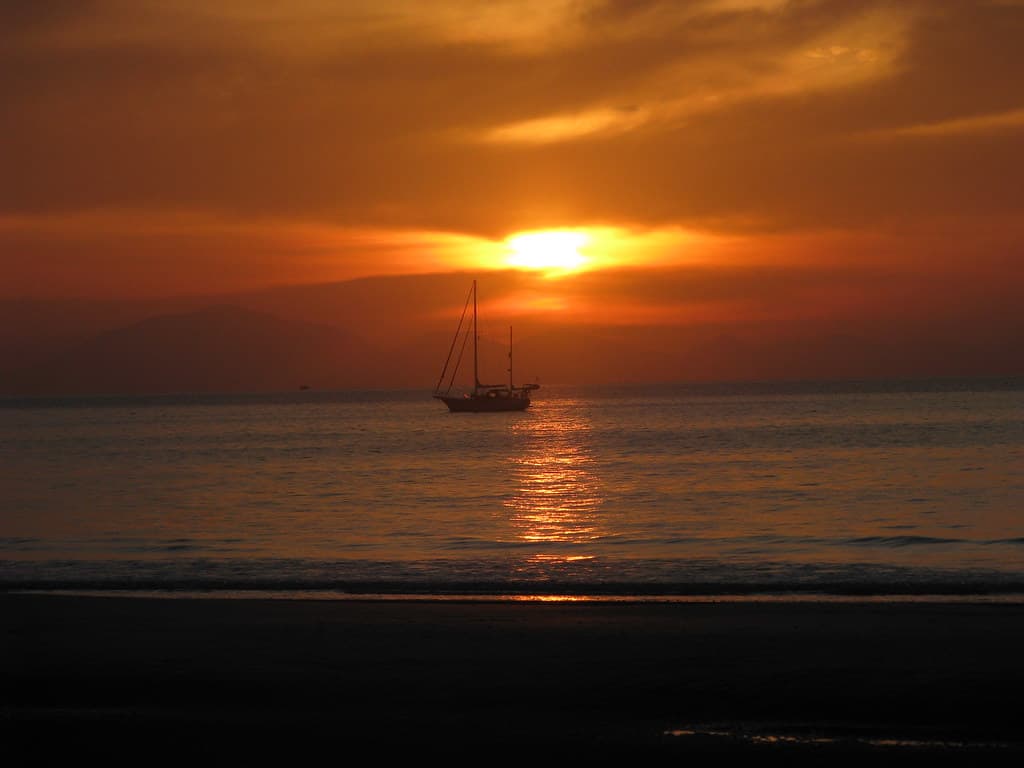
“Tarutao's principal beach stretches along the island's western shore, backed by dense jungle that hasn't changed much since this place served as a political prison. The sand slopes gently into water that stays swimmable…”
Limited recent visitor reports — live OBI telemetry is your best guide for current conditions.
The ferry from Lipe deposits you at the park pier, and a ten-minute walk through forest brings you to sand that extends nearly three kilometers. Tarutao's beach feels deliberately undeveloped—a few ranger stations, scattered picnic shelters, none of the commercial infrastructure that defines Lipe. You spread your mat beneath trees where langurs crash through branches and hornbills announce their presence with guttural croaks that carry across the sand.
The swimming here lacks drama but offers reliability. The bottom slopes gradually, free of sharp coral or hidden rocks, making this a favorite for families and nervous swimmers. Water clarity varies with seasons—glasslike in dry months, murky after rains—but the waves stay modest year-round. You float on your back and study the forest canopy, trying to identify bird calls, or you strike out parallel to shore for distance swimming in water that feels more South Pacific than Southeast Asian.
 Credit: Unsplash
trees beside body of water during daytime
 Credit: Unsplash
brown cottage near coconut trees
Family-safe water entry
Monsoon forest exploration
Hornbills and langurs
Prime Visitation
Best Weather|Less Crowds
Where it is
Koh Tarutao Beach
Koh Lipe, Satun, Thailand
6.593300°, 99.768300°
Weather
Loading…
Swell
—
Temp
Warm · Restorative
UV Index
Moderate
Wind
—
Tidal State
Last known
Max Sunlight
—
Ideal Shade
—
Jan - Dec (Peak)
May - Nov (Off-season)
Best Weather|Less Crowds
Select a category to load nearby places.
Unlock restaurants, luxury stays and curated maritime experiences within 2km
Koh Tarutao's beaches are generally safe for swimming during the high season (November-April) when conditions are calm. The island features several beaches with clear waters and gentle slopes. However, as Thailand's third-largest island and part of a national marine park with limited development, facilities and lifeguards are minimal. Swimmers should exercise caution, stay in designated areas near park facilities, and avoid swimming alone or during rough weather. Some beaches may have stronger currents during seasonal transitions. The park rangers can advise on current conditions at specific beaches around the island.
The best time to visit Koh Tarutao is during the dry season from November through mid-May, when the national park is officially open and weather conditions are favorable. Peak visitation occurs December through February, though the island remains relatively quiet compared to Koh Lipe. For the most peaceful experience with good weather, visit during November or March through April. The park completely closes during monsoon season (mid-May through October) when rough seas make boat access dangerous and most facilities shut down. Plan to spend at least one night to fully appreciate the island's natural beauty and tranquility.
Koh Tarutao is located south of Koh Lipe, accessible by scheduled boat services or private charter. During high season (November-May), check with tour operators on Koh Lipe about available boat connections, though direct services may be limited. More commonly, travelers go via Pak Bara pier on the mainland, which offers regular ferries to Koh Tarutao (about 60-90 minutes). Some visitors charter private longtail boats from Koh Lipe, which takes approximately 45-60 minutes and costs significantly more. National park entrance fees apply (200 baht for foreigners). Confirm current schedules as services vary seasonally.
Koh Tarutao offers basic national park accommodations including simple bungalows and longhouse dormitories at several locations, primarily near the main pier at Ao Pante. Camping is also permitted at designated sites. Facilities are rustic with limited electricity (usually evenings only) and no air conditioning. A simple restaurant near park headquarters serves basic Thai meals at modest prices, but options are limited and hours restricted. Bring snacks and any special dietary items needed. Advance booking through the Department of National Parks is recommended during peak season. The limited facilities maintain the island's peaceful, back-to-nature atmosphere.
Koh Tarutao offers a completely different experience from developed Koh Lipe, emphasizing untouched nature and historical significance. As Thailand's third-largest island and the centerpiece of Tarutao National Marine Park, it features pristine beaches, jungle trails, mangrove forests, and wildlife including monitor lizards, monkeys, and diverse birdlife. The island has historical importance as a former political prison and penal colony, with remnants still visible. Unlike Koh Lipe's resort atmosphere, Koh Tarutao provides a genuine wilderness experience with minimal development, basic facilities, and very few visitors, appealing to nature lovers and those seeking authentic eco-tourism.
Photos