Counting the waves…
Counting the waves…
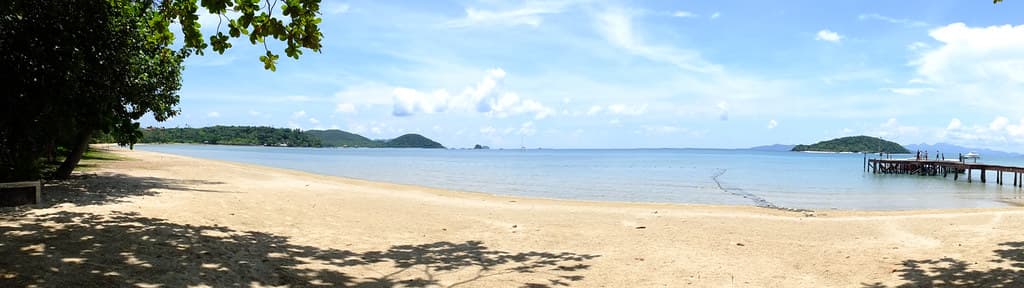
The beach at Ao Nid announces itself modestly—a hundred-meter crescent of coarse sand between two low rocky points, backed by a mix of traditional wooden houses and newer concrete shophouses. This is where islanders actually live, not where they work serving tourists. Longtail boats rest tilted on the sand at low tide, their hulls streaked with rust and barnacles, outboard motors wrapped in plastic against the salt air. The swimming is serviceable rather than spectacular. The bay collects some debris—plastic bottles, coconut husks, the occasional tangle of rope—that higher-end beaches remove each morning. The sand carries a grayish tint from river sediment, and the water clarity varies with the tide. But the authenticity is unforced: this is a working beach where boats launch, nets get mended, and the morning fish market happens on weathered tables under a corrugated roof. A few small guesthouses operate at the western end, their rooms simple and cheap, catering to the rare visitor who wants proximity to village life over resort comforts. The beach itself sees more foot traffic from locals cutting through than tourists sunbathing. Kids play football on the sand after school. Women collect shellfish at low tide, working in pairs with buckets and rakes. If you want Ko Mak without curation, this is it.
Places, rentals, tours and events within walking and driving distance of Ao Nid Beach.
Photos
Ao Nid Beach is generally safe for swimming during calm weather, especially from November to April. Being a small village-side beach, it has a gentle sandy bottom suitable for wading and casual swimming. There are no lifeguards or safety services, so exercise personal caution. Conditions can deteriorate during monsoon months with stronger waves and reduced visibility. The beach is more about atmosphere than water sports, so check conditions locally before swimming. Families should supervise children closely, and avoid the water during rough weather or strong winds common in the rainy season.
Visit Ao Nid Beach during the dry season from November through April for the best weather and calm seas. For the fewest crowds, come during shoulder months or weekdays, as this hidden beach sees far fewer visitors than Koh Mak's main western shores. Early mornings offer peaceful village scenes and good light for photography. The beach is accessible year-round but less appealing during monsoon season (May-October) when rains and waves increase. Since it's valued for atmosphere rather than activities, any dry-season visit will showcase its authentic island character.
Reach Ao Nid Beach by first taking a ferry to Koh Mak from Laem Ngop pier near Trat. Once on the island, rent a bicycle or motorbike to explore the village side where Ao Nid is located. Koh Mak is compact enough to cycle around easily, and the beach is accessible via local roads near residential areas. Taxi-trucks can also take you there if arranged through your accommodation. Signage may be limited since it's off the main tourist circuit, so ask locals or your hotel for specific directions to this small village beach.
Ao Nid Beach has limited tourist infrastructure as it's primarily a village-side location rather than a resort area. You may find very basic local guesthouses or homestays nearby offering simple accommodation for authentic experiences. Dining options are minimal directly at the beach; you'll likely find small local eateries or need to return to the main beach areas on Koh Mak's western side for more restaurant choices. Most visitors stay elsewhere on the island and visit Ao Nid as part of exploring the complete island, bringing their own refreshments.
Ao Nid Beach offers an authentic glimpse of local island life away from Koh Mak's tourist-developed western beaches. Its village-side location means you'll experience genuine island atmosphere with fishing boats, local homes, and everyday Thai coastal life rather than resort amenities. The beach is valued for its hidden, uncommercial character and peaceful vibes rather than picture-perfect sand. It completes a full picture of Koh Mak for explorers who want to see beyond the main beach strips, offering insight into how islanders actually live and work along the shore.